Tengrinews.kz — Global oil prices rose sharply amid a new round of escalation between the United States and Iran.
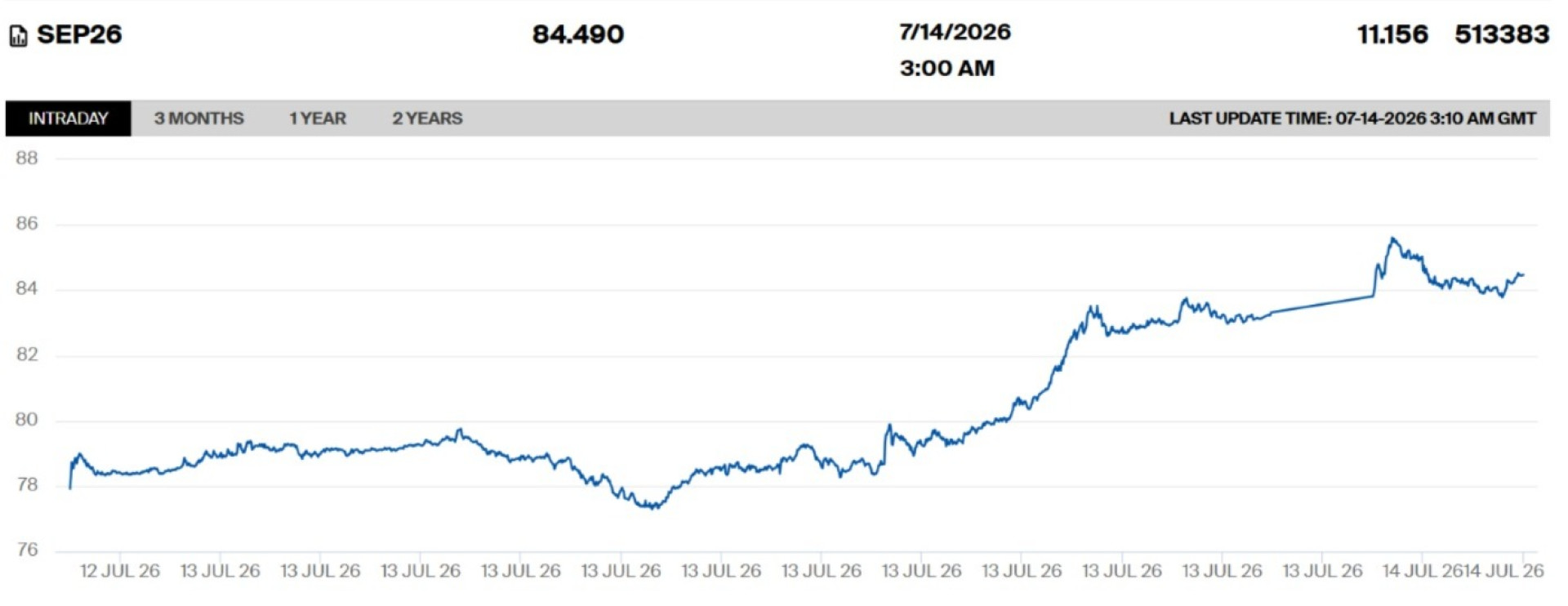
According to trading data as of 8:00 a.m. Astana time, September Brent crude futures on London’s ICE exchange rose by 11.15 percent, exceeding $84 per barrel.
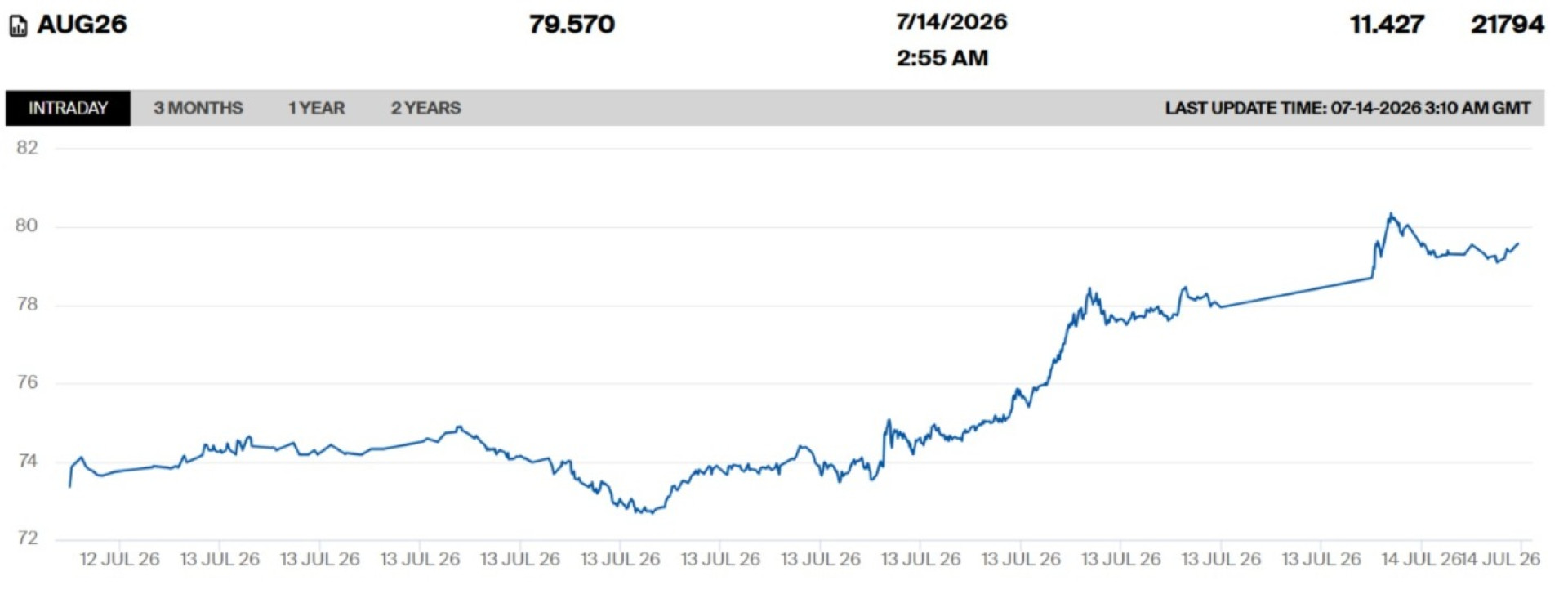
August WTI crude futures increased by 11.42 percent to $79.57 per barrel.
Trump’s statement on the Strait of Hormuz
One of the main factors behind the rise in oil prices was a statement by U.S. President Donald Trump regarding the Strait of Hormuz. The American leader said that “the U.S.A. will be, from this point forward, known as “Guardians of the Strait of Hormuz,” but as such, and as a matter of fairness, will be reimbursed, at the rate of 20% on all cargo shipped.”
U.S. strikes Iran for third consecutive night
Another factor driving prices higher was the ongoing U.S. military operation. Earlier, U.S. Central Command (CENTCOM) reported that American forces had been striking Iranian territory for the third night in a row. Washington said the operation was aimed at weakening Iran’s military capabilities and preventing attacks on commercial shipping in the Strait of Hormuz.
CENTCOM said it had successfully carried out strikes on military facilities in Iran, including in Bushehr, Chabahar, Jask, Konarak and Bandar Abbas.
In response, Iran’s Islamic Revolutionary Guard Corps (IRGC) said it had struck targets at the U.S. Juffair base in Bahrain, as well as two “violating supertankers” in the Strait of Hormuz that had ignored warnings.
Why this matters for Kazakhstan
Earlier, oil and gas industry expert Askar Ismailov noted that oil prices affect budget revenues, the state of the National Fund and the tenge exchange rate. Instability in the oil market increases risks for the economy. Sharp price fluctuations affect inflation, investment activity and financial markets. Dependence on oil revenues makes the country vulnerable to external shocks.
At the same time, the 2026–2028 budget is based on key baseline parameters: an oil price of $60 per barrel and an exchange rate of 540 tenge per dollar. Export revenues, social payments and government spending are calculated based on these benchmarks.