
Tengrinews.kz — A digital twin of the city, a smart district based on South Korean expertise, tokenization projects, and urban air mobility: new details on the development of Alatau City were presented at a meeting of the Alatau City Council, where the city's management system was also approved, citing the government’s press service.
The meeting was chaired by Prime Minister Olzhas Bektenov. Participants discussed the implementation of the Constitutional Law "On the Special Legal Regime of Alatau City" and the future development of the new city.
Digital Twin and a 330-Hectare District
One of the key focus areas will be the Alatau AI-Driven City project. It involves creating a digital twin of the city and utilizing Big Data and artificial intelligence to manage urban processes in real time.
Under the K-Smart City project, a pilot self-sufficient district covering 330 hectares is planned. Its construction will employ modern smart technologies based on South Korean experience.
Another direction is Alatau Crypto City. The project entails launching tokenization and forming a city Web3 ecosystem. The first tokenization projects, resident attraction, and the creation of a unified space for the virtual and real economies are scheduled to be completed by the end of 2026.
53 Projects Worth Two Trillion Tenge
According to the Alatau City Authority, a pool of 53 investment projects totaling two trillion tenge has been formed for the city. This is expected to create 51,000 jobs.
Key projects include the Iconic Complex, valued at over one billion dollars, production facilities for PepsiCo, Mars, and Hyundai Green Food, the Khan Tengri Biopharma plant, and a KAIST university campus.
Urban air mobility projects are also being considered in collaboration with AutoFlight and Joby.
City Governance Structure
The meeting approved the regulations for the Alatau City Authority, defining its legal status, powers, and management system.
The state fund Alatau City Authority will be transformed into a special management organization—a government body responsible for the operation and development of Alatau City.
Furthermore, it was decided to establish an Operational Committee and a Regulatory Commission. The former will handle matters requiring rapid decision-making, while the latter will have the authority to approve regulatory acts and implement international practices under the special legal regime.
A temporary commission on land relations will also be established under the Alatau Akimat. It will oversee priority investment projects until the city's Master Plan is approved.
Plans for 2040 and 2055
Currently, the Alatau City Authority is establishing the city's regulatory framework, drafting strategic documents, creating a public administration system, and supporting investment projects.
Development of the Long-term Development Plan through 2055, as well as the Development Strategy and Master Plan through 2040, is scheduled for completion by the end of the year. International consulting firms ARUP and BCG will be involved in the process.
In parallel, infrastructure and transport development continues for existing settlements, covering the districts of Yntymak, Koyankus, Zhetigen, Zhanadauir, and Zhanatalap.
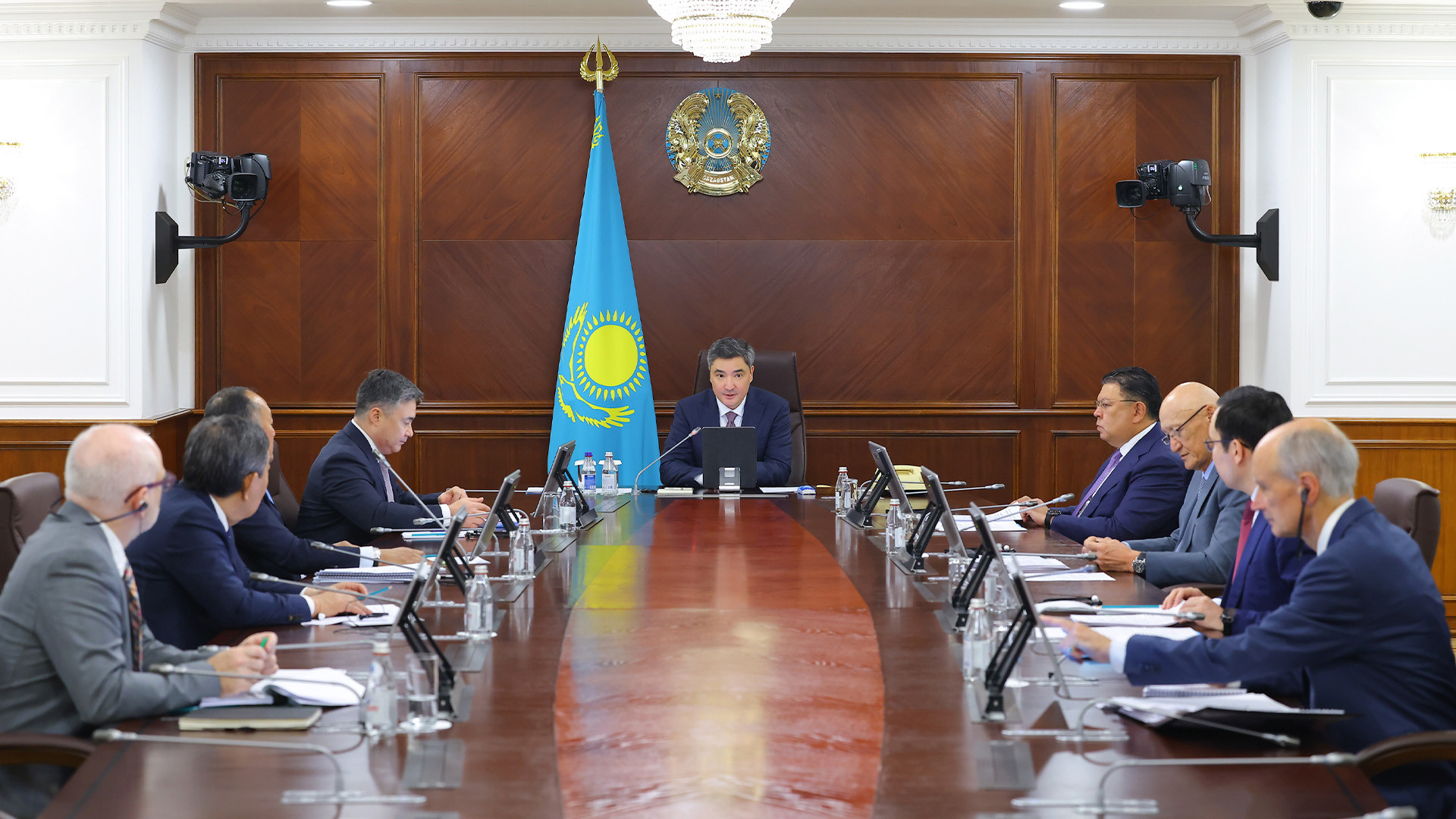 Photo: Government Press Service
Bektenov noted that the special legal regime should help transform Alatau City into a major driver of economic development.
"The primary task of the Alatau City Council is to ensure the timely and high-quality implementation of the special legal regime," the Prime Minister stated.
Following the meeting, he instructed government agencies and the Alatau City Authority to accelerate work on the city's key development areas.
Read also:
Alatau receives unique status as Tokayev signs law
Dozens of investment projects worth 2 trillion tenge - Tokayev presented with the future of Alatau