
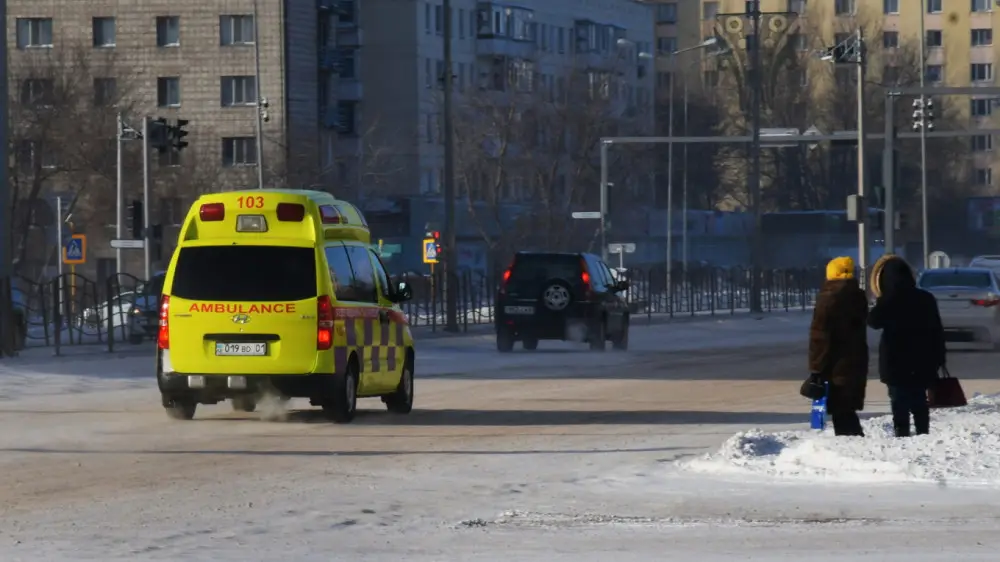
Tengrinews.kz — Doctors report a rise in cases of Hong Kong flu — the A/H3N2 strain of the seasonal virus known for its high contagiousness and tendency to cause more severe illness in Kazakhstan in November 2025. For now, the situation remains manageable: no epidemic outbreaks have been recorded in the country.
However, the global picture makes experts cautious about the coming season. In an opinion column for Tengrinews.kz, Almaz Sharman, President of the Academy of Preventive Medicine, assesses the potential risks.
The virus is evolving: seven new mutations
Specialists note that the current H3N2 variant is more severe than last season’s dominant H1N1 virus. Over several summer months, the virus acquired at least seven mutations that allow it to partially evade immunity — both vaccine-induced and the immunity formed after previous illness.
According to experts, such rapid evolution makes the virus less predictable and increases the likelihood of a sharp rise in cases in the coming weeks.
The vaccine is not perfect, but it protects against severe illness. Despite H3N2 mutating faster than expected when the seasonal vaccine composition was developed, vaccination remains the key tool of protection.
According to the UK Health Security Agency:
- Vaccine effectiveness in children reaches 70–75%;
- In adults — 30–40%.
This means that the vaccine may not prevent infection, but significantly reduces the risk of complications and hospitalizations — the main goal of immunoprophylaxis during unstable seasons.
Global signals: early start and sharp rise in cases
Epidemiologists often observe that flu seasons in the northern hemisphere follow the trends of countries in the southern hemisphere, where circulation begins earlier. And 2025 gave a worrying signal: Australia experienced the worst flu season in its recorded history.
Similar trends are now seen elsewhere:
- The UK entered the flu season a month earlier than usual, with cases tripling compared to last year. The National Health Service issued an urgent call urging people to get vaccinated.
- Tokyo issued its first flu alert since 2009: more than 1,100 schools were closed for quarantine, compared to just 99 last year.
Experts expect the peak of infections in the coming weeks. Therefore, now is the best moment to get vaccinated: immunity develops in about two weeks.
Kazakhstan: low vaccination rates may worsen risks
According to the Ministry of Healthcare, around 600 laboratory-confirmed flu cases have been registered so far, most of them in children.
In Kazakhstan, vaccination coverage for respiratory infections has traditionally been low. This particularly threatens the elderly and young children — groups that are more likely to suffer severe H3N2 illness. Even if they are vaccinated themselves, the virus can be brought home by other family members, increasing the risk of complications.
Global burden: hundreds of thousands of deaths annually
According to international organizations, seasonal flu leads to 290,000–650,000 deaths each year due to complications — from pneumonia to acute heart failure.
In children, flu can also cause rare but dangerous outcomes:
- Brain inflammation;
- Heart rhythm disturbances;
- Severe dehydration and respiratory distress.
A new subclade, H3N2 K: why scientists are watching it closely
In the UK, researchers are studying a new variant — subclade H3N2 K. Its reproduction number is estimated at 1.4, while usual seasonal flu is around 1.2.
Even this small difference can translate into millions of additional cases on a global scale.
Researchers note that this variant can spread very quickly worldwide. However, it is not yet clear whether the new mutations lead to more severe illness.
More time is needed to determine this: the virus is actively circulating among children and then typically spreads to older age groups, where consequences can be more serious.
Could a new pandemic occur, like in 1968?
The Hong Kong flu pandemic of 1968–1969 claimed 1 to 4 million lives, according to WHO estimates. Then, as now, the dominant strain was H3N2, known for its high mutation rate.
But experts emphasize that the situation today is different.
Modern medicine has:
- Antiviral medications;
- Modern monitoring methods;
- Available vaccines;
- Rapid genetic analysis of viral changes.
Despite rising cases, pandemic criteria — large-scale simultaneous spread, severe illness, and lack of control measures — are not currently met. However, experts continue to closely observe the virus’s evolution.
What to do now: expert recommendations
- Get vaccinated as early as possible. It reduces the risk of severe complications and hospitalization.
- Stay home at the first symptoms. H3N2 spreads quickly, and early isolation reduces transmission.
- Monitor children and the elderly carefully. These are the most vulnerable groups.
- Follow simple preventive measures: handwashing, ventilation, wearing masks when sick.
The winter season may be challenging, but timely vaccination and simple precautions can significantly reduce risks for both families and the healthcare system.
Editorial opinion may not reflect that of the author.
About the author: Almaz Sharman is President of the Kazakh Academy of Nutrition and the Academy of Preventive Medicine, a member of the American Public Health Association, and a specialist in biomedicine and public health.

