
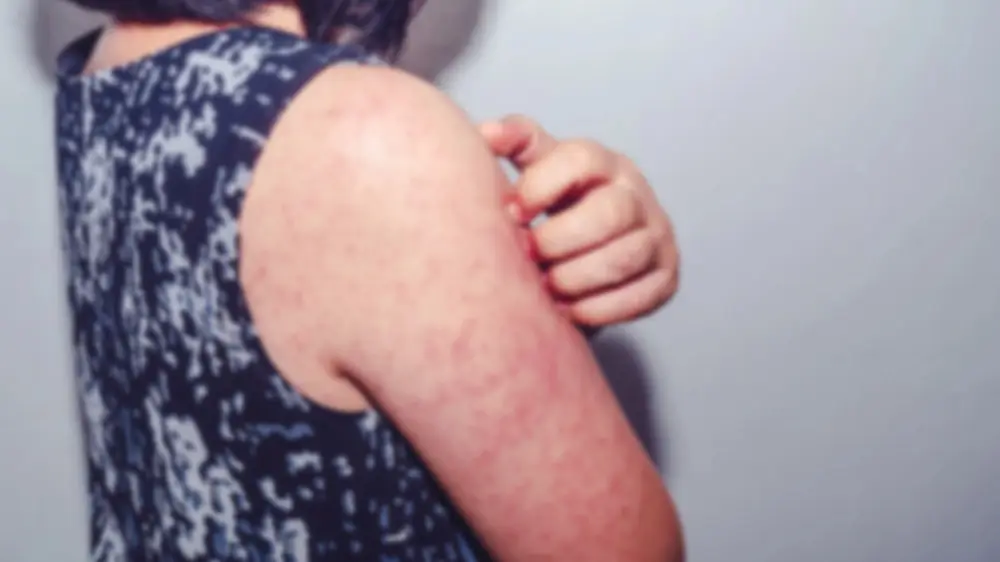
Tengrinews.kz – In some regions of the country, measles cases are once again on the rise — especially among children who have not been vaccinated. According to official data, in the first weeks of 2026 doctors recorded 370 measles cases across the country, 298 of them in children under 14. Doctors link this to an increase in vaccine refusals and insufficient vaccination coverage.
Hotspot in Zhambyl Region
The highest number of cases has been reported in Zhambyl Region. Since the beginning of the year, 191 children there have been diagnosed with measles, more than 80 percent of them under 14.
- 43 children under one year old;
- 42 one-year-old children;
- 54 children aged two to five.
According to the regional health department, most cases — 155 — were registered in Taraz.
The agency specified that 85 percent of children who contracted measles were not vaccinated:
- 33 percent due to parents’ refusal of vaccination;
- 22 percent had not yet reached vaccination age;
- 15 percent had medical exemptions.
Against the background of rising incidence, additional unscheduled immunization began in Zhambyl Region in December 2025. Vaccination is being provided to unvaccinated children aged nine to ten months, as well as children and adolescents aged two to 18 years.
Overall situation in the country
The Committee for Sanitary and Epidemiological Control of the Ministry of Healthcare told us that 4,240 measles cases were registered in 2025. Again, most often it was children under 14 who became ill — 3,673 cases.
The committee emphasizes that measles incidence in 2025 decreased by 85 percent compared to the previous year. However, it is important to note that in 2023, according to WHO data, Kazakhstan had the highest level of measles spread, about 14,000 cases. And in 2024, according to various estimates, between 24,000 and 28,000 people fell ill.
The situation was brought under control at the beginning of 2025 thanks to additional vaccination. Most often, children under five were affected. Seventy-five percent of children who contracted measles in 2025 had not been vaccinated.
In the Committee for Sanitary and Epidemiological Control, it was noted that due to low vaccination coverage among children of target age groups and the growing number of refusals to vaccinate, full stabilization of the situation is not yet possible.
“In Kazakhstan, as in the rest of the world, recent years have seen an increase in vaccine refusals. Over the past eight years alone, this indicator has grown 3.8 times,” the agency added.
According to official data, more than 19,000 refusals of preventive vaccinations were registered in 2025. This has led to a noticeable decrease in the level of herd immunity, which negatively affects the epidemiological situation with measles.
What experts say
Earlier, biologist and immunization consultant Asel Musabekova explained in a comment to the editorial office that any number of measles cases is too many, since the spread of this disease can be controlled with a vaccine that is 97 percent effective.
According to her, compared to previous years when the measles situation in Kazakhstan was relatively stable, a sharp increase in incidence has been observed recently.
“Since 2019, we have been seeing periods of rising incidence. Last year, measles was diagnosed in more than 28,000 people, which is one of the highest rates in the world,” Musabekova noted.
Measles is one of the most contagious viruses. To prevent its spread, the level of herd immunity in society must be at least 95 percent.

