


 Қазақша
 Русский
 English

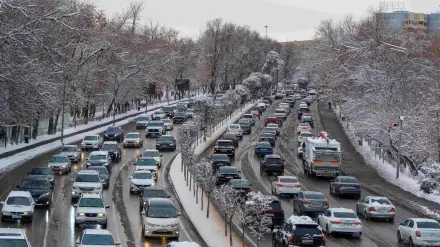
Tengrinews.kz – Kazakhstan is considering the possibility of limiting car movement based on odd and even days to improve the ecological situation in cities. This was reported by the Minister of Ecology and Natural Resources, Yerlan Nysanbaev.
According to the minister, at the beginning of the year, a group of ministry employees, ecologists, and representatives of public organizations were sent to China to study the experience of the People's Republic in combating air pollution.
"You know that in China, over 10–15 years, significant results have been achieved in improving the health of cities. A number of operational measures have been taken there: gasification of transport and production, switching urban transport to gas and electricity. One of the measures is regulating car movement based on odd and even days," Nysanbaev explained.
The minister noted that, following Beijing's example, Kazakhstan's cities have been proposed to develop environmental protection regulations. He added that such rules have already been adopted in Almaty, providing a set of measures to reduce air pollution.
As Yerlan Nysanbaev explained, the main contributor to air pollution in Almaty is road transport. Currently, around 748,000 vehicles are registered in the city. Additionally, approximately 400,000 vehicles enter the city daily.
"If we break it down, practically all of the suburbs are working in Almaty today. Passenger transport is handled mainly by taxis. Therefore, such measures, in combination with others, could help improve the ecological situation," the minister stated.
The specifics of how the odd and even day vehicle movement system might work have not yet been determined. This issue needs to be considered separately for each city, the official said.
In February, the Ministry of Ecology and Natural Resources proposed to divide vehicle movement into odd and even days.
Beijing’s odd-even number system
Beijing's odd-even number system is one of the most well-known measures to combat traffic jams and smog in the Chinese capital. It was introduced before the 2008 Olympics: on one day, only cars with an even last digit of the license plate could drive, while on the next day, only cars with an odd last digit could drive.
After the Olympics, the system was softened. Currently, a lighter version of the system is in place in Beijing, where car owners are allowed to drive only six days a week. The day they are prohibited from driving depends on the last digit of their license plate. Every few months, the authorities change the schedule to ensure a more even distribution of days.



 +7 (777) 001 44 99


