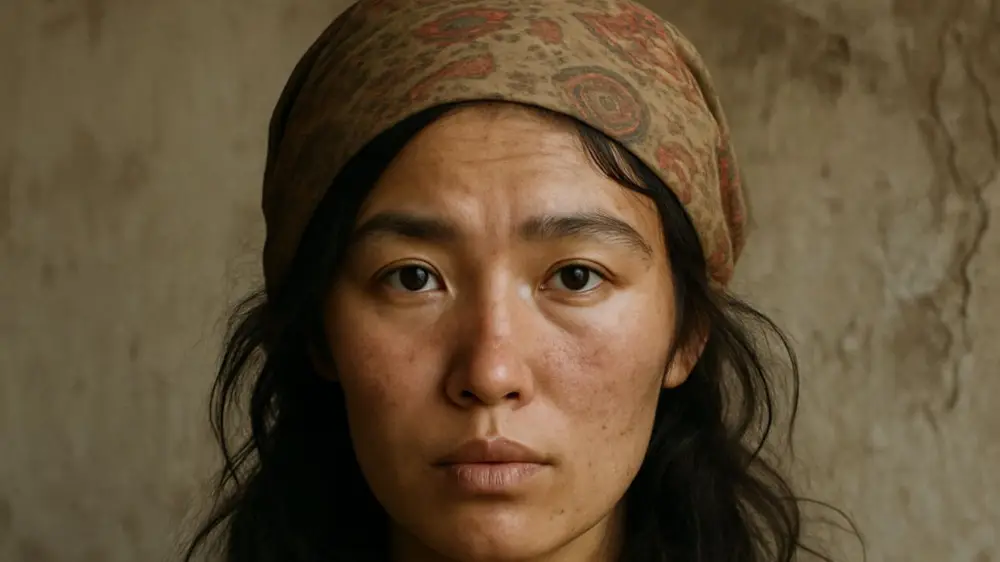
Women in Kazakhstan are the most vulnerable segment of the population – though not everyone agrees with this statement. According to patriarchal norms, men are considered breadwinners and providers, while women are supposed to live under their protection.
But statistical data paint a very different picture: women in Kazakhstan are massively excluded from many areas of economic life, earn less than men, bear the burden of family care, and often become victims of domestic violence. The Tengrinews.kz editorial team examines the phenomenon of the feminization of poverty in Kazakhstan – how millions of women end up below the poverty line and why the situation has remained unchanged for decades.
“More than 60 percent of the poor in Kazakhstan are women”
According to the latest data from Kazakhstan’s Bureau of National Statistics, 4.5 percent of the entire population is officially considered poor: 924,365 Kazakhstanis, or 160,359 families, live on an income below 52,507 tenge – the subsistence minimum as of 2025.
Looking at the statistics in detail reveals several notable facts:
- In rural areas, there are far more poor people than in cities.
- In urban areas, there are 435,134 people living below the subsistence minimum, while in rural areas the figure is 489,231 – 54,000 more.
- The most severe situation is observed in Turkistan Region, where 175,276 people fall under the poverty category.
And now we come to the key point: the majority of the poor population are women. This is confirmed not only by statistics, but also by researchers studying gender issues.
For example, Leila Zuleikha, a doctoral candidate in political science at Johns Hopkins University, points out that female poverty is a common phenomenon not only in Kazakhstan but in many other countries as well:
“More than 60 percent of the poor in Kazakhstan are women. The poverty rate among women is much higher than among men. This is a fairly widespread indicator. Our national statistics have been kept since 2001. According to them, the poverty rate has indeed fallen sharply – from 50 percent to 4.5 percent. The dynamics are positive, but clear gender differences are visible,” the researcher notes.
According to her, the main reason for the feminization of poverty is patriarchy and the resulting social attitudes: the man is the 'breadwinner', the woman the 'keeper of the home'. But in reality, this outdated model leads to an increase in the number of women living below the poverty line.
“The main reason is patriarchal attitudes that still define socio-economic roles. The state and its institutions adhere to a model that does not take into account women’s unpaid work. Caring for children, the elderly or the sick in the family falls mainly on women. These hours are lost from paid labor, and women objectively find themselves in a more vulnerable position,” says Zuleikha.
This opinion is shared by Asel Izekenova, PhD, Associate Professor at the Kenzhegali Sagadiyev University of International Business (UIB). She clarifies that Kazakhstan’s poverty statistics are not broken down by gender, but indirectly women face higher risks due to the wage gap, lower economic activity, and greater caregiving burden. This is also confirmed by international data.
“According to World Bank data in 2024, women’s economic activity stood at 66 percent, compared with 76 percent for men. TheGlobalEconomy.com, meanwhile, reports that female unemployment is 5.5 percent compared to 4.4 percent for men. Structurally, this increases women’s vulnerability to poverty, especially in single-parent and large families and in rural areas,” Izekenova notes.
She highlights an additional risk factor: shorter lifetime economic activity. Women interrupt their careers due to pregnancy, childbirth and childcare, which reduces pension savings and overall lifetime earnings. Thus, in the long term, poverty truly does have a woman’s face.
 depositphotos.com
Over a million women are unemployed
Let’s start with the most obvious. In Kazakhstan, 1.68 million women of working age are not working at all. This is 37.1 percent of all women, compared with 27 percent of men. In other words, every third Kazakh woman stays at home not because she wants to, but because she has no opportunity to find a job or to combine it with family responsibilities.
More figures:
- Out of 9.4 million working-age Kazakhstanis, there are slightly fewer women – 4.5 million versus 4.9 million men. But they are employed far less often: only 59 percent of women have jobs compared with 70 percent of men. The gap is 11 percentage points. This means that nearly half of all women in the country are economically dependent on men or on the state.
- The statistics on those who have never worked are even more troubling: 81,852 women compared to 58,078 men. This is not a matter of personal choice, but the result of a system where girls are prepared from childhood for the role of housewives rather than professionals.
- The difference is also visible in unemployment levels. Among women, the rate is higher – 5.1 percent compared to 4.2 percent for men. But the issue is not just in the numbers, but in the reasons. For example, 31,498 women are officially listed as unemployed because they are engaged in household work. Among men, this figure is only 13,481 – 2.3 times fewer.
- A similar pattern is seen in part-time employment. 15,321 women are forced to work part-time because they care for a child or a sick relative. Among men, there are only 32. That is a 479-fold difference! Parental leave is also overwhelmingly taken by women: 57,829 women versus 1,468 men – 39 times more.
All these numbers add up to a simple reality: when a child is born or when a grandmother falls ill, it is the woman who leaves her job. The man continues earning, while the woman becomes dependent.
“The position of a woman depends heavily on social protection – specifically, on the availability of kindergartens and healthcare facilities in her region of residence. If the family or community has no access to proper medical services, the responsibility falls on the woman. This obligation can last for years, even decades. In essence, women are forced to substitute for entire healthcare institutions, devoting themselves fully to caring for sick family members," Zuleikha explains.
Motherhood as a poverty sentence
Motherhood has the strongest impact on women’s poverty levels in Kazakhstan. Single motherhood in particular — and it is widespread in the country. When a family breaks up or a man leaves, it is almost always the woman who stays with the children and carries the related expenses. As a result, motherhood, which should be a social value, in Kazakhstan turns into a risk factor for poverty.
In Kazakhstan, 699,416 children live only with their mother, compared with 87,788 children who live only with their father. That is an 8-to-1 ratio. Divorce or the death of a spouse leaves children with the mother eight times more often than with the father.
Women head 61.7 percent of all households, compared to 38.3 percent led by men. But paradoxically, among poor households, 54.6 percent are headed by men, while among the richest, 62.8 percent are headed by women.
In reality, though, women often serve as “household heads” only on paper — they may not actually control finances. Or they become heads of households only when men leave, abandoning them with children and often without means of survival. In those cases, women do often manage family finances more efficiently — but from a much weaker starting point.
For officially employed women, there is always another “shift” — unpaid domestic labor.
- On average, women spend 3 hours 37 minutes per day on household chores, while men spend only 1 hour 9 minutes. That is 3.1 times more for women.
- For childcare and care for relatives, women spend 38–50 minutes per day, compared with 16–19 minutes for men — 2.5 times more.
This means that after an eight-hour paid working day, a woman works nearly four more unpaid hours at home. A man, only just over one. For women, the total workday lasts about twelve hours; for men, about nine.
The COVID-19 effect
The coronavirus pandemic made these inequalities even clearer. According to Izekenova, women working in service sectors were more likely to lose income.
A grant-based project titled “The impact of the COVID-19 pandemic and restrictive measures on lifestyle and access to healthcare in Kazakhstan, 2021–2023” found that 74 percent of those who lost income during the pandemic were women.
At the same time, the burden of unpaid care in households grew, and in some periods, reports of domestic violence increased. According to observations by UN Women and UNDP in Kazakhstan, this heightened women’s economic vulnerability, especially for mothers, and raised the risk of a rollback in women’s participation in the labor market and income levels.
Zuleikha, in turn, noted that gender inequality was visible even in academia. During lockdowns, the number of publications authored by female researchers dropped sharply. Later it became clear why: with schools and kindergartens closed, unpaid domestic work fell entirely on their shoulders, leaving them with no time for academic work.
“The pandemic affected women’s employment and their ability to engage in paid work. Since kindergartens and schools were closed, most of the care burden fell on women. In academia, one study showed that during the pandemic, women published far less than men. This demonstrates that under changed conditions, women simply could not work as much as men. Our cultural norms expect women to do this unpaid domestic work, but because of that they cannot earn properly,” Zuleikha said.
 Generated using AI
Men earn, women provide care
Another reason for women’s poverty in Kazakhstan is their near total exclusion from the most profitable professions. Extractive industries, construction, IT, and science — the key sectors of the economy where big money circulates — are dominated by men, while women are kept out.
Mining is one of the highest-paying industries in the country. Men here earn an average of 561,689 tenge per month, while women earn 408,679 tenge. But the issue is not only the pay gap. Out of 296,547 workers in mining, only 52,163 are women — less than 18 percent. Four out of five of the highest-paying jobs in mining go to men.
Construction is another male-dominated sector. It employs 513,688 men compared to just 124,598 women. Women make up less than 20 percent of all construction workers, despite the fact that construction is one of the fastest-growing sectors of the economy.
IT, often called the future of the economy, is also traditionally male. Out of 81,590 IT specialists, only 22,958 are women — less than 30 percent. This is despite the fact that women account for 53 percent of all university students. Many women simply do not make it into jobs in their professional fields.
Science and engineering remain male territories: 238,924 men compared with 86,887 women — only 27 percent. The absurdity lies in the fact that women make up 53.6 percent of all researchers in the country and hold more academic degrees than men, but access to high-tech and well-paid jobs is still closed to them.
Where Kazakh women actually work
Let’s look instead at the sectors where Kazakh women are most often employed:
Education: 874,119 women compared to 347,900 men. Women make up 71.5 percent of all teachers and educators.
Healthcare: 426,903 women compared to 168,277 men — that’s 71.7 percent of all medical professionals. Among mid-level medical staff the percentage of women is even higher — 78.6 percent (206,883 women vs 56,256 men).
Service and care: women dominate with 85 percent of all workers (81,078 vs 14,267 men).
Cleaning: women make up 79.4 percent (188,070 vs 48,794 men).
Sales: women comprise 68 percent of employees (425,134 vs 199,773 men).
In short: men extract oil and build houses, while women teach children and clean offices.
Men earn the money, women provide the services — and pay is lower for women even where they are the majority.
In finance, women are 64.5 percent of all employees (128,387 vs 70,766 men). Yet the average female salary is 375,954 tenge, while men earn 499,558 tenge — a gap of 123,604 tenge. That’s almost 25 percent.
Nationwide, the average male salary is 418,788 tenge, compared with 311,217 tenge for women. The difference is 107,571 tenge per month, or almost 1.3 million tenge per year. Officially, women’s labor is worth 25.7 percent less.
“Unlike the first years of independence, in recent years more or less segregated data on women and men have become available. They show a 25 percent difference in pay between men and women. But these are averages, and they vary by sector. For example, in the oil sector, which is highly profitable in Kazakhstan, the gap is even greater,” Zuleikha comments.
 Generated using AI
Politics, business and land – for men
In addition to being stuck in the “low-income zone” professionally, women are also shut out of politics, resources and big business — areas that remain almost entirely male-dominated.
- In government, women make up just 14.3 percent — 3 ministers out of 21.
- In parliament, women account for less than 21 percent.
- In the army, only 3.7 percent of leadership positions are held by women; in the police, the figure is 15.4 percent.
- Even in the social protection sector, which logic would suggest should be female-dominated, there are more men: 317,181 men versus 189,755 women.
- Among production managers, there are 119,854 men compared to 53,852 women — only 31 percent are women.
- In corporate leadership, the situation looks slightly better, with 45.8 percent women.
In politics, the higher the level of power, the greater the gender gap.
“In politics, it also depends on the level. At the district or city level, there are more women, especially in the social sector. But the higher you go, the wider the gap. In the military, in internal and external security, it is almost exclusively men. Kazakhstan has pledged under international conventions to raise women’s political representation to 30 percent, but that figure has not been reached,” Zuleikha explains.
But politics is just the tip of the iceberg. The real problem is access to resources.
Land ownership: men own 7.31 percent of land, women only 1.63 percent. Even worse, the share of female landowners is declining — from 4.12 percent in 2012 to today’s figure. So not only do women own less land, they are actually losing what they once had.
Entrepreneurship: women make up nearly half of individual entrepreneurs (44.9 percent), but only 36 percent are actual business owners. And the larger the business, the fewer women there are:
- small business – 28.8 percent women
- medium business – 34.6 percent women
- large business – only 18.4 percent women
“When it comes to access to resources, everything is interconnected. To get a loan, you need property that can serve as collateral. But women have less property and lower incomes, so banks reject them more often. The same applies to inheritance: property usually passes to men, and women are cut off from a financial base,” Zuleikha elaborates.
The result is a vicious cycle: women are more often excluded from politics and business, have less property and income, and therefore fewer opportunities to develop projects or access credit. Men, in contrast, strengthen their positions, passing resources to one another.
Educated but poor
One of the most painful paradoxes of Kazakh society is the phenomenon of educated but poor women.
Today, 21.6 percent of women have higher education, compared with 17.8 percent of men.
At universities, women make up 53 percent of all students, 57.5 percent of master’s students and 62.2 percent of doctoral students.
Women also make up 53.6 percent of all researchers in the country. Among them, there are more Doctors of Science (2,607 vs. 2,359 men) and more Candidates of Science (8,885 vs. 7,930 men). But despite these achievements, 79 percent of rectors and heads of universities are men.
In other words, women produce knowledge, but men manage it. Women study better and more, but still earn less.
Poverty and women’s health
Another hidden factor of poverty is health.
Over the past four years, genitourinary diseases have affected 851,000 women compared with 265,000 men — that is 3.2 times more. Breast cancer has been diagnosed in 5,505 women. Teenage pregnancy: there were 5,094 births among girls aged 15–18.
All of these issues bring not only medical risks but also direct economic losses: extra costs for treatment, sick leave, and loss of ability to work.
Meanwhile, 53,223 cases of domestic violence represent not only a social tragedy but also an economic catastrophe: women are forced to spend money on protection, changing housing, medical treatment, and psychological assistance.
“It is important to understand the condition of the women themselves. If a woman suffers from chronic illnesses, disability, or lives in violent relationships, her risk of facing poverty increases dramatically. Violence worsens health, cuts off social connections, and makes women much more vulnerable,” Zuleikha emphasizes.
Thus, women’s poverty is not only about low wages and lack of access to resources. It is also about social insecurity, health issues that act like a “tax on womanhood”, and violence that pushes women into destitution.
Against women
What do all these numbers ultimately show? In Kazakhstan, systemic discrimination against women makes them the most vulnerable part of society. This is not a natural condition, not tradition, and not a matter of personal choice. It is the result of economic policies that exclude women from high-paying sectors and force them into low-paid service industries.
1.68 million women do not work at all. Those who do work earn a quarter less than men. The most profitable professions remain male-dominated. Women bear a double workload — both at their jobs and at home. Motherhood has turned into an economic punishment.
Every eighth mother in Kazakhstan raises her children alone. Every third working-age woman has no personal income.
At the same time, patriarchal ideology continues to suggest that women are protected and provided for by men. But the statistics clearly show the opposite.
“Vulnerability is shaped by three factors: economic — the gender wage gap and higher risk of unemployment among women; sectoral segregation — the concentration of women in lower-paid occupations and informal employment; social — the disproportionate ‘second shift’ (caring for children and the elderly), which restricts working hours and career growth. Women find themselves in a situation of ‘double discrimination’: limited access to well-paid jobs plus an excessive care burden. Patriarchal expectations of the ‘main breadwinner’ and of ‘women’s work’ reinforce these disparities,” says Asel Izekenova.
The feminization of poverty in Kazakhstan is not a fashionable term from a sociology textbook. It is the reality of thousands of Kazakh women who have been made economically dependent and vulnerable by the system. Moreover, the increase in the number of poor women is tied not only to economic and financial factors, but also to the level of social protection. The weaker the institutions that support families and women, the greater the risk that poverty will have a “woman’s face”.
 Generated using AI
Equality could improve the economy
Despite this picture, in reality women’s poverty is disadvantageous for the state itself. As Ranking.kz points out, the gender gap has an enormous impact on the economy. According to the Organisation for Economic Co-operation and Development (OECD), countries that uphold principles of gender equality demonstrate more stable economic growth, higher labor productivity, and improved social cohesion.
According to estimates by the McKinsey Global Institute, eliminating the gender gap in labor participation could add up to 12 trillion USD to global GDP. Businesses built with gender balance in mind are 21 percent more likely to outperform competitors in profitability. And this is just a small part of the data showing how economically beneficial it is to support women.
“International assessments show that increasing women’s employment and reducing the wage gap boost productivity and GDP. For Kazakhstan this is especially important due to demographics and the need for diversification. Engaging women in high-productivity sectors, entrepreneurship and STEM accelerates growth and expands the tax base. The World Economic Forum’s Gender Gap Index directly links progress in women’s economic participation and political representation to competitiveness,” notes Izekenova.
Zuleikha adds:
“If women are supported, the economy of the country will undoubtedly grow. There is a direct correlation: when women gain more access to resources, the well-being of both the population and the economy improves.”
What is being done to support women in Kazakhstan
In Kazakhstan, all programs to support women are funded from the state budget and developed with guidance from the United Nations, through the Committee on Women’s Affairs, which helps the government monitor and implement policy changes aimed at improving women’s quality of life.
For example, this year the authorities updated the rules for granting targeted social assistance by taking into account both income and expenses of applicants, in order to provide more precise support for vulnerable families, including women in difficult life situations. Comprehensive social protection covers low-income families and families with children, applying targeted aid and benefits.
According to Ranking.kz, a wide range of measures are being implemented to support women: free training and mentorship programs, preferential loans and refinancing of debts,
participation in grant programs and competitions, networking and business forums, and subsidized housing programs to strengthen financial resilience.
These programs have produced some results. According to the World Economic Forum’s Global Gender Gap Report, Kazakhstan is one of the few Central Asian countries to have surpassed the 70 percent threshold in economic parity. The country also maintains a relatively high level of gender equality in education, though progress remains slow.
Kazakhstan and global indicators
Kazakhstan belongs to the group of countries where the dynamics of gender equality remain at a “stagnant stage”. This is especially true when it comes to women’s participation in politics.
The same trend is shown by the UNDP Gender Social Norms Index. According to the study, in 2020, 96 percent of Kazakhstan’s population held biases against women — including the belief that men are more successful in politics and business. In 2023, the situation hardly changed: 93 percent of citizens continued to hold such views, and more than 40 percent still believed men were more successful in business.
The key metric is the Global Gender Gap Index. In the worldwide ranking, Kazakhstan was placed 76th out of 146 countries, compared with 62nd place a year earlier. Among post-Soviet states, Kazakhstan ranked above only Kyrgyzstan (90th), Azerbaijan (103rd), and Tajikistan (112th).
“The picture in Kazakhstan is mixed. There is the Concept for Family and Gender Policy until 2030; in 2024, responsibility for domestic violence was tightened; employment programs in education and healthcare are in place. But political representation has declined — the share of women in the Mazhilis dropped from 26.9% to 19.4%. According to the Global Gender Gap Index, economic participation is rated at 0.71 out of 1, while political empowerment is only 0.12. There is also some progress: the wage gap has narrowed from 33 percent to 25.7 percent. However, systemic ‘bottlenecks’ remain in politics, pay, and care infrastructure,” Izekenova explains.
Comprehensive solutions are needed
Experts emphasize that fighting women’s poverty requires comprehensive measures that cover social policy, the labor market, and employment support systems.
First, research and programs must take into account gender and age differences. This approach should be integrated into social policy, healthcare, and labor. It is also important to update the methodology for measuring poverty and to regularly publish up-to-date data.
“The main thing is to understand that there is no single measure that can fix everything,” Zuleikha notes.
Second, experts point to the need for systemic changes in pay practices. These include mandatory audits of the principle of “equal pay for equal work” in the public sector and large companies, greater transparency in salary bands, and subsidies for employment and retraining programs for vulnerable groups of women: those aged 45+, mothers with young children, and women living in rural areas.
Special attention must be given to care infrastructure. Expanding the network of affordable kindergartens and long-term care institutions for the sick would increase women’s employment and reduce the risk of poverty for families with children or dependents.
“Expanding the system of social services and introducing payment or compensation for care work could reduce women’s risk of poverty and at the same time create a niche for professional social workers, which would strengthen both the labor market and the social protection system,” Izekenova explains.
Finally, experts stress the importance of developing women’s leadership and entrepreneurship. This includes targeted programs for managers in the public sector and state-owned companies, support for women’s small and medium-sized businesses through affordable loans and guarantees, startup accelerators, as well as promoting women in STEM and digital professions. At the same time, policies must take into account regional specifics.
“The causes of poverty in oil-producing regions differ from those in areas where the economy is based on services or agriculture. Based on these economic realities, it is important to understand where and how women can best be supported,” Zuleikha highlights this point.
Thus, fighting the feminization of poverty is impossible without a comprehensive approach: from reforming pay systems and expanding care infrastructure to supporting women’s leadership. And all of this must be adapted to regional realities.
Women’s poverty in Kazakhstan is not a private matter but a systemic problem, and until the country ensures women equal opportunities in employment, pay, and access to resources, genuine economic growth will remain impossible.

