
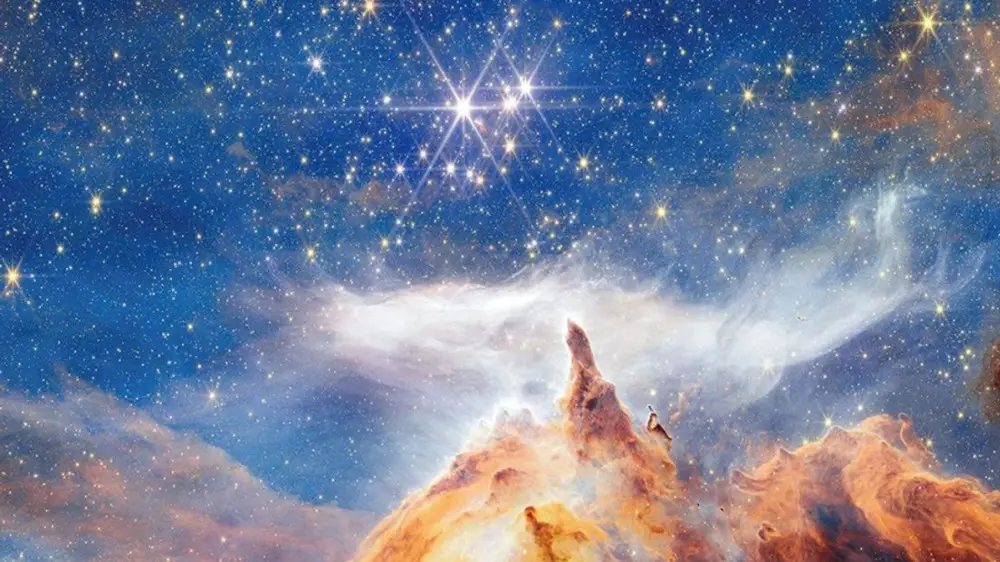
Tengrinews.kz – NASA has released a striking image from the James Webb Space Telescope showing thousands of newly formed stars, 24.kg reports.
The young star cluster, known as Pismis 24, lies about 5,500 light-years away (over 52 quadrillion kilometers) in the constellation Scorpius. The image reveals the Omega Nebula, a vast cloud of cosmic gas and dust where stars are actively forming — some nearly eight times hotter than the Sun.
What looks like a glowing mountain peak wrapped in wispy clouds is, in reality, a cosmic landscape of dust eroded by powerful winds and radiation from massive young stars.
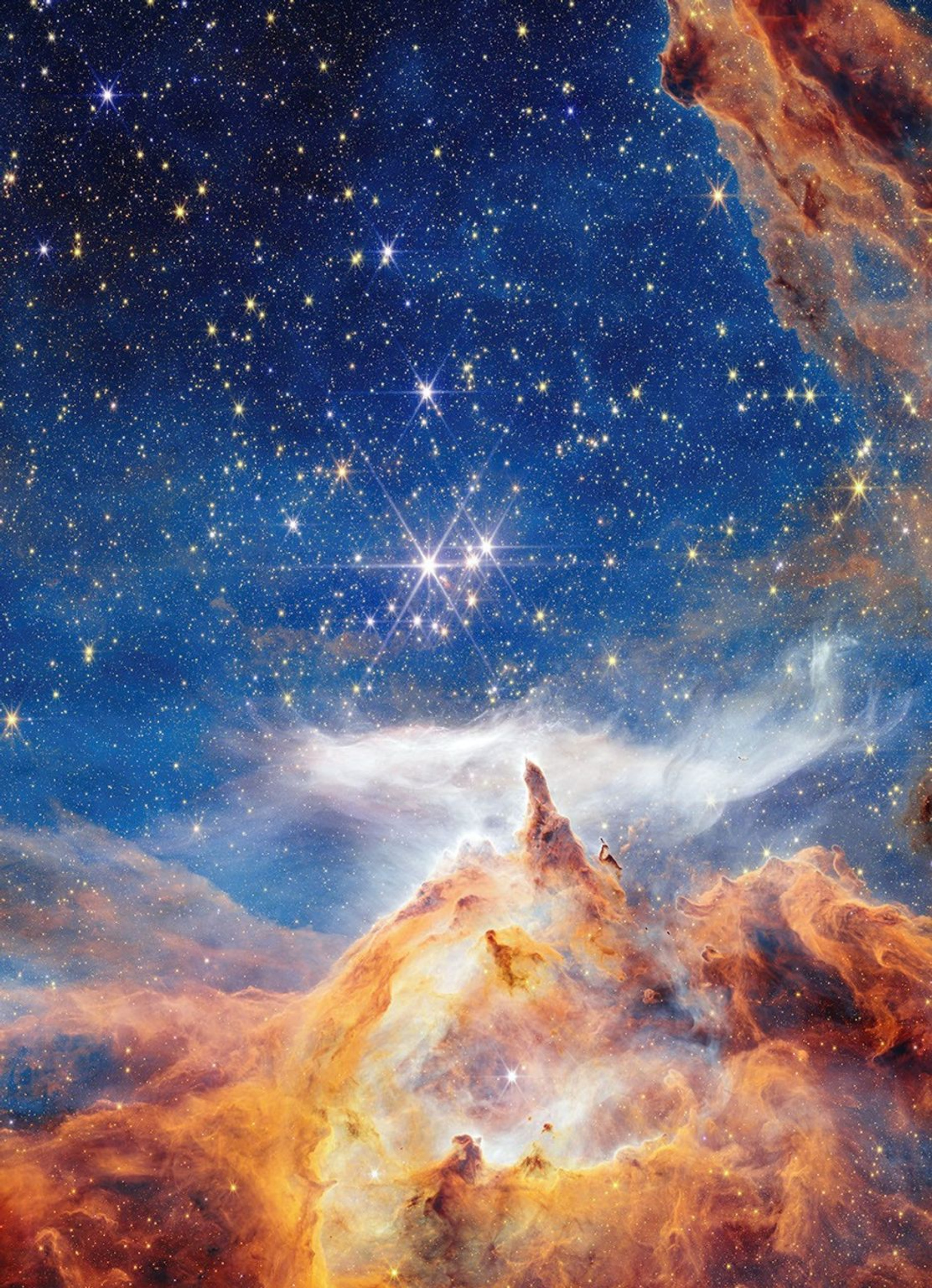
At the center of the cluster shines Pismis 24-1. Once believed to be the most massive star known, astronomers later discovered it is actually a system of at least two stars, though they cannot be distinguished in this photo.
In the image, colors represent different elements: blue indicates hot, ionized hydrogen; orange shows smoke-like dust; red marks colder, denser molecular hydrogen; black highlights the densest gas that emits no light; and white smudges depict dust and gas scattering starlight.
Launched in 2021, the James Webb telescope is a joint project of NASA, the European Space Agency, and the Canadian Space Agency. It is the largest space telescope ever built and operates from a vantage point 1.6 million kilometers from Earth.

