
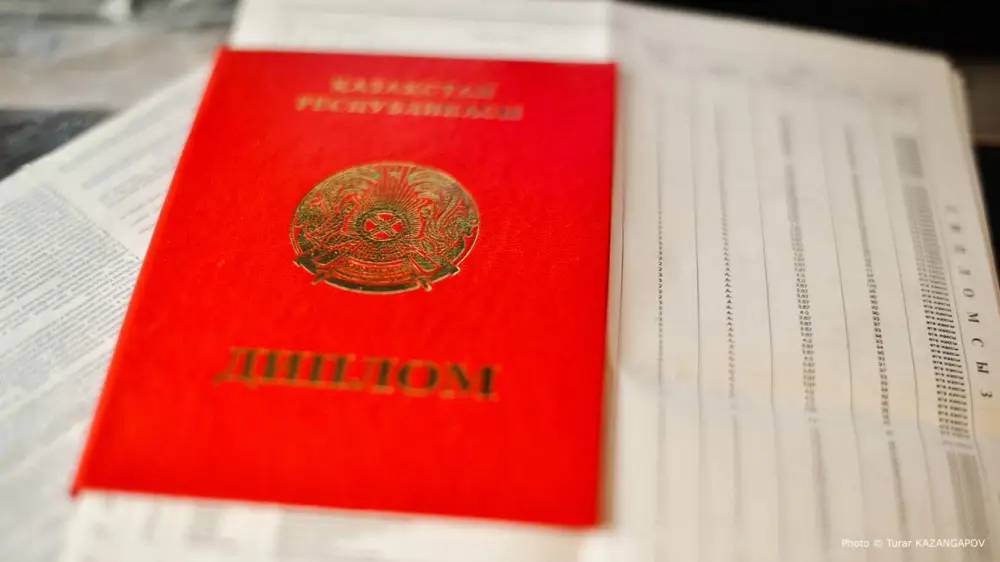
Tengrinews.kz – Kazakhstan’s Senate has approved a law that simplifies the recognition of higher education diplomas in countries of the Asia-Pacific region, a move expected to make it easier for graduates to continue their studies and find employment abroad.
The legislation concerns the so-called Tokyo Convention, signed on November 26, 2011. The convention establishes common approaches to assessing and recognizing higher education qualifications across Asia-Pacific countries.
Ratifying the convention will allow Kazakhstan to join the Asia-Pacific network of national information centers for the recognition of qualifications. This is expected to streamline diploma recognition procedures, boost confidence in Kazakhstan’s higher education system and open new markets for exporting educational services offered by domestic universities.
The move is also expected to increase student and professional mobility and deepen the integration of Kazakhstan’s and Central Asian education systems into the international academic space.
The Senate’s standing committees raised no objections or proposals regarding the law and recommended that it be approved.
What will change in practice
Following the Senate session, Vice Minister of Science and Higher Education Talgat Yeshenkulov explained that ratification does not mean automatic recognition of diplomas but significantly simplifies the process.
“Ratification does not provide automatic recognition. It simplifies the procedure by granting access to databases in these countries, which shortens all verification stages,” Yeshenkulov said.
He noted that graduates of foreign universities currently undergo a lengthy nostrification process, which involves requests to universities and ministries abroad, checks of licenses, accreditation and compliance with standards.
“After ratification, all these steps remain, but they become faster and easier because we gain direct access to official sources of information,” the vice minister added.
The convention is designed to create equal and more transparent conditions both for Kazakhstanis educated abroad and for foreign students who studied in Kazakhstan.
Which countries are covered
The Asia-Pacific region is a broad macro-region encompassing East, Southeast and South Asia, as well as Pacific Rim countries. In the context of the Tokyo Convention, this refers to states participating in the system of mutual recognition of higher education diplomas.
These include, among others: Japan, South Korea, China, Australia, New Zealand, Singapore, Malaysia, Indonesia, Thailand, Vietnam, the Philippines, India and Pakistan. Central Asian states, including Kazakhstan, also participate, further expanding regional integration in education.

