


 Қазақша
 Русский
 English

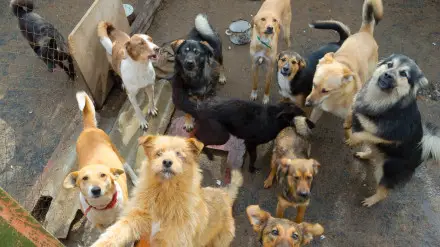
Tengrinews.kz — Kazakhstan is changing its rules on the treatment of stray animals: the Mazhilis is discussing amendments that would allow euthanasia and end free vaccination.
The Mazhilis is considering in first reading the draft law “On Amendments and Additions to the Law ‘On Responsible Treatment of Animals.’”
Deputy Edil Zhanbyrshin stated that the current system for regulating the number of stray animals has failed to produce the expected results.
“If 190,000 stray animals were caught in 2022, then as of January 1, 2026, the figure had already reached 276,000. We see not a decline, but growth. Therefore, the current model has not solved the task for which it was introduced,” Zhanbyrshin said.
He recalled that Kazakhstan had previously used a catch-neuter-vaccinate-return model, under which animals were captured, sterilized, vaccinated, and then returned to their former habitat.
“If the mechanism does not reduce the number of stray animals and does not decrease the number of attacks, then it is not working effectively enough,” the deputy emphasized.
According to him, international experience also demonstrates the limitations of this model.
“In countries where the state prioritizes public safety, the return of stray dogs to the urban environment is either not practiced or used only to a very limited extent,” he noted.
He cited Turkey as an example.
“For almost 20 years, Turkey used the return model. But the country faced a growth in numbers — today there are about 4 million stray dogs there. In 2024, Turkey was forced to abandon this model,” Zhanbyrshin said.
The deputy also referred to World Health Organization data.
“Around 36 percent of all rabies deaths worldwide occur in India. Up to 99 percent of transmission cases come from dogs. This is a crucial signal for lawmakers,” he stated.
In this regard, the draft law proposes revising the current approach.
“Today the state is acting according to an absurd scheme: dogs are caught, sterilized, vaccinated, and then returned to the same place. In other words, a source of potential danger is being returned to public space,” the deputy said.
According to him, the key amendment is a shift to non-return capture.
“It is proposed to move to a more realistic and responsible mechanism for regulating the number of stray dogs,” Zhanbyrshin concluded.
As he stressed, the draft law is directed “not against animals, but against the legal chaos and irresponsibility” that led to the current situation.
What changes are being proposed
Transfer of animals to holding facilities
“It provides for the mandatory transfer of an animal to a temporary holding facility in order to eliminate the risk of it being abandoned back into its habitat,” Zhanbyrshin said.
Revision of state-funded vaccination
“It is proposed to remove the provisions on vaccinating stray animals at the expense of the state budget in order to ensure rational and efficient use of funds,” the deputy explained.
Population control through euthanasia
“It provides for regulating the number of stray and unattended animals through euthanasia in order to protect public health and safety,” he said.
Public oversight
“The draft law ensures access for public oversight entities to the grounds and premises of temporary holding facilities and shelters,” Zhanbyrshin added.
Additional provisions
According to him, the amendments also clarify the powers of local executive bodies, introduce mandatory registration and microchipping of animals, and establish requirements for breeding and keeping them.
“The grounds for regulating the number of stray animals are being expanded and specified, including the use of euthanasia in cases provided for by law,” the deputy noted.
Context
Earlier, Kazakhstan had already proposed introducing a so-called timer for homeless animals — limited shelter holding periods: up to 5 days for stray animals and up to 60 days for pets. If animals are not taken in during that time, euthanasia would be allowed.
The Ministry of Ecology explained such measures by the ineffectiveness of the current CNVR system (catch, neuter, vaccinate, release): according to the ministry, animals continue to form packs and pose a threat to people.
The amendments also provide for mandatory microchipping of pets, tougher liability for animal cruelty, and regulation of breeding.
However, part of society opposes these changes. Animal rights advocates believe that such measures effectively legalize the mass destruction of animals and instead propose developing shelters, strengthening owner control, and implementing systemic prevention.
The law “On Responsible Treatment of Animals” was adopted in 2021, but according to experts and public activists, many of its provisions still do not function fully in practice.



 +7 (777) 001 44 99


