
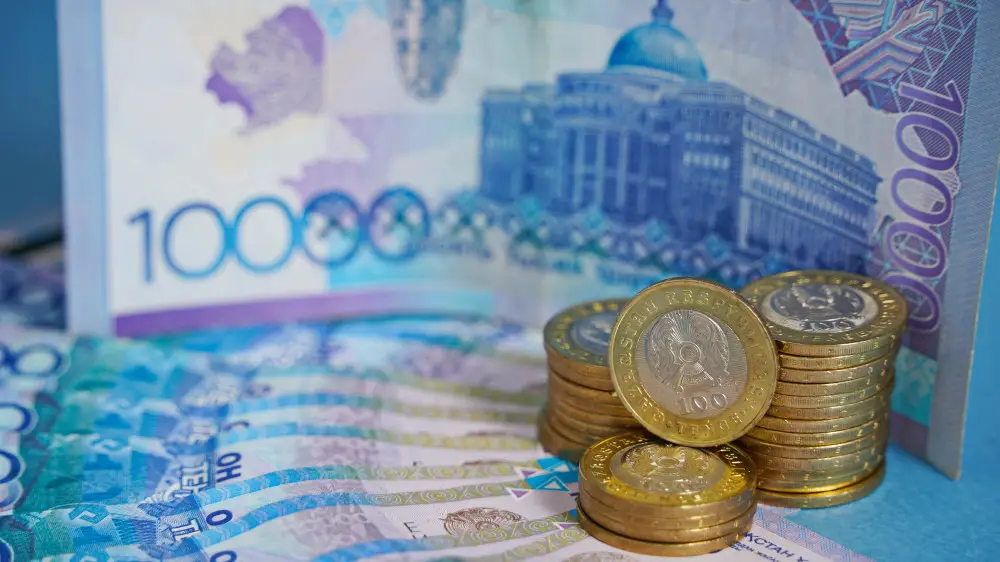
Tengrinews.kz – President Kassym-Jomart Tokayev has signed the law on the national budget for 2026–2028, citing Akorda.
The President also signed the law on the volumes of general transfers between the national and regional budgets, as well as the budgets of cities with national significance, including the capital, for 2026–2028.
At the end of November, the Parliament approved the national budget law for 2026–2028. The document establishes key social parameters such as the monthly calculation index (MCI), minimum wage, and the subsistence minimum. These parameters determine pension amounts, benefits, fines, and many other payments.
Key indicators for 2026:
- MCI – 4,325 tenge (up from 3,932 tenge in 2025)
- Minimum wage – 85,000 tenge (no change)
- Minimum pension – 69,049 tenge (62,771 tenge in 2025)
- Minimum state basic pension payment – 35,596 tenge (32,360 tenge in 2025)
- Subsistence minimum – 50,851 tenge (46,228 tenge in 2025)
Income and expenses of the budget
According to the document, government spending will increase by about 1 trillion tenge annually. The expected budget breakdown is as follows:
- 2026 – 27.7 trillion tenge
- 2027 – 28.7 trillion tenge
- 2028 – 29.7 trillion tenge
Meanwhile, the country’s revenues (excluding transfers) will fall short of expenditures:
- 2026 – 19.2 trillion tenge
- 2027 – 21.2 trillion tenge
- 2028 – 23.2 trillion tenge
This means the budget will have a deficit each year, with expenses exceeding revenues by several trillion tenge. The gap will be covered through transfers and other sources.
The guaranteed transfer from the National Fund for 2026–2028 will remain at 2.7 trillion tenge annually.
How the budget is formed
The main source of government income is taxes paid by citizens, businesses, and companies. For example:
- taxes are deducted from your salary;
- VAT is included in the price of goods;
- businesses pay corporate taxes;
- taxes and fees are charged when buying or selling a car or apartment.
In total, about 80% of the budget’s income comes from tax revenues. This money goes into the "general fund," from which the government finances pensions, benefits, education, healthcare, salaries of public sector workers, and other needs.

