
Tengrinews.kz – The National Bank of Kazakhstan has released an update on the situation in the foreign exchange market.
Strengthening to 500 tenge per dollar driven by rising investment
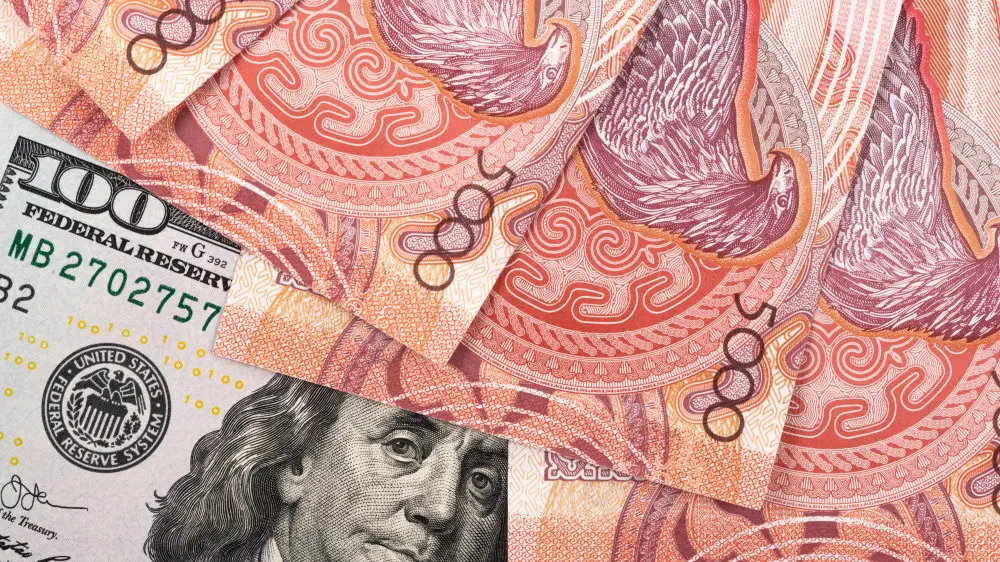
According to the regulator, the tenge has strengthened by roughly 9 percent since October, with the exchange rate reaching the 499–500 tenge per dollar range. This dynamic reflects a combination of favorable global conditions and consistent macroeconomic policy.
The National Bank notes that global oil prices have remained steadily above $60 per barrel. At the same time, the US Federal Reserve’s ongoing rate-cutting cycle has weakened the global dollar index by 8.3 percent, which in turn boosted emerging-market currencies by the same margin since the beginning of the year.
Against this backdrop, international investor interest in emerging-market assets — including Kazakhstan’s — has grown significantly.
The regulator highlights that the key driver of the tenge’s appreciation has been the coordinated policy of the government and the National Bank aimed at reducing inflation and improving macroeconomic predictability.
Stabilization program and National Bank measures
The Government, the National Bank and the Agency for Regulation and Development of the Financial Market are implementing a Joint Action Program for 2026–2028. The program focuses on addressing supply-and-demand imbalances, improving the efficiency of budget expenditures, enhancing micro- and macroprudential regulation, and increasing real household incomes.
The National Bank stresses that a moderately tight monetary policy has strengthened market confidence. Revised inflation expectations and the rise in real yields on tenge-denominated instruments have increased their attractiveness, including for foreign investors.
Billions flow into Kazakhstan: record demand for government securities
From early October to late November, non-resident portfolio investments in government securities increased by $1.1 billion, bringing total holdings to a record $3.6 billion. Since the beginning of the year, the growth has reached $1.5 billion.
This surge in demand helped reduce borrowing costs on the long end of the yield curve by more than one percentage point. In December, 9-year government bonds were placed at 16.1 percent, compared to 17.2 percent in October.
Additional foreign-currency supply from non-resident investors became a direct factor supporting the tenge. A positive external environment further contributed to market dynamics.
Strengthening market infrastructure
The National Bank points to systematic efforts to improve the government securities market infrastructure — greater transparency, a more structured yield curve, and easier access conditions for non-residents — all of which have supported foreign investor demand.
The regulator emphasizes that a stronger tenge helps curb inflation. Given the large share of imported goods in the consumer basket, the exchange rate reduces the pass-through of external price pressures to the domestic market.
“Thus, the current exchange-rate dynamics reflect an improvement in the quality of economic policy and the formation of a more predictable macroeconomic environment (coordination of monetary and fiscal policies). This has resulted in a positive assessment of Kazakhstan by global investors and a strong inflow of portfolio investments into the country,” the statement said.
The National Bank continues to monitor the foreign exchange market closely. At present, it does not observe speculative activity and sees no factors requiring intervention.
On 28 November, the National Bank kept the base rate unchanged at 18 percent, after which the dollar sharply declined in trading.

