
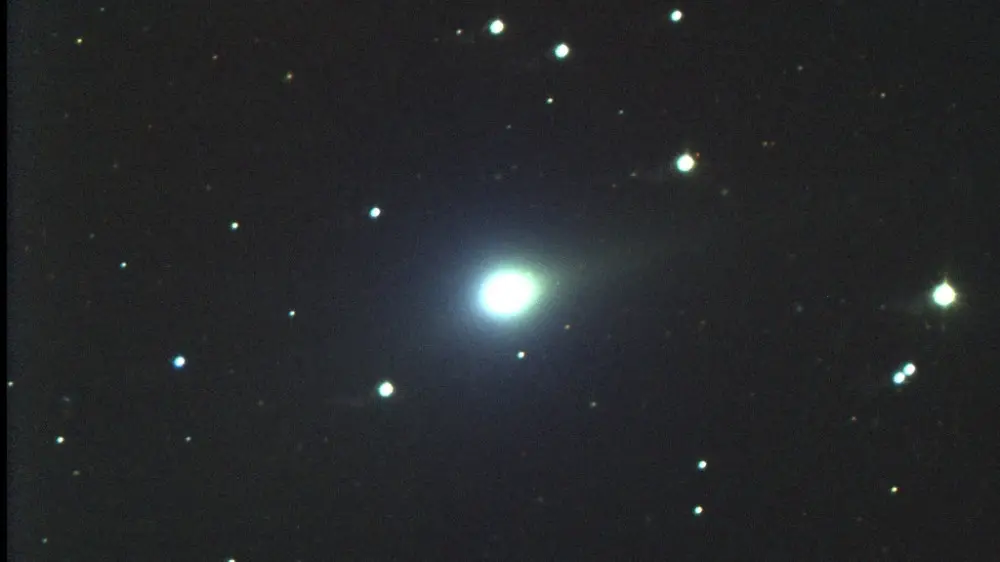
Tengrinews.kz – It has become known that Kazakh scientists managed to capture images of the well-known comet 3I/ATLAS.
The images
Senior researcher at the Fesenkov Astrophysical Institute, Maksim Krugov, shared the details. He noted that Kazakh scientists became interested in the comet back in July, immediately after its discovery. The comet was designated 3I/ATLAS — where “3I” means it is the third confirmed interstellar object to pass through the Solar System.
Scientists were able to detect it thanks to a successful combination of factors: high-quality detection algorithms, the location of the observatory in Chile, and the winter season with long nights. Later, when archival observations were examined, it was found that the earliest images date back to June 14, even though the official discovery was recorded in early July.
“The comet was discovered at an observatory in Chile, where our Kazakh telescope is also located. About thirty meters away is the ATLAS telescope — a very powerful project that combines a good wide-field instrument (about 50 cm) with strong computing infrastructure and advanced data-processing algorithms. It was ATLAS that detected many new objects,” he explained.
 Photo: Kazakh telescope in Chile/Grigory Bedenko
According to Maksim Krugov, the image shown below was taken on November 29. The scientists observed the comet from 3 a.m. until dawn.
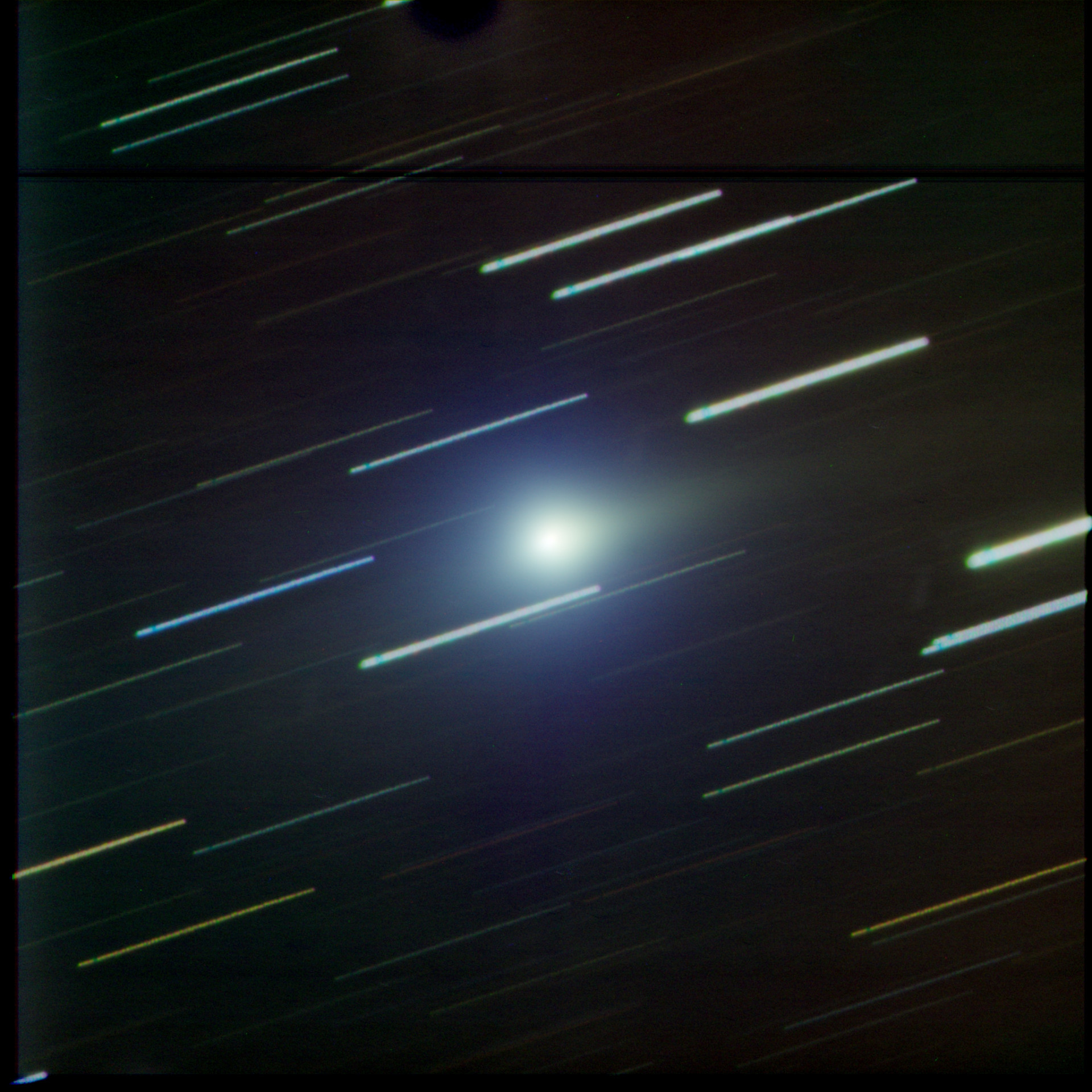 Image of comet 3I/Atlas obtained by Kazakh astrophysicists
Kazakh researchers attempted to capture the comet back in July, but clear images were obtained only recently.
“This is one of the latest frames, because its brightness is now increasing. The first images we took in the summer were quite modest — they showed a barely visible blurry object against the background of stars. The Astrophysical Institute participates in an international planetary-defense monitoring program, so we continue observations together with other observatories. Right now we are observing it from the Assy-Turgen observatory — the altitude and atmospheric conditions there allow us to obtain high-quality spectral data,” Krugov said.
He added that the comet “glows green.”
“In the images, you can see its characteristic green glow — it appears due to the excitation of diatomic carbon molecules. Many telescopes, including orbital ones, are now studying this comet. This is needed to gather statistics because, unlike the first interstellar objects, this third one was caught on its way into the Solar System. And again, this is thanks to ATLAS, which managed to spot an uncatalogued object in the right field and determine its trajectory. It was added to the monitoring list, and continuous observations are now underway,” Krugov said.
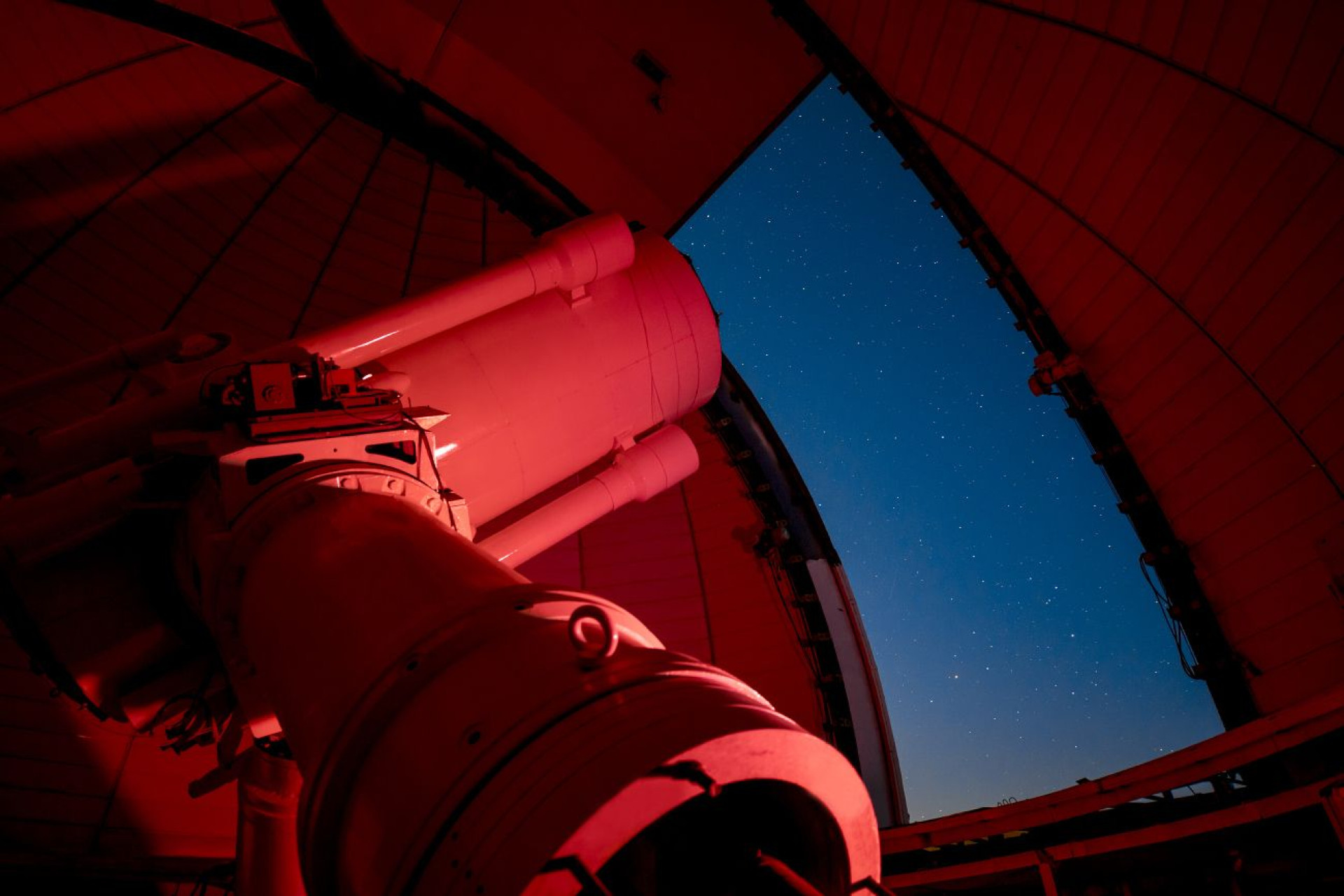 Assy-Turgen Observatory. Photo by Grigory Bedenko
The scientist also recalled the first Kazakh images of the comet.
“We have a one-meter telescope there, and all we could see was an ordinary ‘star’ with a barely noticeable blurry halo. And even that could only be called a comet with a big stretch — visually, it was almost indistinguishable from a star. Only now, as the object has come closer — it will approach Earth around December 16–17 — we have begun to see details in the images, and the tail is now distinguishable. It’s interesting to watch how it will change: the tail, the anti-tail — all these features are now clearly visible and of scientific interest,” added Maksim Krugov.
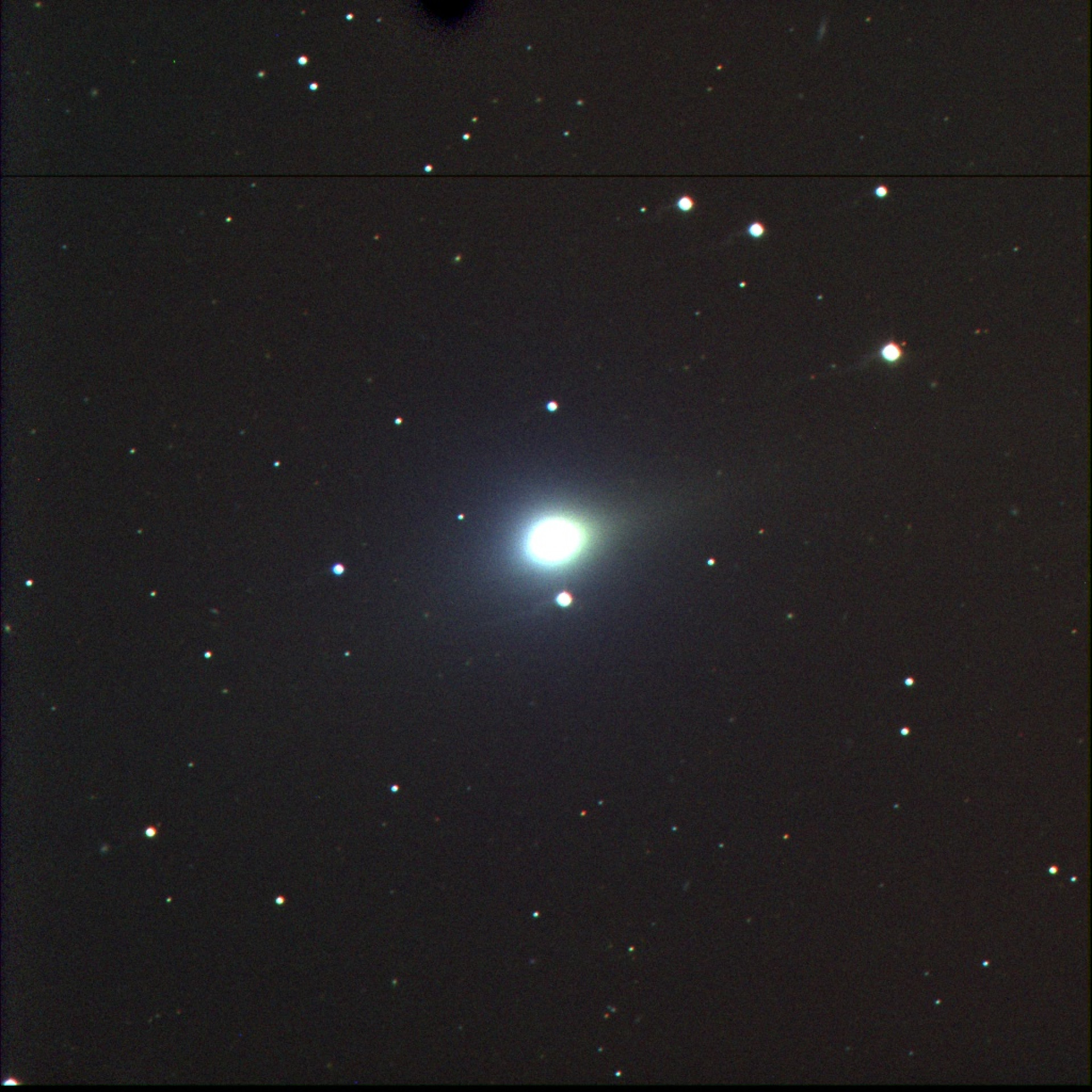 Image of a comet obtained by Kazakh astrophysicists
Comet data
According to preliminary measurements taken when the comet was near the Sun, an unusually high level of carbon dioxide was detected — about eight times higher than in typical comets of the Solar System, the researcher said.
“Thanks to such observations, we can develop theories about how planetary systems form. The more data of this kind we collect, the more accurate the statistics become, and the better we understand the structure of our galaxy and the cosmos as a whole. With advancing technologies — especially CMOS sensors with electronic amplification — it is expected that such objects will be discovered more often,” said Maksim Krugov.
The scientist added that research on 3I/ATLAS is ongoing and will continue at least until March.
“It’s too early to draw final conclusions — observation data is still being accumulated. According to preliminary estimates, its age may be between 7 and 14 billion years, meaning it formed long before our Solar System — likely in a long-disrupted planetary system,” said Krugov.
The “alien spacecraft” nickname
The scientist emphasized that 3I/ATLAS is definitely a comet.
“These conversations that the comet ‘shifts here, shifts there under the influence of gravity’… One must understand that sometimes scientists fall victim to their own fantasies. And frankly, I do not agree with the wording that is now actively being promoted — about some sort of alien origin. Of course not. It is an ordinary comet. And NASA has already released a statement saying: yes, the comet is unusual, it has its own features, but it cannot be ‘ordinary’ in the familiar sense, because it came from beyond the Solar System,” he added.
When asked whether they plan to submit the image to scientific journals, Maksim Krugov replied that they do not — “scientists don’t need such photos.” He took this image specifically so that the media would have material to publish.
It should be noted that at the end of November it was reported that the brightness of 3I/ATLAS, often called an “alien spacecraft,” had decreased by more than one-third within just a few days. Scientists believe the main reason is the comet’s increasing distance from the Sun, although internal changes in its composition are also possible.

