


 Қазақша
 Русский
 English

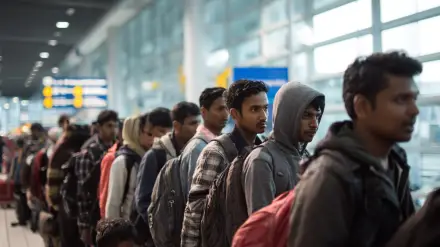
Tengrinews.kz – Kazakhstan is tightening its student visa regulations, and the reasons behind this decision were explained by Minister of Science and Higher Education Sayasat Nurbek.
"An equivalent to the U.S. visa system"
Kazakhstan is introducing stricter rules for issuing student visas in order to reduce corruption and prevent the entry of migrants posing as students. According to the minister, it is currently difficult to obtain student visas for Europe or the United States — and Kazakhstan is now developing a similar system.
“There, students undergo a full background check. We are now developing and integrating a similar system, and we will be monitoring very strictly,” said Sayasat Nurbek.
What prompted this move
The decision to change the rules came after observing cases in other countries where overly lenient visa policies led to mass issuance of student visas to foreigners seeking employment or relocation.
“There was an unfortunate situation in several countries where a very liberal visa regime was implemented. A large number of citizens from Bangladesh arrived not to study but to work. Or from Afghanistan, aiming to use the country as a transit point to Europe. Therefore, we are now working with the Ministry of Foreign Affairs, Ministry of Internal Affairs, and National Security Committee to create a visa regime that is both convenient and secure,” the minister explained.
Sayasat Nurbek emphasized that if Kazakhstan's student visa remains too easy to obtain, the country may also start seeing labor migrants and unauthorized immigrants posing as students.
What will change in student visas
1. "Super visa" for students
Currently, student visas are issued for only one year, requiring students to renew them annually.
According to the minister, this creates significant corruption risks:“Foreign students start running around, negotiating, looking for intermediaries or ‘helpers,’” he said.
Now, the plan is to issue the visa for the entire duration of study — but only after a background check, including identity verification, validation of personal information, and authenticity of documents.
2. The process will be digitalized
All visa procedures will move online. Kazakhstan is adopting the experience of Dubai, where a "student super visa" system is already functioning fully digitally, the minister explained.
According to Sayasat Nurbek, universities will be given quotas and will be able to admit students directly.
After being admitted, a student will receive an official invitation to apply for a visa.
3. Integration of databases
A unified migration database is being created, consolidating all necessary data. It will combine the systems of the Ministry of Education, Ministry of Internal Affairs, Ministry of Foreign Affairs, National Security Committee, and other state bodies.
Universities will be directly connected to this system.
“It will be a very clear model. We’ll know exactly which foreign citizen received an invitation from our university, we’ll verify their identity, and perform a background check,” the minister explained.
Who can expect a residence permit
If a foreign student is talented and “needed by the country,” they will be eligible for a residence permit (residency), Sayasat Nurbek said.
“It’s very important for us that talented students in Kazakhstan can start their own business or launch a startup. And for such strong, talented individuals, we can filter and allow them to stay,” he concluded.
Context
Earlier, we reported that at one of the universities in Kazakhstan, staff members had issued fake invitations for foreign students in order to legalize their presence in the country. To carry out the scheme, the suspects signed a formal contract with an entrepreneur to attract foreign students and faked the educational process.
On June 2, under the chairmanship of President Kassym-Jomart Tokayev, a regular meeting of the Security Council was held, where key trends in internal and external migration were discussed. The President emphasized the need to ensure control to prevent illegal migration as well as to stimulate the growth of the country's human capital.



 +7 (777) 001 44 99


