


 Қазақша
 Русский
 English

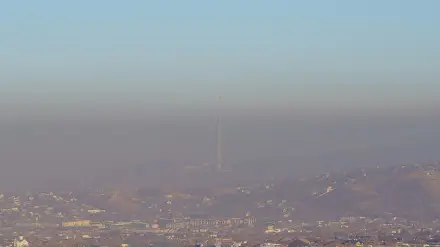
Tengrinews.kz – Tengrinews asked Prime Minister Olzhas Bektenov whether schoolchildren in Kazakhstan could be moved to remote learning when smog levels become dangerous.
The question followed a parliamentary request from Senator Olga Bulavkina, who warned that air pollution remains one of the country’s major health risks. She cited official statistics showing rising mortality from cardiovascular, respiratory and cancer-related diseases, and stressed that industrial cities such as Karaganda, Temirtau, Ust-Kamenogorsk, Atyrau, Aktobe, as well as Astana and Almaty, regularly face dense smog due to factory emissions and adverse weather conditions.
Bulavkina noted that current Education Ministry regulations do not clearly outline how schools should act during severe pollution episodes. She recalled that in October 2025, 66 schools in Ust-Kamenogorsk — serving 53,000 pupils — were moved online for several days because of persistent smog, yet no unified national guideline existed for such cases.
Prime minister’s response
In his official reply, Bektenov said air quality is monitored continuously in 70 settlements. In the first half of 2025, 298 high-pollution episodes were recorded, with field inspections confirming dangerous levels in nine cases. He added that monitoring reflects overall pollution levels but does not always identify the exact source, especially when several industrial facilities operate nearby.
Bektenov emphasized that remote learning is an officially recognized form of education and can be used in various situations, including adverse weather, emergencies, health-related restrictions and parental requests.
“During second- and third-degree adverse weather conditions, and when pollutant concentrations exceed permissible limits by more than three times, local authorities have the right to transfer students to online learning to protect their health,” he said.
Key takeaway
Under the prime minister’s clarification, akimats may switch schools to remote learning when smog reaches second or third severity level and pollution exceeds safety limits by more than three times.



 +7 (777) 001 44 99


