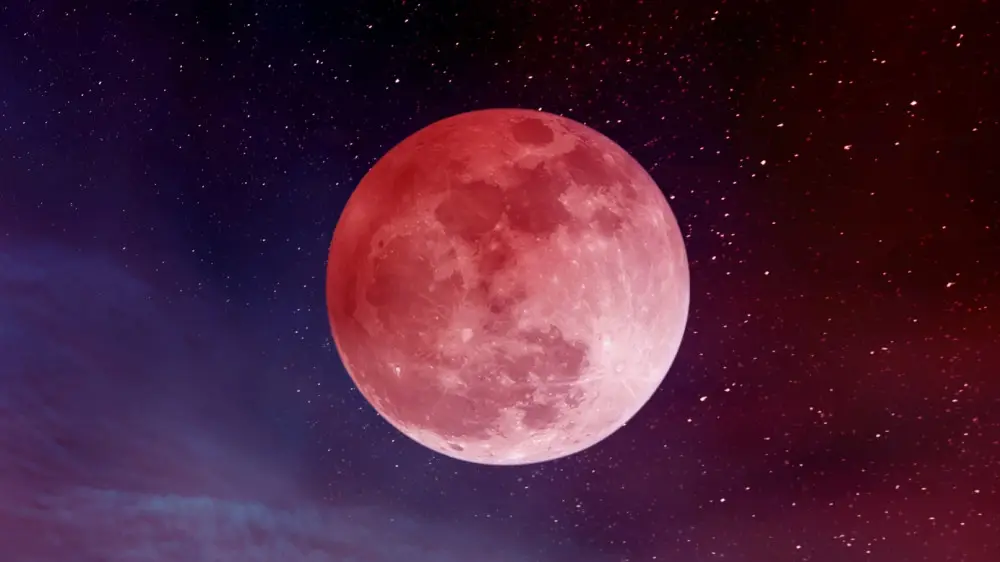
Tengrinews.kz — On the night of June 29-30, residents of Kazakhstan will be able to witness a beautiful astronomical phenomenon: the first full moon of summer, popularly known as the Strawberry Moon. This year, the event coincides with a so-called micromoon, and the Moon itself will appear unusual due to its low position above the horizon. Tengrinews.kz gathered all the details: the exact time for Kazakhstan, the unique features of this full moon, and tips on where to look so you don’t miss a thing.
Exact Timing and Key Features
According to data from the starwalk.space, the full moon will peak on June 30, 2026, at 04:57 Astana time.
This year's June full moon has several distinctive characteristics. Experts note that it will be the first since the summer solstice, meaning that in the Northern Hemisphere, the Moon will sit low on the horizon. Because of this, it may appear larger than usual during moonrise and take on a golden or orange hue. This effect is not due to a change in the Moon's actual color, but rather the way its light passes through the atmosphere.
Furthermore, this Strawberry Moon will be a micromoon. The full moon will occur near its apogee—the point in the lunar orbit farthest from Earth. As a result, the visible size of the lunar disk will be slightly smaller than usual.
During the full moon, Earth's satellite will be located in the constellation Sagittarius.
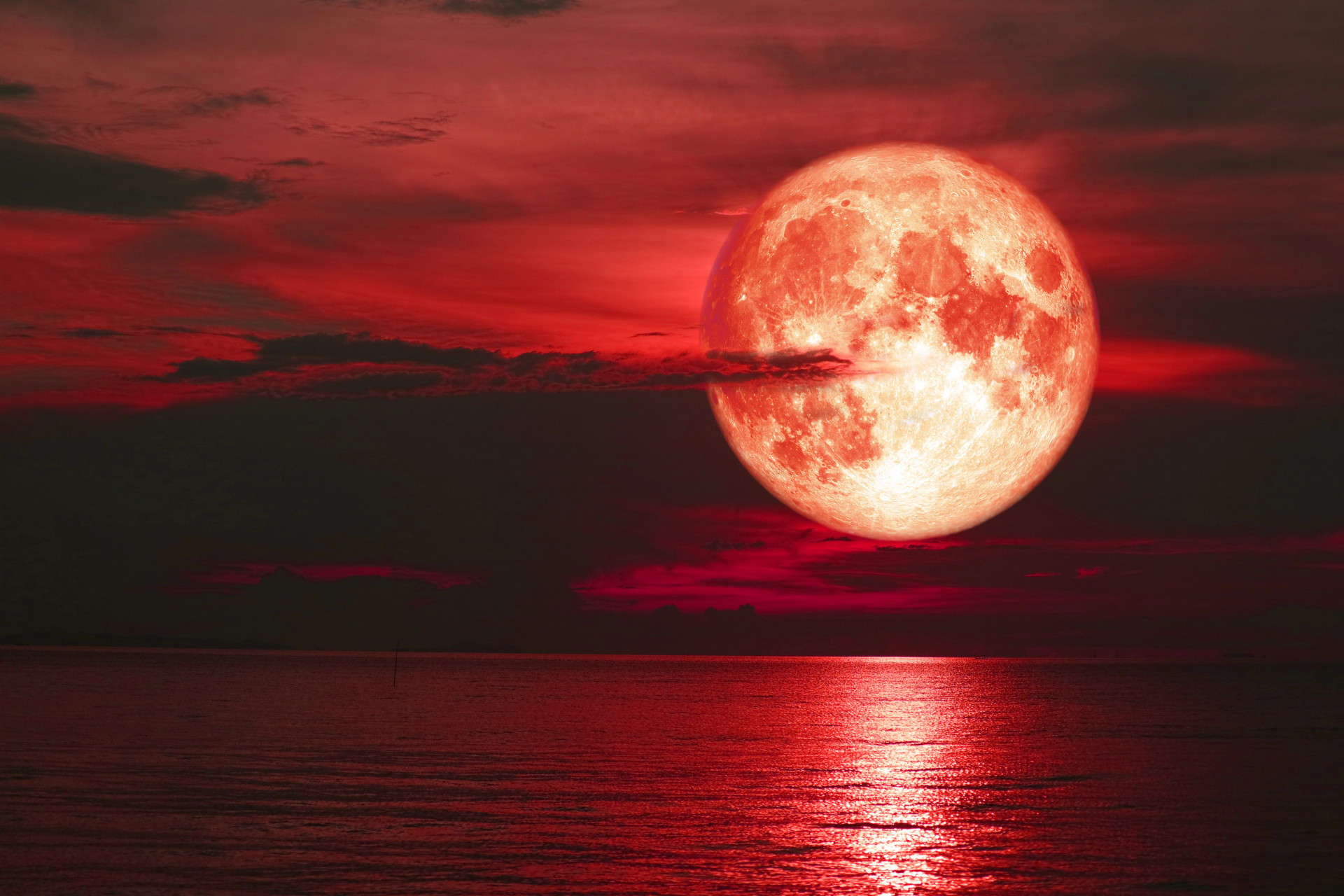 Photo: depositphotos.com
How and Where to Watch in Kazakhstan
For residents of Kazakhstan (including Astana), the optimal time to start observations is on the eve of the peak—June 29, starting around 21:00. The Moon will appear in the sky and move leisurely across the southern part throughout the night.
Artur Gaiduk, founder of the Astro Astana project, noted that successful observations do not necessarily require traveling far outside the city.
"The Moon will be visible even from within the city; the main thing is to choose a spot with an unobstructed southern sky so that buildings do not block the view," he noted.he said.
It is best to plan your viewing closer to moonrise and local sunset: it is during these minutes that its color will be most intense.
Astronomers advise those wishing to observe this rare full moon to choose locations with a clear view to the south. No special equipment is required—provided the weather is clear, the Strawberry Moon will be perfectly visible to the naked eye from anywhere, including urban residential areas.
Why is it called the "Strawberry Moon"?
The name of the phenomenon has nothing to do with the actual color of the satellite—the Moon will not turn pink or red.
"The name 'Strawberry Moon' is a folk designation associated with the strawberry harvesting season in June," explained Artur Gaiduk.
According to data from the Almanac, the tradition took root thanks to Native American tribes (specifically the Ojibwe people) in northeastern North America, where wild berries ripened during this period. Other cultures have their own names for this full moon. For instance, the Canadian Cree call it the "Egg Laying Moon" due to the behavior of waterfowl.
In Europe, it became known as the "Honey Moon" or "Mead Moon," as the first honey was traditionally harvested in late June. In China, this lunar month is called the "Month of the Sweet Sedge" (Púyuè), while in India, the Kabir Jayanti festival is celebrated. Meanwhile, in the Southern Hemisphere, where winter is at its peak, the Maori describe this period as a time when "man becomes extremely cold and lights fires."
 Photo: depositphotos.com
Why is the June Moon so low?
The unique aspect of the June full moon lies in its position in the sky. As the first full moon after the June solstice, the Moon follows a relatively low trajectory in the Northern Hemisphere.
Because of this, it creates the impression during moonrise that the lunar disk has grown larger, and its shade can vary from golden to orange or reddish. However, the Moon itself does not turn pink—this is a common misconception unrelated to the origin of the name.
Will the Moon actually be strawberry-colored?
No. Despite the romantic name, the Strawberry Moon typically remains its usual white color. However, its low position above the horizon and atmospheric conditions can lend it warm tones—golden, amber, or orange.
View this post on Instagram
What else can be seen in the sky these days
The Strawberry Moon will not be the only object observable in the night sky.
According to data from the Space, the Summer Triangle—consisting of three bright stars: Vega, Deneb, and Altair—will be clearly visible in the east.
After sunset, Mars will appear in the southwestern part of the sky, with Regulus distinguishable nearby. In the second half of the night, Saturn will rise above the horizon, and closer to dawn, Venus will emerge as one of the brightest objects in the morning sky.
In addition, the Big Dipper will be visible high in the northern sky, and its handle makes it easy to locate the brilliant star Arcturus.