


 Қазақша
 Русский
 English

ПОДЕЛИТЬСЯ
- Main
- Yesterday 18:29
Launch of a unified QR code – National Bank responded to criticism regarding commissions
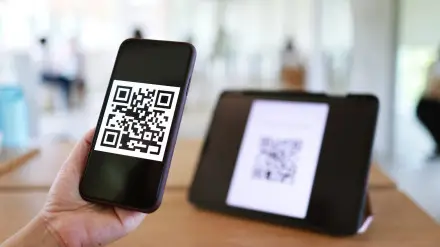 Photo:depositphotos.com
Tengrinews.kz — The National Bank has responded to criticism regarding fees associated with the unified interbank QR code system. The regulator's press service issued an official statement.
The new system was launched in Kazakhstan on July 19. It allows customers to pay for purchases through their own bank's app, even if the merchant's terminal belongs to a different bank.
Such payments are free for customers, as the merchant pays the commission. However, as the National Bank emphasized, by law the fee cannot exceed the commission charged for a similar payment made via bank card.
"Thus, merchants' expenses when accepting payments through the unified QR are guaranteed not to exceed the cost of a similar transaction using a card from any other bank," the National Bank stated.
Where the commission goes
If the buyer and the seller are serviced by the same bank, the tariff is set by the bank itself.
For payments between different banks, the commission is distributed as follows:
- The customer's bank receives 1 percent. This is the interbank commission, or interchange fee. The bank may return part of these funds to customers in the form of cashback and bonuses;
- The remaining portion goes to the merchant's bank for accepting and processing the cashless payment.
From the funds received, banks also settle accounts with the National Payment Corporation, which provides technical maintenance for the system. Its tariff is 0.05 percent of the unified QR payment.
The National Payment Corporation does not charge a commission for interbank transfers via phone number.
Will the National Bank reduce tariffs
The National Bank noted that commercial banks independently set commissions for merchants, taking into account the costs of terminals, infrastructure, and payment processing.
However, the regulator stated that it monitors the banks' tariff policies and will seek ways to reduce the burden on businesses if necessary.
The National Bank recalled that over the past two years, interbank commissions for card payments have already been reduced by approximately half:
- for mass-market cards — from 1.8–2% to 1%;
- for premium cards — from 2.4% to 1.2%;
- for super-premium cards — from 2.45% to 1.4%.
Is it possible to opt out of the unified QR
The National Bank emphasized that the unified QR is not a mandatory method of payment acceptance.
Merchants can continue to accept cash, bank cards, and payments via QR codes from individual banks, or consolidate interbank payments into a single terminal.
"The introduction of the unified QR does not restrict conventional payment options; rather, it expands them, giving businesses and customers freedom of choice," the National Bank reported.
In the future, the new system is planned to facilitate B2B settlements, payments to the state, request-to-pay services, and international transfers.
According to National Bank data, approximately 1 million transactions.
Why the dispute arose
Following the launch of the unified QR, a petition appeared on the GosRating platform, whose authors claimed that commissions for interbank payments could reach 1.5 percent and create an additional burden on small businesses.
The initiators proposed capping the total commission at 0.5 percent. They also demanded stricter oversight of microfinance organizations.
The Agency for Regulation and Development of the Financial Market responded that it does not set commissions for interbank acquiring nor does it regulate the operation of the unified QR. These matters fall under the jurisdiction of the National Bank.
Editorial Question
What’s your take on this news?
Comments are moderated by the editorial team
Show comments


 +7 (777) 001 44 99


