
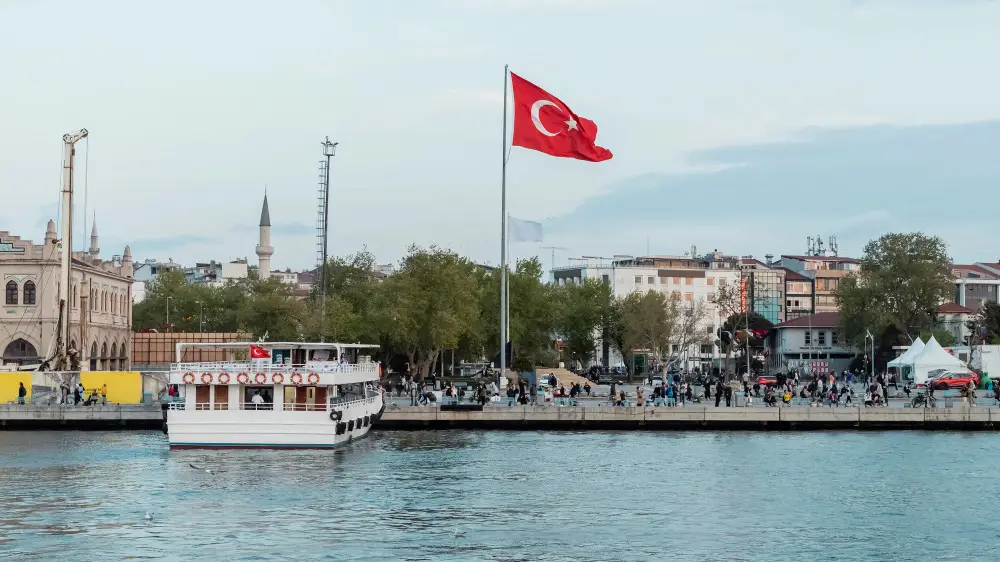
Tengrinews.kz – Turkish President Recep Tayyip Erdogan has signed a decree changing the employment rules for Turkic-speaking foreigners. According to the new regulation, it will now be the president himself who decides which Turkic peoples are allowed to work legally in Turkey without obtaining a special work permit.
The news quickly went viral in Kazakhstan, with social media users suggesting that all people of Turkic origin would now be able to work freely in Turkey. However, as experts point out, the situation is far more complex.
Journalist Zhamilya Abenova, who has lived in Istanbul for five years, helped clarify the new law.
Who can actually work?
Abenova explained that the decree does not clearly define who qualifies as a “foreigner of Turkic origin”. However, a close reading suggests that citizens of Turkic-speaking countries such as Kazakhstan, Kyrgyzstan, Uzbekistan, Turkmenistan, and Azerbaijan are unlikely to benefit from the exemption.
The document lists ten criteria that a foreigner must meet, including:
- Having a valid residence permit in Turkey (which is now harder to obtain);
- Holding recognized qualifications, such as diplomas and certificates acknowledged as equivalent in Turkey.
The two final conditions are the most restrictive:
- The person must prove that they cannot find employment in their home country for reasons beyond their control or are forced to remain in Turkey;
- They must have an ethnic or cultural identity different from the majority in their country of citizenship.
“How can a Kazakh citizen prove that they are ethnically different from the majority and can’t find a job at home?” Abenova asked rhetorically.
According to her, the law primarily targets Turkic minorities without their own sovereign state, such as Meskhetian Turks, Uyghurs, and Crimean Tatars — groups that have already been granted long-term residency, simplified citizenship, and now, potentially, unrestricted work rights.
“There is work — but not for everyone”
Abenova, who lives in Istanbul under a residence permit obtained through property ownership, said this type of visa does not allow legal employment, so she works remotely.
“I can’t work in Turkey without a work permit. I run a company registered in Almaty and collaborate with Turkish universities, helping Kazakh students with admissions and consulting on education, healthcare, and living in Turkey,” she explained.
She also believes rumors about a lack of jobs and declining living standards in Turkey are exaggerated.
“I know many Kazakhs and Russians who have been working here legally for years. Istanbul is an international business hub — professionals with skills and languages are always in demand. But Turkey doesn’t plan to accept everyone,” Abenova said.
According to her, rising inflation has led many qualified Turkish specialists — doctors, engineers, and others — to seek opportunities in Europe and the U.S., where Turkish education and diplomas are highly valued.
“The labor market here is flexible and open to the best — but not to everyone,” she added.
Salaries and cost of living
Abenova noted that salaries in Turkey are regularly adjusted for inflation. Average monthly wages currently stand at about:
- Teachers – from $1,300 (≈695,000 tenge)
- Police officers – $1,600 (≈855,000 tenge)
- Nurses – $1,400 (≈748,000 tenge)
- Doctors in public hospitals – $1,720 (≈919,000 tenge)
- Jobs for unskilled workers are also available, with a minimum wage of about 26,000 lira (≈340,000 tenge).
“It used to be very cheap in Turkey, but now it’s like everywhere else,” Abenova said.
Further details on the changes introduced by Erdogan’s decree are available here.

