


 Қазақша
 Русский
 English

ПОДЕЛИТЬСЯ
- Main
- 26 June 2026 17:28
Queues of up to six hours - airports warned of problems due to new EU rules
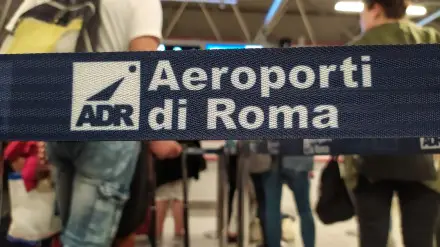 Photo:depositphotos.com/ info.cineberg.com
Tengrinews.kz — Rome's airports have warned of a high probability of major disruptions during the peak summer tourist season unless new European Union entry rules are temporarily relaxed. The warnings concern the Entry/Exit System (EES), which mandates biometric registration for non-EU citizens.
Marco Troncone, CEO of Aeroporti di Roma, which operates Fiumicino and Ciampino airports, stated that some biometric checks must be temporarily waived to prevent massive queues.
"I would rate the risk level at eight or nine out of ten," Troncone noted.
According to him, the current registration procedure is incompatible with the passenger traffic expected during the summer months.
"The only way out is to open the valve," he said, explaining that it is simply impossible to complete all necessary registrations given the sheer volume of passengers.
The system is operational, but causing problems
The Entry/Exit System came into effect in mid-April after several launch delays. It requires non-EU citizens to provide fingerprints and have their photo taken upon their first entry into the Schengen Area. The system's primary goal is to strengthen the security of the EU's external borders.
However, shortly after the launch, operators began reporting technical glitches. Common issues include malfunctions at self-service kiosks and errors that force already registered passengers to undergo the entire procedure again.
Olivier Jankovec, Director General of the European airport association ACI Europe, criticized the performance of the automated system.
"Automated systems are not working as they should," he emphasized.
Other airports share these concerns
The issue is not limited to Italy. The International Air Transport Association (IATA) has warned that wait times at the busiest airports could reach six hours.
Some countries have already begun seeking temporary solutions independently. Earlier this month, Greek airports allowed British citizens to pass through border control without EES procedures to reduce the burden on terminals.
Concerns are also rising outside the European Union. Executives at major international hubs, including London and Istanbul, are warning of a potential domino effect that could lead to flight delays across the entire aviation network.
Selahattin Bilgen, CEO of Istanbul Airport, confirmed that the new system is already creating difficulties for some passengers.
According to him, many Turkish citizens are facing significant hurdles when undergoing the European registration procedure for the first time.
The European Commission's response
The European Commission does not share the fears of a potential collapse, stating that the system is fully operational across all Schengen Area countries.
An EU Commission spokesperson noted that queues are primarily linked to pre-existing issues, such as border control staffing shortages, airport infrastructure limitations, and a high volume of simultaneous flight arrivals.
At the same time, Brussels pointed out that current regulations already include a flexibility mechanism. If there is a risk of disrupting the normal flow of passengers across the border, national authorities may temporarily suspend the collection of biometric data. The decision to use this option is made at the individual state level.
As a reminder, the Entry/Exit System (EES) became fully operational in Schengen Area countries on April 10. Data for foreign tourists will now be recorded in a centralized digital database, and traditional passport stamps will gradually become a thing of the past.
The system applies to all non-EU citizens. The new requirements will affect both travelers who need a Schengen visa and those entering Europe under visa-free regimes.
The primary goal of the reform is to digitize border control and reduce paper-based administrative processes.
Read also: Head of the European Commission shared good news for Kazakhstanis
Editorial Question
What’s your take on this news?
Comments are moderated by the editorial team
Show comments


 +7 (777) 001 44 99


