Tengrinews.kz — Global oil prices are rising by more than 5 percent amid escalating tensions in the Middle East.
Brent nears $97 per barrel
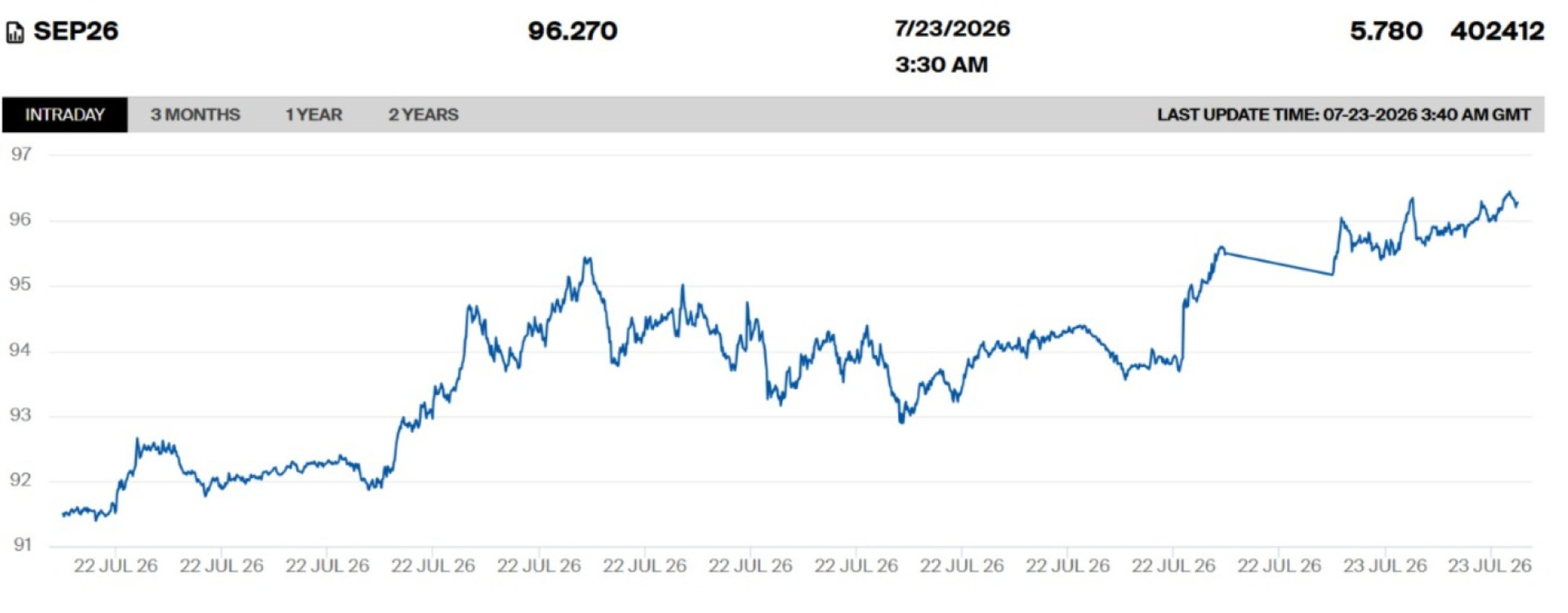
As of 8:30 a.m. Astana time, the price of September Brent crude futures on London’s ICE exchange rose by 5.78 percent to $96.27 per barrel.
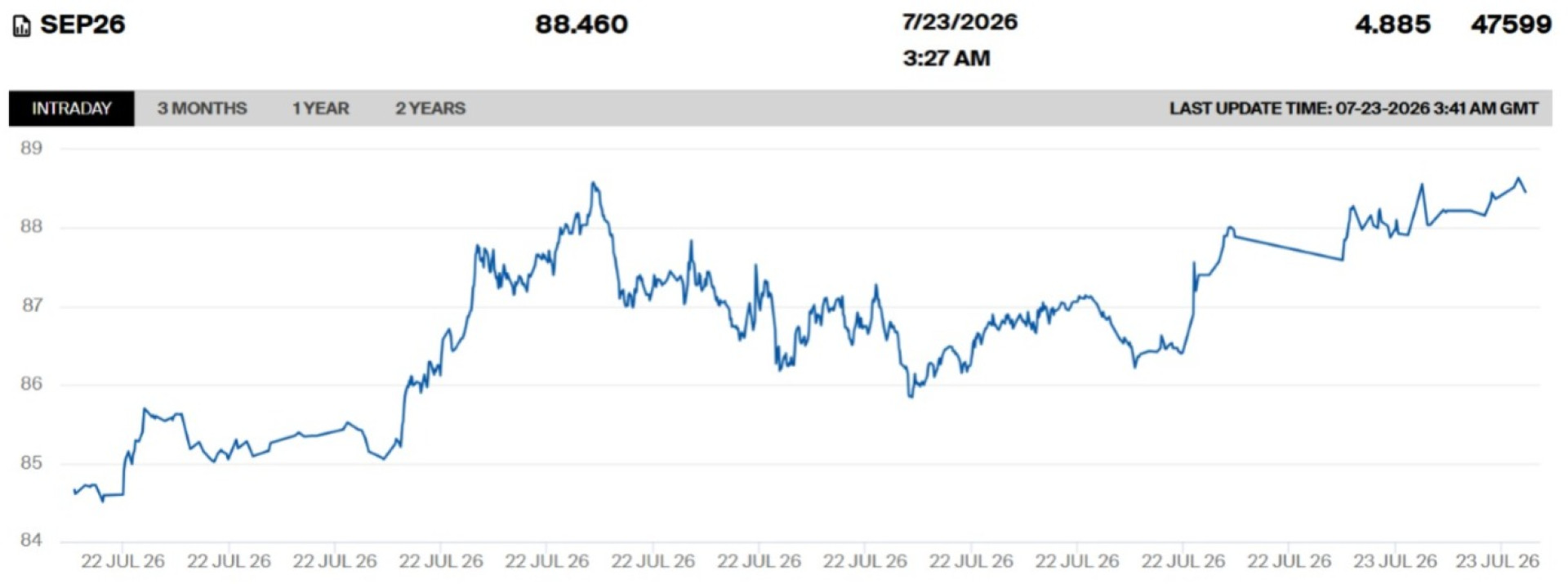
U.S. WTI crude futures gained 4.88 percent, reaching $88.46 per barrel.
Why prices rose sharply
According to analysts, the global oil market is facing two serious supply risks at once. In addition to the continuing tension around the Strait of Hormuz amid the standoff between the United States and Iran, the situation has escalated in the Bab el-Mandeb Strait, which connects the Red Sea with the Gulf of Aden and is considered one of the most important routes for global oil trade.
Yemen’s Houthis announced a naval blockade of Saudi Arabia and claimed an attack on Saudi oil tankers. Against this backdrop, the European Union Naval Force recommended that vessels linked to the United States, Israel or Saudi Arabia avoid the Red Sea and the Gulf of Aden.
Why this matters for Kazakhstan
Earlier, oil and gas industry expert Askar Ismailov noted that oil prices affect budget revenues, the state of the National Fund and the tenge exchange rate. Instability in the oil market increases risks for the economy. Sharp price fluctuations affect inflation, investment activity and financial markets. Dependence on oil revenues makes the country vulnerable to external shocks.
At the same time, the 2026–2028 budget is based on key assumptions: an oil price of $60 per barrel and an exchange rate of 540 tenge per dollar. These benchmarks are used to calculate export revenues, social payments and government spending.