
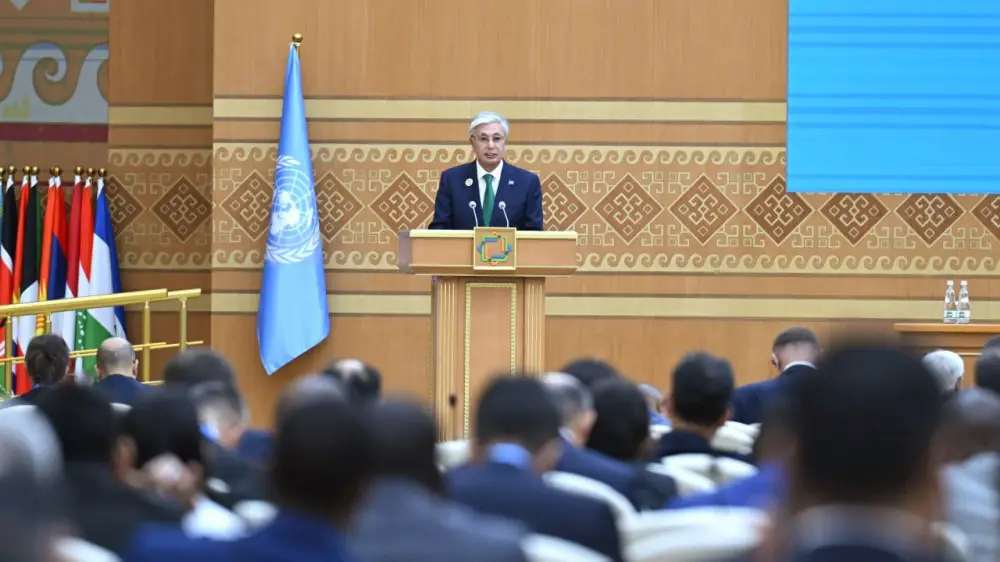
Tengrinews.kz - President Kassym-Jomart Tokayev delivered a speech at the Third UN Conference on Landlocked Developing Countries, citing Akorda.
In his address, Tokayev thanked the President of Turkmenistan, Serdar Berdimuhamedow, for initiating the conference, and expressed appreciation to UN Secretary-General Antonio Guterres for his commitment to addressing the challenges and realizing the potential of Landlocked Developing Countries (LLDCs).
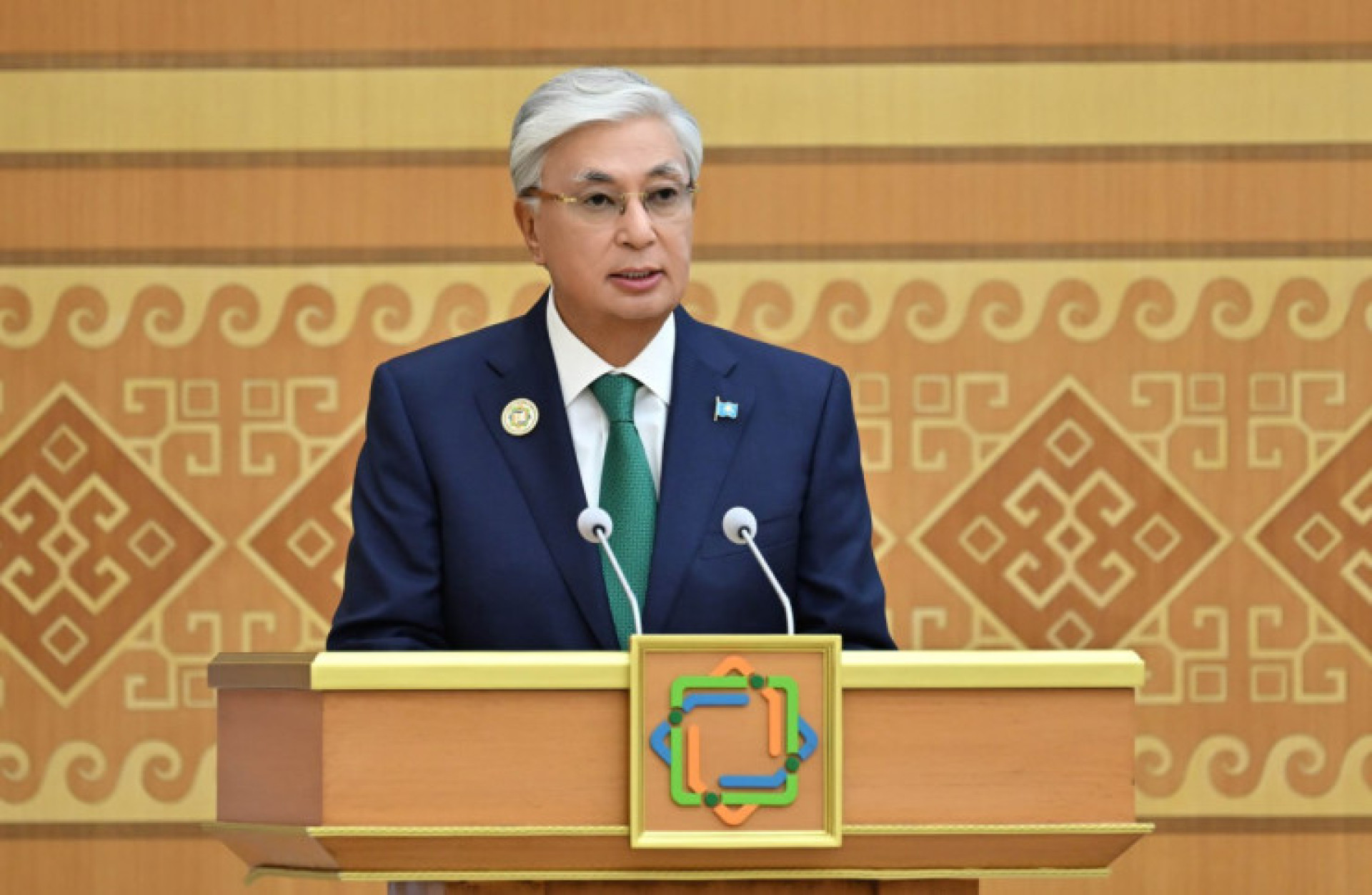
“More than two decades ago, Kazakhstan took the lead by hosting the first UN conference on LLDCs, marking the beginning of its long-standing and active involvement in this process. During that historic event, the Almaty Programme of Action was adopted, which for the first time placed the issues of LLDCs on the global development agenda. Today, we’ve gathered in Awaza to take new steps toward achieving the goals before us,” the Head of State emphasized.
According to him, 32 landlocked developing countries represent over half a billion people. Many still face serious barriers in accessing finance, technology, and global markets.
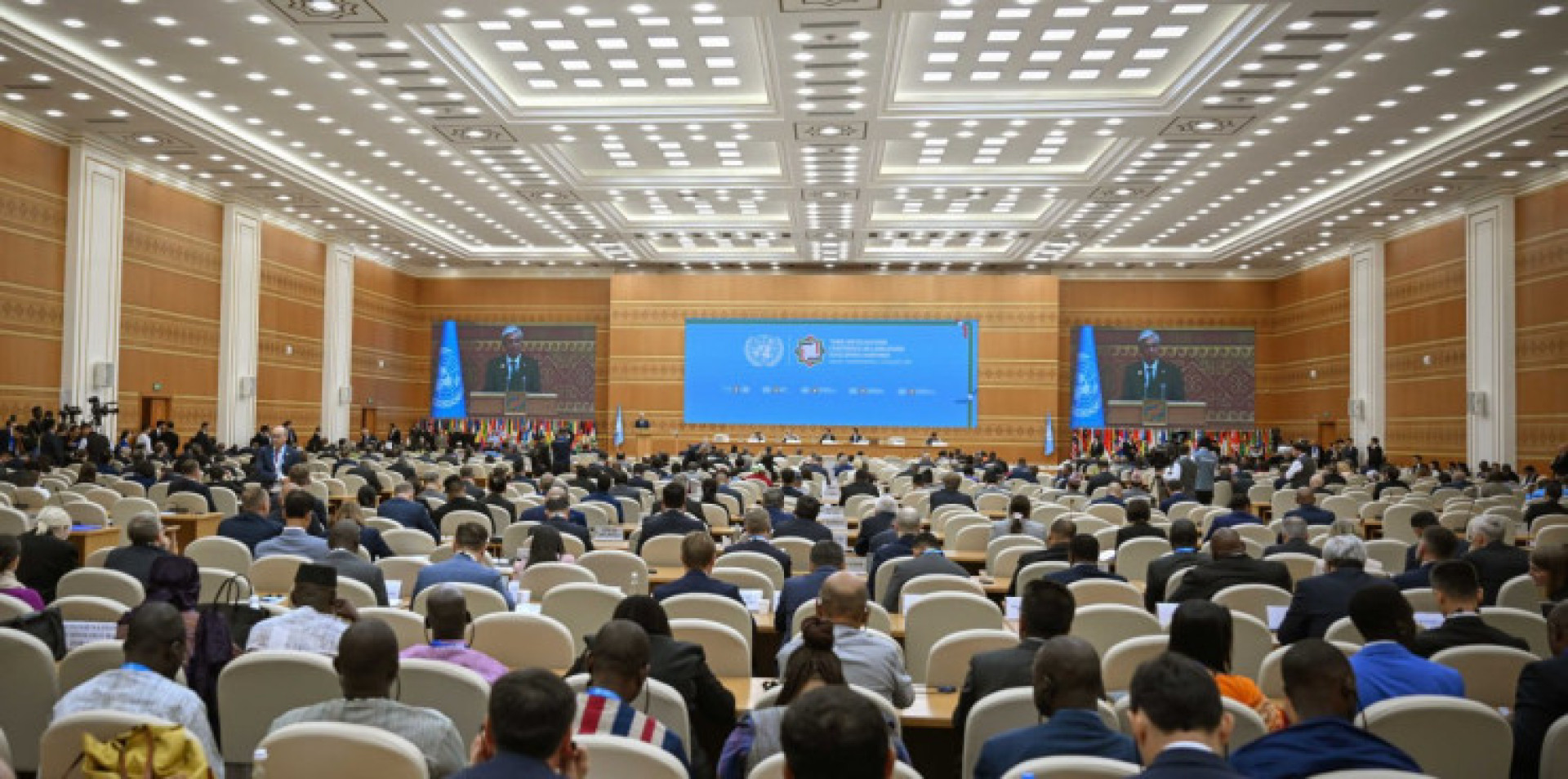
“Limited regional transport connectivity remains a key challenge for LLDCs. This leads to a range of economic difficulties, including high transit and trade costs, and vulnerability to geopolitical factors. These limitations affect citizens' well-being and reduce competitiveness. Conflicts, economic sanctions, supply chain disruptions, and growing global distrust only worsen the situation. Nonetheless, Kazakhstan believes that LLDCs must be seen as equal and promising partners in shaping global solutions. The voices of landlocked developing countries must be louder, our cooperation deeper, and our collective ambitions bolder,” Tokayev said.
He noted that Kazakhstan fully supports the Awaza Programme of Action as a roadmap toward an inclusive and sustainable future.
“This important initiative must receive political backing from transit countries, international development organizations, and financial institutions. Innovative financial mechanisms are needed to encourage investment in key sectors like transportation, energy, and digital infrastructure,” the President said.
Tokayev also named climate change as another urgent issue.
“Many LLDCs face water shortages, glacier melt, desertification, and other extreme weather events. Solving these problems requires coordinated regional efforts and strong international support. At the same time, I believe that climate action should remain balanced and inclusive, addressing the justified development needs of these countries. To strengthen our joint efforts on climate, I invite you to the Regional Environmental Summit to be held in Astana in partnership with the United Nations in April next year,” he said.
The President noted that Kazakhstan is making significant efforts, together with its partners, to boost regional connectivity, advance digital transformation, and promote long-term sustainable growth.
 Photo: Akorda press service
“We prioritize developing transport corridors and transit infrastructure along the North–South route and the Middle Corridor. Our long-term goal is to build an integrated network of rail, road, air, and logistics hubs. This will strengthen Kazakhstan’s position as a Eurasian transit hub, currently accounting for nearly 85% of overland cargo between Asia and Europe. We are also investing in digitalization. Kazakhstan has established the AlemAI artificial intelligence center in Astana and recently launched a supercomputer. Our doors are open to scientific collaboration, and we invite partners to join us,” said Tokayev.
Addressing the regional agenda, the Head of State said that the experience of Central Asia shows geography does not determine destiny.
“We are moving from a landlocked state toward a future where land connectivity will be just as important. Our region demonstrates resilience in socio-economic development and shows that with political will, strategic investment, and international partnership, the lack of access to the sea can become a powerful driver of growth rather than a barrier. We are witnessing how Central Asia is turning into a region of mutually beneficial cooperation, with dynamic potential in trade, investment, transport, communications, and sustainable resource management. Two days ago, Kazakhstan signed an agreement with the United Nations to establish a UN Regional Center for Sustainable Development Goals for Central Asia and Afghanistan, headquartered in Almaty. I believe this is a major achievement for the entire region, fully aligned with the goals of the Awaza Programme. Once again, I thank the UN Secretary-General and all our Central Asian partners for supporting Kazakhstan’s initiative,” the President said.
In conclusion, Kassym-Jomart Tokayev reaffirmed Kazakhstan’s strong commitment to the goals and principles of the group of Landlocked Developing Countries.
“Only by strengthening international partnerships can we ensure that LLDCs remain an integral part of the global development agenda,” he concluded.
As a reminder, on Monday, August 4, Tokayev arrived in Turkmenistan to take part in the Third UN Conference on Landlocked Developing Countries. He was welcomed at the airport in the city of Turkmenbashi by Gurbanguly Berdimuhamedow.
Prior to the opening ceremony of the Third UN Conference on Landlocked Developing Countries, President Tokayev met with the Central Asian Heads of State.

