


 Қазақша
 Русский
 English

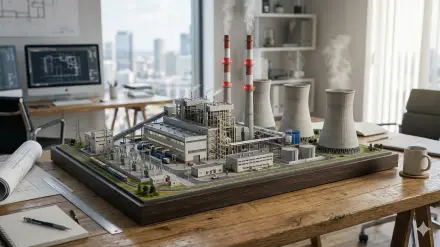
Tengrinews.kz – Russia will not participate in the construction of three combined heat and power plants (CHPs) in Kazakhstan. Projects in Kokshetau, Semey and Ust-Kamenogorsk will instead be implemented by a Kazakhstan–Singapore consortium.
The announcement was made by Vice Minister of Energy Sungat Yessimkhanov during a government briefing. According to him, EPC (Engineering, Procurement and Construction) contracts for the plants in Semey and Ust-Kamenogorsk were signed in early 2026.
The contractor is expected to enter the active phase of construction in the coming months. Orders for key equipment are scheduled to be placed in May, while engineering surveys and site preparation will begin simultaneously. Delivery of major equipment is expected from the third quarter of 2027, with commissioning of the plants planned for the fourth quarter of 2029.
Kokshetau project underway
The CHP project in Kokshetau is currently at the preparation and partial construction stage. According to Samruk-Energo, infrastructure connections and access roads have already been completed, and design documentation is under development. Construction of an administrative building is scheduled to begin in 2026.
The plant’s capacity has also been increased from 520 to 820 gigacalories, with corresponding changes made to the contractor agreement. Commissioning is planned for the first quarter of 2029.
Who will build the plants
Yessimkhanov noted that the projects will be carried out by a Kazakhstan–Singapore consortium, using modern technologies, including Chinese solutions.
“These are experienced contractors with access to technology. There is personal responsibility for projects of this scale,” he said.
All three plants are expected to incorporate “clean coal” technologies and elements of artificial intelligence.
Later, on the sidelines, the vice minister confirmed that Russian participation in the projects has been fully terminated.
“EPC contracts have been signed for all three plants, and there are no Russian contractors involved. Construction will be carried out by Kazakh contractors,” he said.
He also outlined the estimated cost: the Kokshetau plant is expected to cost around 350 billion tenge, while the Semey and Ust-Kamenogorsk plants are estimated at about 400 billion tenge each due to their higher capacity. He emphasized that the projects will be implemented without direct state budget funding.
“Across the entire program, there is no budget financing. Companies attract funds themselves, build the facilities, and after commissioning we begin payments so they can repay loans,” Yessimkhanov explained.
Background
The CHP projects in Kokshetau, Semey and Ust-Kamenogorsk were initially planned with Russian participation. The initiative dates back to November 2023, when Kazakhstan and Russia discussed cooperation agreements.
However, the projects faced repeated delays, and key issues—particularly financing—remained unresolved. Kazakhstan did not receive confirmation of concessional financing from the Russian side.
In 2025, authorities began considering replacing the investor. By the end of that year, the situation remained uncertain, with Kazakhstan preparing to proceed independently if necessary.
The government has since moved forward with new contractors, aiming to complete construction by 2029.



 +7 (777) 001 44 99


