
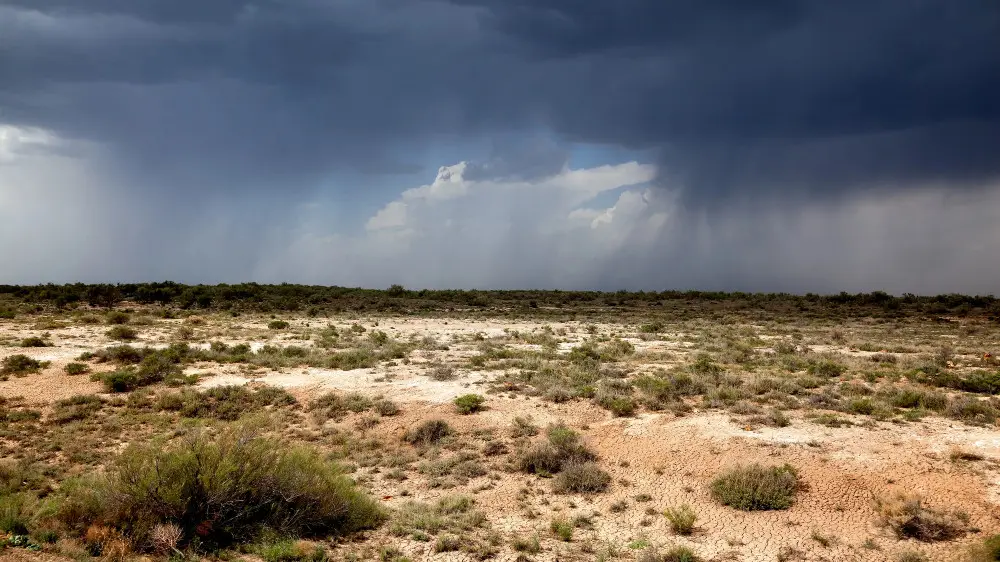
Tengrinews.kz – This summer, Central Asian countries may be hit by extreme downpours. According to a forecast by the UN World Meteorological Organization, such a “surprise” for the region could be brought by the return of the Pacific phenomenon El Niño, citing the organization’s official information portal.
At first glance, the link between processes in the equatorial Pacific Ocean and weather in Central Asia may not seem obvious. However, in 2026, a dangerous cumulative effect is coming into play. The planet’s atmosphere and hydrosphere are already critically overheated due to anthropogenic factors.
When a new El Niño overlaps with this “heated” foundation, the climate pendulum will swing with unprecedented force. Instead of gradual weather changes, the region may face a sharp release of enormous volumes of moisture. According to UN forecasts, Central Asia, along with the southern U.S. states, will become one of the main targets for abnormal heavy rainfall.
Note: El Niño is a climate phenomenon involving abnormal warming of surface waters in the central and eastern equatorial Pacific Ocean. It affects atmospheric circulation and weather in different regions of the world.
UN Secretary-General António Guterres urged that the development of El Niño be treated as an urgent climate warning.
“El Niño conditions will add fuel to the fire of planetary warming,” he said in a video address.
According to him, the consequences will be felt faster and more widely than before, while an effective response requires accelerating the transition to renewable energy sources, protecting the most vulnerable groups and developing early warning systems.
World Meteorological Organization Secretary-General Celeste Saulo said the current situation requires heightened preparedness.
“We need to prepare for a potentially strong El Niño event, which will intensify droughts and heavy rainfall, as well as increase the risk of heatwaves both on land and in the ocean,” she emphasized.
Meteorologists estimate the probability of El Niño developing in the coming summer months at 80 percent, while the chance that the anomaly will last until winter exceeds 90 percent.