


 Қазақша
 Русский
 English

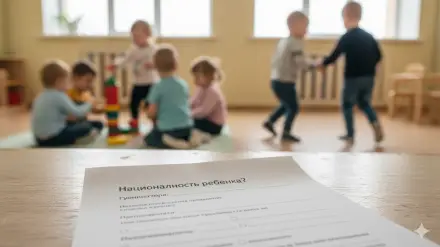
Tengrinews.kz – Kazakhstan’s Prosecutor’s Office has clarified a recent ruling by the Constitutional Court on how a child’s nationality can be determined and changed, following growing questions around the issue.
In April 2025, the Constitutional Court issued regulatory ruling No. 70 after reviewing Article 65 of the Code On Marriage (Matrimony) and Family for compliance with the Constitution.
Under this article, a child’s nationality is determined by the nationality of their parents and can later be changed only to that of the other parent.
What prosecutors explained
According to the Constitutional Court, Article 65 does not account for a range of real-life situations where determining or changing a child’s nationality solely based on parental nationality is impossible.
Senior prosecutor of Astana’s Prosecutor’s Office, Aliya Kystaubayeva, noted that in some cases parents may be unknown, documents confirming their nationality may be missing, or relevant information may be unavailable. The article also fails to consider situations where a child is raised in a foster family or a care institution and wishes to adopt a different nationality due to growing up in another national and cultural environment.
Because of this, the Constitutional Court ruled that Article 65 is unconstitutional in the part that does not allow alternative ways of determining and changing a child’s nationality.
What it means in simple terms
In plain language: the rule that a child’s nationality can only be linked to their parents’ nationality is no longer absolute.
Going forward, the law must take into account other life circumstances — for example, when parental data is missing or when a child grows up in a different family or cultural environment and wants their nationality to reflect that reality.
Amendments to the Code On Marriage (Matrimony) and Family are now expected to formally introduce alternative ways to determine and change a child’s nationality. In short: the system is finally being updated to match real life, not just paperwork.



 +7 (777) 001 44 99


