


 Қазақша
 Русский
 English

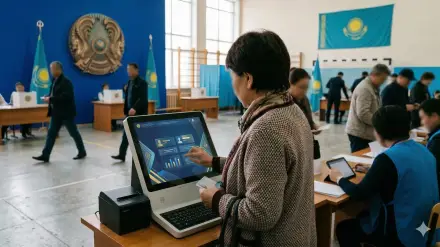
Tengrinews.kz — When could electronic voting be introduced in Kazakhstan? The Central Election Commission (CEC) answered this question.
In response to an official request from the Tengrinews.kz editorial team, the commission said that electronic voting is currently used in about 40 out of 193 countries. At the same time, in most states such technologies are used only in certain regions or in pilot mode.
The CEC noted that introducing such systems requires a careful assessment of risks. In particular, this concerns possible:
- cyberattacks on server infrastructure;
- interference by third parties;
- fraud;
- violations of the principle of secret voting;
- pressure on voters or voting by another person.
Kazakhstan is studying international experience with electronic voting, including the practice of Estonia, where it is used alongside traditional voting. At the same time, the commission said that the electronic voting system in that country “remains the subject of active international debate.”
Estonia is considered the world leader in internet voting. Since 2005, its citizens have been able to vote online in elections using electronic ID cards. In 2023, more than half of the votes in parliamentary elections were cast online.
According to the CEC, at an international conference in 2023, invited ODIHR OSCE expert David Duenas-Cid stated that there is still no direct evidence that internet voting increases turnout or reduces election costs.
In addition, there are examples in global practice of countries abandoning such technologies. For example, in 2009, Germany’s Constitutional Court banned the use of electronic voting machines, citing the inability to ensure the principle of publicity and transparency in elections.
The CEC stressed that the introduction of alternative forms of voting requires further study of international experience and assessment of possible risks.
International experience
Electronic voting is used in different forms: internet voting, electronic machines at polling stations, or automatic ballot counting. At the same time, most countries still use paper ballots, while electronic technologies are applied only partially — in specific elections, regions, or pilot formats. For example, this approach is used in Belgium, the United States, Canada, and some other countries.
Some countries have abandoned such technologies because of concerns over security and public trust. For example, the Netherlands and Ireland returned to paper ballots after testing electronic systems.



 +7 (777) 001 44 99


