


 Қазақша
 Русский
 English

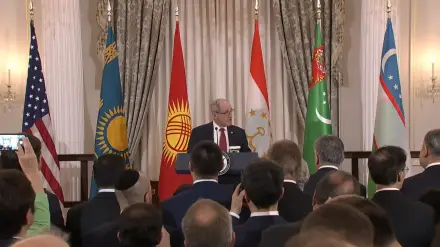
Tengrinews.kz – U.S. senators have once again proposed ending the Cold War–era trade restrictions imposed on Kazakhstan.
It is reported that U.S. Senators Jim Risch (Idaho) and Jeanne Shaheen (New Hampshire) joined Senators Steve Daines (Montana) and Chris Murphy (Connecticut), as well as Representatives Carol Miller and Jimmy Panetta, in introducing a bill to repeal the Jackson–Vanik amendment.
“As a volatile Russia and an increasingly aggressive China pursue their own interests across the globe, the U.S. offers Central Asian nations the opportunity to work with an equal partner. Removing outdated Jackson-Vanik restrictions on our partners will pave the way for a new era of economic cooperation in Central Asia. I am proud to introduce this bill in support of President Trump’s efforts to build a secure and prosperous future for the U.S. and our C5+1 partners,” said Jim Risch.
Steve Daines, in turn, emphasized that Central Asia is rich in natural resources and is a strategically important region for the United States.
“Central Asia is rich in natural resources and is a strategically critical region for the U.S. Unfortunately, Central Asia is still subject to outdated, Cold War–era trade restrictions that prevent any permanent investment and hinder American trade and prosperity. It’s past time that we get rid of these outdated restrictions, and I’m proud to work with my colleagues on a bill that will repeal Jackson-Vanik and unleash the full potential of American relationships with Central Asia,” he stated.
What the Jackson–Vanik amendment is
The Jackson–Vanik amendment is a 1974 amendment to the U.S. Trade Act that restricts trade with countries that impede emigration or violate other human rights. It was proposed by congressmen Henry Jackson and Charles Vanik. The amendment prohibits granting most-favored-nation trade status, government loans, and loan guarantees to countries that violate or severely restrict their citizens’ right to emigrate, as well as other human rights.
It also mandates the application of discriminatory tariffs and fees on goods imported into the U.S. from countries with non-market economies.
The amendment was formally introduced in response to emigration restrictions in the USSR, but it also applied to other states such as China, Vietnam, and Albania. In 2006, the amendment was repealed for Ukraine, and in 2012 for Russia (simultaneously with the adoption of the Magnitsky Act) and Moldova.
After emigration restrictions in the USSR were lifted in 1989, the U.S. imposed an annual moratorium on the amendment’s enforcement for the USSR and later for CIS countries. However, the amendment was never officially repealed. At present, it formally remains in effect for several countries, including Azerbaijan, Belarus, Kazakhstan, Tajikistan, Turkmenistan, and Uzbekistan.



 +7 (777) 001 44 99


