


 Қазақша
 Русский
 English

ПОДЕЛИТЬСЯ
- Main
- 19 May 2026 18:33
Tokayev warned of the danger of misinterpreting history
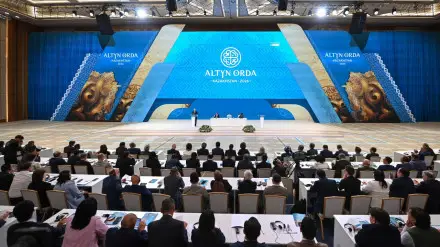 Photo of the Akorda press service
Tengrinews.kz — President Kassym-Jomart Tokayev stated that Kazakhstan views the history of the Golden Horde as a complex, multidimensional period in the global record.
"This circumstance should under no circumstances be simplified, as it would inevitably lead to a linear view of this unique phenomenon in world history. This is fraught with historical errors, which, in turn, could undermine friendly relations between states and peoples. Unfortunately, we are already witnessing such instances involving different interpretations of major historical events of global significance," the Head of State said at the opening of the symposium titled "The Golden Horde as a Model of Steppe Civilization: History, Archaeology, Culture, and Identity".
Tokayev emphasized that in today’s extremely complex and tense geopolitical situation, it is vital to find compelling and inspiring examples of peace-building structures and dialogue platforms in human history, rather than remaining focused solely on the grim chronology of wars.
"I understand this is not an easy task, as the entire world record, from ancient times to the present, is generous in its detailed descriptions of wars and armed conflicts. The reason for this is quite clear: wars, with their inexhaustible confrontational potential, were much easier to describe than the monotonous processes of creation during times of peace. Incidentally, Leo Tolstoy’s famous novel 'War and Peace' is a phenomenal and fundamental description more of war than of peace," the President noted.
The Head of State added that specifically now, as the global community has reached a historical crossroads and faces a civilizational choice, it is critically important to unite the efforts of authoritative professional scholars to present our shared history as a factor for the unity of nations.
As a reminder, The international symposium "The Golden Horde as a Model of Steppe Civilization: History, Archaeology, Culture, and Identity" is being held in Astana. Delegations from more than 20 countries are participating in the event, including medieval historians, archaeologists, Orientalists, Turkologists, Mongolists, numismatists, epigraphists, political scientists, cultural scholars, art historians, diplomats, and representatives of international organizations.
Editorial Question
What’s your take on this news?
Comments are moderated by the editorial team
Show comments


 +7 (777) 001 44 99


