


 Қазақша
 Русский
 English

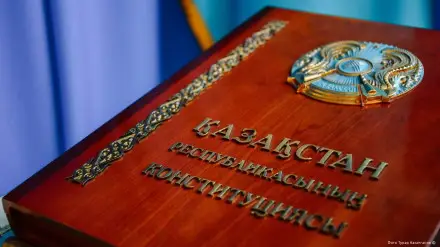
Tengrinews.kz – President of Kazakhstan Kassym-Jomart Tokayev, speaking about the significance of the current Constitution, highlighted its role in the country’s formation and mentioned the contribution of First President Nursultan Nazarbayev.
In his address at an expanded meeting of the Government, the Head of State stressed that there is no question of revising the historical role of the Basic Law.
“No one is setting the task of nullifying the significance of the current Constitution, which has played a huge role in all the achievements of our country over the past 30 years. The First President, Nursultan Abishuly Nazarbayev, deserves great credit for this,” Tokayev noted.
According to the President, the Constitution was adopted during the period when independent Kazakhstan was taking shape and reflected the difficult circumstances of that time.
“It was adopted when our country was just finding its feet and bears the imprint of the first difficult years of the establishment of our independence,” he said.
Tokayev recalled that over the years society has changed significantly, and that Kazakhstan, contrary to sceptical forecasts, has emerged as a strong and respected state.
“Today the world is undergoing fundamental geopolitical, geoeconomic and technological shifts. In recent years, Kazakhstan has also experienced significant changes that have affected national self-awareness and caused profound upheavals,” the President stressed.
In this regard, according to the Head of State, the country needs to rethink its reference points and enshrine them in the Basic Law.
“It is extremely important for us to update our goals, values and principles, and to entrench them at the constitutional level,” Tokayev concluded.
By way of reminder, in recent years the expanded Government meeting has been held once a year and has become a traditional format for working with the Cabinet. It reviews economic development, the performance of ministries, problem areas and priorities for the coming year. The President issues important instructions, offers criticism, notes successes and sets the overall direction of work.



 +7 (777) 001 44 99


