


 Қазақша
 Русский
 English

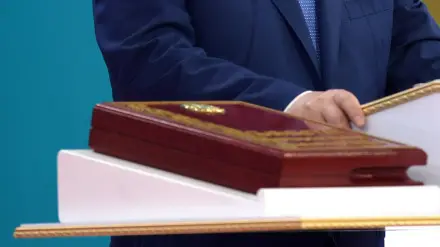
Tengrinews.kz – Official media have published the final draft of the new Constitution of Kazakhstan, which will be put to a referendum.
This is already the second draft of the new Constitution. The first was published on 31 January. After that, the Constitutional commission introduced a number of amendments and additions to the document.
Draft of the new Constitution of Kazakhstan
CONSTITUTION OF THE REPUBLIC OF KAZAKHSTAN
We, the united people of Kazakhstan, strengthening statehood in the ancient Kazakh land,
Preserving the continuity of the thousands of years of history of the Great Steppe,
Emphasizing the unitary nature of the state and the inviolability of its borders and territorial integrity,
Adhering to the idea of a just Kazakhstan and the principles of Law and Order,
Declaring that the rights and freedoms of man and citizen shall be inviolable,
Based on the principles of unity and solidarity, interethnic and interfaith harmony,
guided by the values of culture and education, science and innovation,
Recognizing the need to protect nature,
striving for peace and friendship with all nations,
Feeling a great responsibility towards future generations,
We adopt the Basic Law of the Republic of Kazakhstan - this Constitution.
Part I
Fundamentals of constitutional construction
Article 1
The Republic of Kazakhstan is a democratic, secular, legal and social state. The highest value of the state is the person and his life, rights and freedoms.
Article 2
1. The Republic of Kazakhstan is a unitary state. The government model is a presidential republic.
2. The sovereignty of the Republic of Kazakhstan extends to its entire territory. The state ensures the integrity, inviolability, and indivisibility of its territory.
3. The administrative-territorial structure of the Republic of Kazakhstan is determined by constitutional law.
4. The capital of the Republic of Kazakhstan is the city of Astana. The status of the capital is determined by the constitutional law.
5. The names Republic of Kazakhstan and Kazakhstan have the same meaning.
6. The national currency (monetary unit) of the Republic of Kazakhstan is the tenge.
The exclusive right to issue tenge belongs to the Republic of Kazakhstan.
7. The sovereignty, independence, unitary nature, territorial integrity, and governance model of the Republic of Kazakhstan will not change.
Article 3
1. The fundamental principles of the Republic of Kazakhstan are: Protection of sovereignty and independence; observance of the rights and freedoms of man and citizen; ensuring the rule of law and order; strengthening national unity; improving the well-being of the people; promoting the idea of responsible and creative patriotism; developing public dialogue; strengthening the values of hard work, progress, and education; forming a high ecological culture; preserving historical and cultural heritage;
supporting native culture.
2. The Republic of Kazakhstan recognizes the development of human capital, education, science, and innovation as a strategic direction of state activity.
Article 4
1. The people of Kazakhstan are the sole source of state power and the owners of sovereignty.
2. The people exercise power directly through a national referendum and free elections, and also exercise their power through state bodies.
3. No one may usurp power in the Republic of Kazakhstan. Usurpation of power is punishable by law. The right to act on behalf of the people and the state belongs to the President of the Republic of Kazakhstan, as well as to the Kurultai of the Republic of Kazakhstan within the limits of its constitutional powers. The Government of the Republic of Kazakhstan and other state bodies act on behalf of the state within the limits of the powers granted to them.
4. State power in the Republic of Kazakhstan is unitary, and is exercised on the basis of the Constitution and laws in accordance with the principle of division and interaction between the legislative, executive, and judicial branches.
Article 5
1. The current law of the Republic of Kazakhstan is the norms of the Constitution, laws corresponding to it, regulatory resolutions of the Constitutional Court of the Republic of Kazakhstan and the Supreme Court of the Republic of Kazakhstan, other regulatory legal acts, and international treaty obligations of the Republic of Kazakhstan.
2. The Constitution has the highest legal force and is directly applicable throughout the territory of the Republic of Kazakhstan.
3. The procedure for applying international treaties on the territory of the Republic of Kazakhstan is determined by law.
4. All laws and international treaties ratified by the Republic of Kazakhstan shall be published. The official publication of regulatory legal acts concerning the rights, freedoms and obligations of citizens is a mandatory condition for their application.
5. Laws that impose new obligations on citizens or worsen their situation shall not have retroactive effect.
Laws that establish or strengthen liability are not retroactive.
If a new law eliminates or mitigates liability for a previously committed offense, then the new law applies.
6. In order to promote the rapid development of the economy of certain regions of the Republic of Kazakhstan, a special legal regime for the financial sector or a special legal regime for "rapidly developing cities" may be established in accordance with constitutional laws. These special legal regimes may provide for the specifics of the functioning of state administration and the judicial system.
Article 6
1. Ideological and political diversity is recognized in the Republic of Kazakhstan.
2. Public associations are equal before the law. Illegal interference by the state in the affairs of a public association, and by a public association in the affairs of the state, and the assignment of functions of a state body to a public association, are not permitted. The establishment of a political party organization in a state body is not permitted.
3. It is prohibited to establish and operate a public association whose purpose or actions are aimed at forcibly changing the foundations of the constitutional system, violating the integrity and public order of the Republic of Kazakhstan, undermining national security, inciting war, social, racial, national, or religious hatred, as well as to create a paramilitary force not provided for by law.
4. The activities of a political party and trade union of another state, a political party based on religion, are not permitted, as well as the financing of a political party and trade union by a foreign legal entity, a foreign citizen and stateless person, a legal entity with foreign participation, a foreign state and an international organization.
5. Information on the movement of funds and assets received by a non-profit organization from a foreign state, international and foreign legal entities, foreign citizens and stateless persons must be open and accessible in accordance with the laws of the Republic of Kazakhstan.
Article 7
1. Religion is separate from the state.
2. The activities of religious organizations in the territory of Kazakhstan are carried out in accordance with the law and may be limited in order to protect the foundations of the constitutional order, the rights and freedoms of man and citizen, ensure national security, maintain public order, the health of citizens, and the moral character of society.
Article 8
1. In the Republic of Kazakhstan, all types of property are recognized, guaranteed and equally protected.
2. The use of property must be in the interests of society and the state, must be carried out in compliance with the established requirements in the field of environmental protection, and must not infringe on the rights and interests of other persons protected by law. The subjects and objects of property, the scope and limits of the rights of owners, and the guarantees of their protection shall be determined by law.
3. The land and its subsoil, water sources, flora and fauna, and other natural resources belong to the people. The state exercises ownership rights on behalf of the people. Land may also be privately owned on the grounds, conditions, and within the limits established by law.
Article 9
1. The state language of the Republic of Kazakhstan is Kazakh.
2. Russian is officially used in government organizations and local government bodies, along with Kazakh.
3. The state takes care of creating conditions for the study and development of the languages of the united people of Kazakhstan.
Article 10
The Republic of Kazakhstan respects the principles and norms of international law, pursues a foreign policy aimed at peace and cooperation with interested states, non-interference in their internal affairs, and peaceful resolution of international disputes.
Article 11
The state symbols of the Republic of Kazakhstan are the State Flag, the State Emblem, and the State Anthem. Their description and procedure for use are established by constitutional law.
Part II
Fundamental rights, freedoms and duties
Article 12
1. Every person has the right to be recognized as a subject of law.
Everyone has the right to protect their rights and freedoms by all means not contrary to the law, including through necessary defense.
2. Everyone has the right to protect their rights and freedoms through court.
3. The right to receive qualified legal assistance in accordance with the law is recognized in the Republic of Kazakhstan.
Article 13
1. Citizenship of the Republic of Kazakhstan is granted and terminated in accordance with the law, which is uniform and equal regardless of the basis on which it is granted.
2. A citizen of the Republic of Kazakhstan may not be deprived of his or her citizenship, deprived of the right to change his or her citizenship, or deported outside Kazakhstan. Deprivation of citizenship is permitted only by court decision for committing a terrorist crime, as well as for causing other serious harm to the national interests of the Republic of Kazakhstan.
3. A citizen of the Republic of Kazakhstan shall not be allowed to have dual or multiple citizenship. The possession of citizenship of another country shall be grounds for termination of citizenship of the Republic of Kazakhstan. The provisions provided for by law shall apply to a minor who has acquired the citizenship of a foreign country due to his birth in that country.
Article 14
1. A citizen of the Republic of Kazakhstan shall not be extradited to a foreign state, unless otherwise provided for in international treaties of the Republic of Kazakhstan.
2. The Republic of Kazakhstan guarantees the protection of its citizens outside the territory of the country in accordance with the law.
Article 15
1. In accordance with the Constitution of the Republic of Kazakhstan, human rights and freedoms are recognized and guaranteed.
2. Human rights and freedoms are inherent in everyone, they are recognized as inalienable and inalienable, and the content and application of the current law of the Republic of Kazakhstan are determined accordingly.
3. A citizen of the Republic of Kazakhstan has rights and obligations in accordance with his citizenship.
4. In cases provided for by the Constitution, laws and international treaties, a foreign citizen and a stateless person shall enjoy the rights and freedoms established for a citizen of the Republic of Kazakhstan, and shall also perform the duties.
5. The exercise of human and civil rights and freedoms must not violate the rights and freedoms of other persons, and must not harm the foundations of the constitutional order, public order, the health of citizens and the moral character of society.
6. Everyone has the right to receive compensation from the state for damage caused by the unlawful actions of a state body or its official.
Article 16
1. Everyone is equal before the law and the court.
2. A citizen of the Republic of Kazakhstan, a foreign citizen and a stateless person residing or temporarily staying in the territory of the Republic of Kazakhstan may not be discriminated against on the basis of their origin, social, official and property status, gender, race, nationality, language, religious views, beliefs, place of residence or any other grounds.
Article 17
1. The right to life is an inalienable and inalienable right of every person.
2. No one has the right to take a human life on their own.
3. The death penalty is prohibited.
Article 18
1. Every person is guaranteed the right to personal liberty and the inviolability of his or her person.
2. A person may not be detained for longer than the period provided for by law without a court order.
Detention is only permitted by court order and is subject to the right to appeal.
3. Each person is explained the grounds for restricting their freedom and their rights at the time of arrest.
4. A detained person, suspect, or accused has the right to use the assistance of a lawyer (defense attorney) from the moment of his/her detention, recognition as a suspect, or indictment.
Article 19
1. A person is presumed innocent of a criminal offense until he or she is found guilty by a final court judgment.
2. No one is obliged to testify against himself, his spouse, or his close relatives as defined by law.
Religious ministers are not obligated to testify against people who confide in them and reveal their secrets.
3. It is prohibited to bring a person to criminal or administrative liability again for the same offense.
Article 20
1. Human honor and dignity are inviolable and are protected by law.
2. No one may be subjected to torture, violence, other cruel treatment, or degrading or degrading punishment.
Article 21
1. The right to privacy, the right to personal and family secrecy, and the right to protection of personal data from unlawful collection, processing, storage, and use, including through the use of digital technologies, are guaranteed by law.
2. The confidentiality of banking transactions, personal deposits and savings, correspondence, telephone conversations, postal messages and other communications transmitted by means of communication, including digital technologies, shall be protected by law. Restrictions on this right shall be permitted only in the cases and in the manner prescribed by law.
3. State bodies, public associations, officials and the mass media are obliged to ensure that every person has the opportunity to familiarize himself with documents, decisions and sources of information related to his rights and interests.
Article 22
1. Everyone has the right to determine their nationality and to show it or not.
2. Everyone has the right to use their native language and culture, to freely choose the language of communication, upbringing, study and creativity.
Article 23
1. Freedom of speech, scientific, technical, and artistic creativity is guaranteed.
2. Intellectual property is protected by law.
3. The right to freely receive and disseminate information, with the exception of state secrets, shall be exercised in any manner not prohibited by law. The list of information constituting state secrets of the Republic of Kazakhstan shall be determined by law.
4. Freedom of speech and freedom of dissemination of information must not harm the honor and dignity of other people, the health of citizens and the moral character of society, or violate public order.
5. Censorship is prohibited.
6. It is not allowed to promote forcible changes in the foundations of the constitutional structure of the Republic of Kazakhstan, encroachments on its territorial integrity, sovereignty and independence, disruption of public order, undermining national security, war, armed conflict, social, racial, national, ethnic, religious supremacy or discord, cruelty and violence, as well as calls for such actions.
Article 24
1. Except in cases established by law, every person legally residing in the territory of the Republic of Kazakhstan has the right to freedom of movement and residence within the country and to freely choose his or her place of residence.
2. Everyone has the right to travel outside the Republic of Kazakhstan. Restrictions on this right are permitted in the cases and in the manner prescribed by law. Citizens of the Republic of Kazakhstan have the right to return to the Republic of Kazakhstan without hindrance.
Article 25
1. Everyone has the right to freedom of conscience.
2. The exercise of the right to freedom of conscience should not limit the rights of all people and citizens, or obligations to the state.
Article 26
1. Citizens of the Republic of Kazakhstan have the right to freedom of association. The activities of public associations are regulated by law.
2. The chairmen and judges of the Constitutional Court, the Supreme Court and other courts of the Republic of Kazakhstan, the chairmen and members of the Central Election Commission, the Supreme Audit Chamber, employees and workers of law enforcement agencies and special state bodies, and military personnel do not have the right to be members of a political party or trade union, to support any political party or socio-political movement, or to express critical opinions.
Article 27
1. Everyone has the right to work and to freely choose their occupation and profession. Forced labor is permitted only on the basis of a court decision recognizing a person as guilty of a criminal or administrative offense, or in a state of emergency or war.
2. The Republic of Kazakhstan guarantees the right to working conditions that meet safety and hygiene requirements, to receive remuneration for work without any discrimination, as well as the right to social protection in accordance with the law.
3. The right to resolve individual and collective labor disputes using methods established by law is recognized.
4. The right to rest, working hours, days off and holidays, and paid vacation are guaranteed by law.
Article 28
1. It is prohibited to trespass on a dwelling. Deprivation and eviction from a dwelling without a court decision are not allowed. Entry into a dwelling, its inspection, and search are allowed in the cases and in the manner prescribed by law.
2. The Republic of Kazakhstan shall create conditions for providing its citizens with housing. Housing shall be provided to the categories of citizens in need specified in the law in accordance with the norms established by law.
Article 29
1. Citizens of the Republic of Kazakhstan have the right to private ownership of any property they have legally acquired.
2. Property and inheritance rights are guaranteed by law.
3. No one may be deprived of his property without a court decision. In exceptional cases provided for by law, the forced alienation of property for state needs is permitted upon payment of its equivalent value.
4. The Republic of Kazakhstan guarantees the right to freedom of entrepreneurial activity, the right to freely use one's property for any lawful entrepreneurial activity. Monopolistic activity is regulated or limited by law. Unfair competition is prohibited.
Article 30
1. Marriage and family, mother, father and child, shall be under the protection of the state.
2. Marriage is a voluntary and equal union of a man and a woman, registered by the state in accordance with the law.
3. Caring for and educating a child is the fundamental right and duty of parents.
4. Adult children who are able to work are obliged to take care of their parents who are unable to work.
Article 31
1. A citizen of the Republic of Kazakhstan is guaranteed a minimum wage and pension,
as well as social security in connection with age, illness, disability, loss of a breadwinner, and on other legal grounds.
2. Voluntary social insurance, other forms of social security, volunteering, and charity are supported in the Republic of Kazakhstan.
Article 32
1. Citizens of the Republic of Kazakhstan have the right to health protection.
2. Citizens of the Republic of Kazakhstan have the right to receive medical care established by law free of charge.
3. Receiving paid medical care in state and private medical institutions, as well as from persons engaged in private medical practice, is carried out on the grounds and in the manner prescribed by law.
Article 33
1. Citizens of the Republic of Kazakhstan are guaranteed free secondary education in state educational institutions. Primary and basic secondary education are compulsory.
2. A citizen of the Republic of Kazakhstan has the right to receive higher education in higher educational institutions in accordance with the law.
3. Paid education in private educational institutions is carried out on the grounds and in the manner prescribed by law.
4. The state establishes standards for compulsory education. The activities of all educational institutions must comply with these standards.
5. The system of education and upbringing in educational organizations on the territory of the Republic of Kazakhstan, with the exception of spiritual (religious) educational organizations, is secular in nature.
Article 34
Citizens of the Republic of Kazakhstan have the right to peaceful assembly. The exercise of this right may be restricted by law in order to protect the foundations of the constitutional order, the rights and freedoms of man and citizen, ensure national security, preserve public order, the health of citizens and the moral character of society.
Article 35
1. Citizens of the Republic of Kazakhstan have the right to participate in the management of state affairs, directly and through their representatives, to personally address state bodies and local self-government bodies, as well as to send individual and collective appeals.
2. Citizens of the Republic of Kazakhstan have the right to elect and be elected to state bodies and local self-government bodies, as well as to participate in a national referendum. The procedure for holding a national referendum is determined by constitutional law.
3. Citizens of the Republic of Kazakhstan recognized by a court as incompetent, as well as citizens of the Republic of Kazakhstan serving a sentence in places of deprivation of liberty by court verdict, do not have the right to participate in elections and national referendums.
Citizens of the Republic of Kazakhstan recognized by a court as incompetent, citizens of the Republic of Kazakhstan whose convictions have not been canceled or withdrawn in accordance with the procedure established by law, as well as citizens of the Republic of Kazakhstan recognized by a court as guilty of committing a corruption crime or corruption offense in accordance with the procedure established by law, do not have the right to be elected.
4. Citizens of the Republic of Kazakhstan have an equal right to enter the civil service. The requirements for a candidate for a civil servant position shall relate only to the nature of the official duties in accordance with the law.
Article 36
1. Everyone is obliged to observe the Constitution and legislation of the Republic of Kazakhstan, to respect the rights, freedoms, honor and dignity of other people.
2. Everyone is obliged to respect the state symbols of the Republic of Kazakhstan.
Article 37
1. Citizens of the Republic of Kazakhstan are obliged to preserve nature and take care of natural resources.
2. The state aims to protect an environment that is conducive to human life and health.
3. Concealment by officials of facts and circumstances that pose a threat to human life, health, or the environment shall result in liability in accordance with the law.
Article 38
Payment of legally established taxes, fees and other mandatory payments is the duty and obligation of every person.
Article 39
1. Protecting the Republic of Kazakhstan is the inherent duty and obligation of every citizen.
2. Citizens of the Republic of Kazakhstan shall perform military service in the manner and in the manner prescribed by law.
Article 40
Citizens of the Republic of Kazakhstan are obliged to take care of the preservation of historical and cultural heritage and to carefully look after historical and cultural monuments.
Article 41
1. The rights and freedoms of man and citizen may be limited only by law and to the extent necessary for the protection of the foundations of the constitutional order, the rights and freedoms of man and citizen, ensuring national security, preserving public order, the health of citizens and the moral character of society.
2. Actions that disrupt interethnic and interfaith peace are recognized as unconstitutional.
3. Restrictions on the rights and freedoms of citizens for political reasons are not allowed. The rights and freedoms stipulated in Articles 12, 14, 16, 17, 20, 22, 25 of the Constitution of the Republic of Kazakhstan shall not be restricted under any circumstances.
Part III
President
Article 42
1. The President of the Republic of Kazakhstan is the head of state, the highest official who determines the main directions of the state's domestic and foreign policy, and represents Kazakhstan within the country and in international relations.
2. The President of the Republic of Kazakhstan is a symbol and guarantor of the unity of the people and state power, the inviolability of the Constitution, and the rights and freedoms of man and citizens of the Republic of Kazakhstan.
3. The President of the Republic of Kazakhstan ensures the harmonious and unhindered functioning of all branches of state power, and the accountability of government bodies to the united people of Kazakhstan.
Article 43
1. The President of the Republic of Kazakhstan is elected by adult citizens of the Republic of Kazakhstan for a term of seven years by secret ballot on the basis of universal, equal and direct suffrage in accordance with the constitutional law.
According to the Constitution, a person cannot be elected President of the Republic of Kazakhstan more than once.
2. A citizen of the Republic of Kazakhstan who is a citizen of the Republic of Kazakhstan by birth, has reached the age of forty, is fluent in the state language, has resided in Kazakhstan for the past fifteen years, has a higher education, and has worked in the civil service or an elective state position for at least five years may be elected President of the Republic of Kazakhstan.
3. The next election of the President of the Republic of Kazakhstan shall be held no later than two months before the end of his term of office and shall not coincide with the date of election of the new composition of the Kurultai of the Republic of Kazakhstan.
4. The candidate who receives more than fifty percent of the votes of the voters who participated in the voting shall be considered elected. If none of the candidates receives more than fifty percent of the votes, the two candidates who received the largest number of votes shall be put to a second round of voting. The candidate who receives the largest number of votes of the voters who participated in the voting shall be considered elected.
5. The provisions of paragraph 1 of this Article remain unchanged.
Article 44
1. The President of the Republic of Kazakhstan takes office from the moment he takes the oath to the people: "I solemnly swear to serve the people of Kazakhstan faithfully, to strictly observe the Constitution and laws of the Republic of Kazakhstan, to guarantee the rights and freedoms of citizens of the Republic of Kazakhstan, and to faithfully fulfill the honorable duty of the President of the Republic of Kazakhstan entrusted to me."
2. The oath-taking ceremony shall be held within one month from the date of announcement of the election results with the participation of deputies of the Constituent Assembly of the Republic of Kazakhstan, judges of the Constitutional Court, the Supreme Court, ex-Presidents, as well as representatives of the public and invited foreign citizens. In the case provided for in Article 51 of the Constitution, a person who has assumed the powers of the President of the Republic of Kazakhstan shall take the oath within seven days from the date of his/her early dismissal from office due to his/her voluntary resignation, permanent inability to perform his/her duties due to health reasons, or removal from office, or death.
3. The powers of the President of the Republic of Kazakhstan shall be terminated from the moment the newly elected President of the Republic of Kazakhstan takes office, as well as in the event of the President of the Republic of Kazakhstan's voluntary resignation, permanent inability to perform his/her duties due to health reasons, or his/her premature dismissal or death. Except for those who have been dismissed from office, all former Presidents of the Republic of Kazakhstan shall have the title of ex-President of the Republic of Kazakhstan.
Article 45
1. The President of the Republic of Kazakhstan does not have the right to be elected as a deputy of a representative body, hold any other paid position, engage in entrepreneurial activity, or be a member of a political party during his term of office.
2. Close relatives of the President of the Republic of Kazakhstan do not have the right to hold positions of civil servants or heads of quasi-state sector entities.
Article 46
The President of the Republic of Kazakhstan:
1) makes a message to the people of Kazakhstan about the situation in the country and the main directions of the domestic and foreign policy of the Republic of Kazakhstan;
2) appoints the Vice-President of the Republic of Kazakhstan with the consent of the Constituent Assembly, given by a majority vote of the total number of deputies; dismisses the Vice-President from office, and determines his powers.
In the event of a repeated refusal to consent to the appointment of the Vice-President, the President of the Republic of Kazakhstan has the right to dissolve the Constitution, except for the cases provided for in paragraph 3 of Article 62 of the Constitution;
3) calls regular and extraordinary elections to the Constituent Assembly of the Republic of Kazakhstan; convenes the first session of the Constituent Assembly and accepts the oath of its deputies to the people of Kazakhstan; convenes an extraordinary session of the Constituent Assembly; signs the law proposed by the Constituent Assembly within one month, promulgates the law to the people, or returns the law or its individual articles for reconsideration and voting;
4) After consultation with the factions of political parties represented in the Kurultai, submits the candidacy of the Prime Minister of the Republic of Kazakhstan to the Kurultai for consideration and approval; appoints the Prime Minister with the consent of the Kurultai, given by a majority vote of the total number of deputies; dismisses the Prime Minister from office; determines the structure of the Government upon the proposal of the Prime Minister; appoints members of the Government proposed by the Prime Minister after consultation with the Kurultai; independently appoints the Ministers of Foreign Affairs, Defense, and Internal Affairs; dismisses members of the Government from office; takes the oath of the members of the Government; chairs meetings of the Government on particularly important issues.
The President of the Republic of Kazakhstan has the right to dissolve the Kurultai in the event of a repeated refusal to give consent to the appointment of the Prime Minister, except for the cases provided for in paragraph 3 of Article 62 of the Constitution;
5) appoints and dismisses the Chairman of the Constitutional Court of the Republic of Kazakhstan, the Chairman of the Supreme Court, the Chairman of the National Bank, the Prosecutor General, the Chairman of the National Security Committee, the Chairman of the Central Election Commission, the Chairman of the Supreme Audit Chamber, the Chairman of the Supreme Judicial Council, the Head of the State Security Service, and the Commissioner for Human Rights in the Republic of Kazakhstan;
6) establishes, dissolves and reorganizes state bodies directly subordinate to and accountable to the President of the Republic of Kazakhstan, appoints and dismisses their heads;
7) appoints and recalls heads of diplomatic missions of the Republic of Kazakhstan;
8) appoints ten judges of the Constitutional Court for a term of eight years, six members of the Central Election Commission for a term of five years, and eight members of the Supreme Audit Chamber for a term of five years, with the consent of the Constituent Assembly, given by a majority vote of the total number of deputies; dismisses them from office.
The President of the Republic of Kazakhstan has the right to dissolve the Constitutional Court in the event of a repeated refusal to give consent to the appointment of judges of the Constitutional Court, members of the Central Election Commission and the Supreme Audit Chamber, except for the cases provided for in paragraph 3 of Article 62 of the Constitution;
9) is the Supreme Commander-in-Chief of the Armed Forces of the Republic of Kazakhstan, appoints and dismisses the high command of the Armed Forces;
10) make a decision on holding a national referendum;
11) in the interests of protecting the rights and freedoms of a person and a citizen of the Republic of Kazakhstan, ensuring national security, sovereignty and integrity of the state, submits an application to the Constitutional Court to consider the compliance of a law or other legal act that has entered into force with the Constitution and, in the cases provided for in Article 93 of the Constitution, to issue an opinion;
12) conduct negotiations and sign international treaties on behalf of the Republic of Kazakhstan; sign ratification instruments;
accept credentials and letters of recall from heads of diplomatic missions of foreign states accredited in the Republic of Kazakhstan, as well as from heads of international organizations;
13) establishes state awards and honorary titles;
14) awards state awards, confers honorary titles, high military and other ranks, class ranks, diplomatic ranks, and qualification classes;
15) resolves issues of citizenship of the Republic of Kazakhstan and granting political asylum;
16) grants pardons;
17) if there is a direct threat to the independence and territorial integrity of the Republic of Kazakhstan, internal political stability, and the security of its citizens, and this leads to a disruption of the functioning of state constitutional bodies, after official consultation with the Prime Minister of the Republic of Kazakhstan and the Chairman of the Constituent Assembly, take measures required by these circumstances, including the introduction of a state of emergency throughout the territory of the Republic of Kazakhstan or in certain regions, and the use of the Armed Forces of the Republic of Kazakhstan;
18) in the event of aggression against the Republic of Kazakhstan or a direct threat to its security from outside, introduce martial law, declare partial or general mobilization in the entire territory of the Republic of Kazakhstan or its individual regions, and immediately notify the Constitutional Court of the Republic of Kazakhstan thereof;
19) establishes a State Security Service subordinate to it;
20) forms the Administration of the President of the Republic of Kazakhstan;
21) establishes the Security Council, other consultative and advisory bodies, as well as the Supreme Judicial Council;
22) exercises other powers in accordance with the Constitution and laws of the Republic of Kazakhstan.
Article 47
1. The President of the Republic of Kazakhstan issues decrees and orders that are binding on the entire territory of the Republic of Kazakhstan on the basis of the Constitution and laws and for their implementation.
2. The President of the Republic of Kazakhstan issues decrees that have the force of the constitutional law of the Republic of Kazakhstan or the force of law during the period of its temporary absence, when the powers of the Constituent Assembly are terminated prematurely.
3. Before being signed by the President of the Republic of Kazakhstan, laws are approved by preliminary signatures of the Chairman of the Constitutional Court and the Prime Minister, who are responsible for the compliance of the laws with the Constitution and laws.
Acts of the President of the Republic of Kazakhstan issued on the initiative of the Government are approved by the Prime Minister with a preliminary signature, and he is responsible for the compliance of the acts with the Constitution and laws.
Article 48
1. The President of the Republic of Kazakhstan, his honor and dignity are inviolable.
The President of the Republic of Kazakhstan shall not be held criminally or administratively liable for actions taken while exercising the powers of the President, except for high treason.
2. The provision, service and protection of the President of the Republic of Kazakhstan and his family shall be carried out at the expense of the state.
3. The provisions of this article shall apply to former Presidents of the Republic of Kazakhstan.
Article 49
1. The Vice-President of the Republic of Kazakhstan is appointed by the President of the Republic of Kazakhstan with the consent of the Kurultai of the Republic of Kazakhstan, which is given by a majority vote of the total number of deputies.
2. During his term of office, the Vice-President does not have the right to be elected as a deputy of a representative body, hold any other paid position, engage in entrepreneurial activity, or be a member of a political party.
3. The Vice President, upon the instructions of the President of the Republic of Kazakhstan, represents the President in interaction with the Kurultai, the Government and other state bodies, and also exercises other powers determined by the President.
Article 50
1. The President of the Republic of Kazakhstan has the right to resign voluntarily by submitting a statement to the Constitutional Court of the Republic of Kazakhstan. The Constitutional Court confirms that the President of the Republic of Kazakhstan submitted the statement of resignation himself and voluntarily. From the moment the Constitutional Court issues its conclusion, the President of the Republic of Kazakhstan is considered to have been dismissed from office due to his voluntary resignation.
2. The President of the Republic of Kazakhstan may be dismissed from office early in the event of permanent inability to perform his duties due to health reasons. In this case, the Constituent Assembly shall establish a commission consisting of deputies and specialists in relevant medical fields. The decision on early dismissal shall be made at a session of the Constituent Assembly by a vote of at least three-quarters of the total number of deputies, based on the conclusions of the commission and the conclusion of the Constitutional Court on compliance with the established constitutional procedures.
3. The President of the Republic of Kazakhstan shall be liable for acts committed in the exercise of his powers only in the event of high treason, and for this the Kurultai may remove him from office. The initiative to charge the President of the Republic of Kazakhstan with high treason and to investigate it shall be taken by at least one third of the total number of deputies of the Kurultai. The decision on this issue shall be taken by a majority vote of the total number of deputies of the Kurultai. The Kurultai shall organize an investigation of the charges brought, and its results shall be submitted for consideration by a majority vote of the total number of deputies of the Kurultai. The final decision on this issue shall be taken at a session of the Kurultai by a vote of at least three-quarters of the total number of deputies, provided that there is a conclusion of the Supreme Court on the validity of the charges and a conclusion of the Constitutional Court on the observance of the established constitutional procedures. If a final decision is not made within two months from the date of the charge, this shall entail the recognition of the charges against the President of the Republic of Kazakhstan as rejected. Failure to accept the accusation of high treason against the President of the Republic of Kazakhstan at any stage will lead to the premature termination of the powers of the Kurultai deputies who initiated the consideration of this issue.
4. The issue of removing the President of the Republic of Kazakhstan from office shall not be proposed during the consideration of the issue of early termination of the powers of the Kurultai.
Article 51
1. In the event of the President of the Republic of Kazakhstan being dismissed from office prematurely due to his/her voluntary resignation, permanent inability to perform his/her duties due to health reasons, or removal from office of the President of the Republic of Kazakhstan, as well as in the event of his/her death, the powers of the President of the Republic of Kazakhstan shall be transferred to the Vice-President; in the event of the Vice-President being unable to assume the powers of the President of the Republic of Kazakhstan due to health reasons or other personal reasons, the powers of the President of the Republic of Kazakhstan shall be transferred to the Chairman of the Constituent Assembly; in the event of the Chairman of the Constituent Assembly being unable to assume the powers of the President of the Republic of Kazakhstan, the powers of the President of the Republic of Kazakhstan shall be transferred to the Prime Minister.
A person who has made a decision to refuse to accept the powers of the President of the Republic of Kazakhstan shall submit a statement to the Constitutional Court on the refusal to accept the powers of the President of the Republic of Kazakhstan. The Constitutional Court shall confirm that the statement on the refusal to accept the powers of the President of the Republic of Kazakhstan was submitted by this person himself and voluntarily and shall issue a conclusion.
A person who assumes the powers of the President of the Republic of Kazakhstan shall accordingly cease to hold the powers of the Vice-President, the Chairman of the Kurultai, and the Prime Minister. In this case, the filling of vacant state positions shall be carried out in accordance with the procedure provided for by the Constitution.
2. In the event of the President of the Republic of Kazakhstan being removed from office early due to his/her voluntary resignation, permanent inability to perform his/her duties due to health reasons, or his/her removal from office, the Kurultai shall announce the holding of elections for the President of the Republic of Kazakhstan within seven days from the date of his/her death. The elections shall be held within two months from the date of the adoption of the relevant decision by the Kurultai.
3. In accordance with paragraph 1 of this Article, a person who has assumed the powers of the President of the Republic of Kazakhstan does not have the right to initiate amendments and additions to the Constitution, as well as to dissolve the Constituent Assembly.
Part IV
Foundation
Article 52
1. The Constitution of the Republic of Kazakhstan is the highest representative body of the Republic of Kazakhstan, which exercises legislative power.
2. The powers of the Constituent Assembly shall begin from the opening of its first session and shall end when the work of the first session of the newly convened Constituent Assembly begins.
3. The powers of the Constituent Assembly may be terminated early in the cases and in accordance with the established procedure provided for in the Constitution.
4. The organization and activities of the Kurultai, as well as the legal status of its deputies, are determined by constitutional law.
Article 53
1. The National Assembly consists of one hundred and forty-five deputies elected in accordance with the procedure established by constitutional law on the basis of a proportional representation system within the territory of a single nationwide electoral district.
2. The term of office of the deputies of the Kurultai is five years.
Article 54
1. Deputies of the Congress shall be elected by secret ballot on the basis of universal, equal and direct suffrage. Regular elections of deputies of the Congress shall be held no later than two months before the end of the term of office of the current Congress.
2. Extraordinary elections of deputies of the Congress shall be held within two months from the date of early termination of the powers of the Congress.
3. A person who has reached the age of twenty-five, has citizenship of the Republic of Kazakhstan, and has permanently resided in its territory for the past ten years may become a deputy of the Kurultai.
4. The election of deputies of the Kurultai is regulated by constitutional law.
5. The deputies of the Kurultai take an oath to the people of Kazakhstan.
Article 55
1. Deputies of the Kurultai are obliged to participate in its work. At the Kurultai, a deputy votes in person. If a deputy fails to attend the meetings of the Kurultai and its bodies more than three times without a valid reason, as well as transfers the right to vote to another person, this shall entail the application of punitive measures established by law.
2. A deputy of the Constituent Assembly does not have the right to be a deputy of another representative body, to hold a paid position other than teaching, scientific, or creative activities, to engage in entrepreneurial activity, or to be a member of the governing body or supervisory board of a commercial organization. Violation of these requirements shall result in the termination of the deputy's powers.
3. A deputy of the Constitutional Assembly may not be detained, held under guard, forcibly brought, subjected to administrative punishment imposed by a court order, or brought to criminal liability during his term of office without the consent of the Constitutional Assembly, except in cases of detention at the scene of a crime or during the commission of a serious or especially serious crime.
4. The powers of a deputy of the Constitutional Court shall be terminated if the deputy resigns, dies, is recognized as incompetent by a court decision that has entered into legal force, dies or goes missing, and in other cases provided for by the Constitution and constitutional law.
Deputy of the Constituent Assembly:
1) left for permanent residence outside Kazakhstan;
2) the court's verdict of conviction against him has entered into legal force;
3) citizenship of the Republic of Kazakhstan has been terminated;
4) has left or been expelled from the elected political party;
5) loses his mandate when his elected political party ceases to operate.
The powers of the deputies of the Congress shall be terminated in the event of the dissolution of the Congress.
5. The Central Election Commission of the Republic of Kazakhstan shall be responsible for preparing issues related to the application of punitive measures to deputies, their compliance with the requirements of paragraph 2 of this article and the rules of deputy ethics, as well as the termination of the powers of deputies, their deprivation of powers and guarantees of inviolability.
Article 56
Founding:
1) adopts constitutional laws and statutes;
2) The President of the Republic of Kazakhstan shall reconsider and vote on the laws or articles of the law to which the objections have been raised within one month from the date of the objection. Failure to comply with this deadline shall mean that the objection of the President has been accepted. If the Constituent Assembly overcomes the objection of the President by a vote of three-quarters of the total number of deputies on constitutional laws or articles of constitutional laws, and by a vote of two-thirds of the total number of deputies on laws or articles of laws, the President shall sign the constitutional law or law within one month. If the objection of the President is not overcome, the constitutional law or law shall be deemed not to have been adopted or adopted in the version proposed by the President;
3) resolves issues of war and peace;
4) upon the proposal of the President of the Republic of Kazakhstan, makes a decision on the use of the Armed Forces of the Republic of Kazakhstan to fulfill international obligations to maintain peace and security;
5) declares the election of the President of the Republic of Kazakhstan;
6) initiates the appointment of a national referendum;
7) gives consent to the President of the Republic of Kazakhstan to appoint the Vice-President of the Republic of Kazakhstan by a majority vote of the total number of deputies of the Kurultai;
8) gives consent to the President of the Republic of Kazakhstan to appoint the Prime Minister of the Republic of Kazakhstan by a majority vote of the total number of deputies of the Kurultai;
9) approves the appointment of judges of the Constitutional Court, members of the Central Election Commission, and the Supreme Audit Chamber by the President of the Republic of Kazakhstan by a majority vote of the total number of deputies of the Kurultai;
10) elects and dismisses judges of the Supreme Court of the Republic of Kazakhstan, upon the recommendation of the President of the Republic of Kazakhstan, and takes their oath;
11) deprives judges of the Constitutional Court and judges of the Supreme Court of the guarantee of inviolability;
12) terminates the powers of a deputy of the Constituent Assembly,
and also decides on the issue of depriving a deputy of the guarantee of inviolability upon the recommendation of the Prosecutor General of the Republic of Kazakhstan;
13) The deputies of the Constitutional Assembly have the right to express a vote of no confidence in the Government by a majority vote of the total number of deputies of the Constitutional Assembly on the initiative of at least one-fifth of the total number of deputies;
14) hears the annual report of the Constitutional Court on the state of constitutional legality in the Republic of Kazakhstan;
15) hears the report of the Chairman of the Supreme Audit Chamber twice a year;
16) discusses and approves the reports of the Government and the Supreme Audit Chamber on the implementation of the republican budget. Failure of the Constituent Assembly to approve the Government's report on the implementation of the republican budget shall be deemed a vote of no confidence in the Government by the Constituent Assembly;
17) The deputies of the Constituent Assembly shall have the right to hear reports of the members of the Government of the Republic of Kazakhstan on their activities upon the initiative of at least one third of the total number. In the event that a member of the Government fails to comply with the laws of the Republic of Kazakhstan, the deputies of the Constituent Assembly shall have the right, based on the results of hearing the report, to make a decision to submit a petition to the President of the Republic of Kazakhstan to dismiss him from office by a vote of at least two thirds of the total number. In this case, the President of the Republic of Kazakhstan shall dismiss the member of the Government from office;
18) conduct hearings on issues within its competence;
19) adopts the regulations of its activities and makes other decisions on issues related to the organization and internal procedure of the Kurultai;
20) Establishes the coordinating body and working bodies of the Kurultai;
21) forms constituent commissions, elects and dismisses their chairmen, hears reports on the activities of the commissions;
22) exercises other powers assigned to the Kurultai by the Constitution.
Article 57
1. The Kurultai is headed by a Chairman, elected by secret ballot by a majority of the total number of Kurultai deputies from among deputies who are fluent in the state language. The candidate for the position of Chairman of the Kurultai is nominated by the President of the Republic of Kazakhstan.
In the event of a repeated refusal to elect the Chairman of the Constituent Assembly, the President of the Republic of Kazakhstan has the right to dissolve the Constituent Assembly.
2. The Chairman of the Constituent Assembly may be recalled from office or may resign if a majority of the total number of deputies of the Constituent Assembly votes.
3. Chairman of the Founding:
1) convenes and chairs the meeting of the Constituent Assembly;
2) provides general guidance on the preparation of issues to be submitted for consideration by the Kurultai;
3) nominates candidates to the Constituent Assembly for election to the position of Deputy Chairmen of the Constituent Assembly;
4) ensures compliance with the regulations in the activities of the Kurultai;
5) manages the activities of the coordinating body of the Kurultai;
6) signs the act of the founding committee;
7) performs other duties assigned to it by the regulations of the Foundation.
4. Unless otherwise provided by the Constitution, the Chairman of the Constituent Assembly shall open the session of the Constituent Assembly.
5. The Chairman of the Assembly shall issue orders on matters within his competence.
Article 58
1. The constituent session is held in the form of a meeting.
2. The first session of the Congress shall be convened by the President of the Republic of Kazakhstan no later than thirty days from the date of announcement of the election results.
3. The regular session of the Kurultai is held once a year, between the first working day of September and the last working day of June.
4. The session is opened and closed at the meeting of the Constituent Assembly. The session of the Constituent Assembly is usually opened by the President of the Republic of Kazakhstan. In the period between sessions of the Constituent Assembly, the President of the Republic of Kazakhstan may, on his own initiative, upon the proposal of the Chairman of the Constituent Assembly or at least one third of the total number of deputies of the Constituent Assembly, convene an extraordinary session of the Constituent Assembly. Only the issues that were the basis for convening the session may be considered at it.
5. A meeting of the Constituent Assembly shall be held if at least two-thirds of the total number of deputies of the Constituent Assembly are present.
6. The constituent meeting shall be held in public. In cases stipulated by the Rules of Procedure, the meeting may be held in private. The President of the Republic of Kazakhstan, Vice-President, Prime Minister and members of the Government, the Chairman of the People's Council of Kazakhstan, the Chairman of the National Bank, the Prosecutor General, the Chairman of the National Security Committee have the right to participate in any meeting and to speak.
Article 59
1. The Constituent Assembly shall establish standing committees, the number of which shall be determined by constitutional law, as well as commissions.
2. Committees and commissions issue resolutions on issues within their competence.
Article 60
1. The right to initiate legislation belongs to the President of the Republic of Kazakhstan, deputies of the Kurultai, the Government, and the People's Council of Kazakhstan and is exercised only at the Kurultai.
2. The President of the Republic of Kazakhstan has the right to determine the priority of consideration of draft laws, which means that the relevant draft laws must be adopted within two months, as a priority.
3. Founding:
1) the legal status of individuals and legal entities, civil rights and freedoms, obligations and liability of individuals and legal entities;
2) property regime and other property rights;
3) the basics of the organization and activities of state bodies and local self-government bodies, civil and military service;
4) to impose taxes, establish fees and other mandatory payments or to abolish them;
5) issues of the republican budget, state debt, economic and other assistance to the Republic of Kazakhstan;
6) issues of court structure and judicial proceedings;
7) issues of amnesty;
8) education, science, culture, healthcare and social security;
9) privatization of enterprises and their property;
10) environmental protection;
11) administrative-territorial structure of the Republic of Kazakhstan;
12) ensure the defense and security of the state;
13) state symbols of the Republic of Kazakhstan;
14) ratification and denunciation of international treaties;
15) state awards and honorary titles;
16) has the right to enact laws regulating particularly important public relations and establishing fundamental principles and norms on other issues in accordance with the Constitution.
4. In order to promptly respond to situations that pose a threat to the life and health of the population, the constitutional order, the maintenance of public order, and the economic security of the country, the Kurultai must immediately consider draft laws introduced by the Government of the Republic of Kazakhstan on the legislative initiative.
In the event that the draft laws specified in the first part of this paragraph are submitted to the Kurultai, the Government, assuming responsibility, has the right to adopt a temporary regulatory legal act with the force of law on the issues specified in paragraph 3 of this Article. Such an act shall be in force until the law adopted by the Kurultai enters into force or until the Kurultai rejects the draft laws.
5. The law adopted by the Constitutional Assembly shall be submitted to the President of the Republic of Kazakhstan for signature within ten days.
The Constitutional Assembly has the right to reject the draft law in its entirety by a majority vote of the total number of deputies. In such a case, the draft law is considered rejected and is returned to the initiator.
6. Draft laws that provide for a reduction in state revenue or an increase in state expenditure may be introduced only with a positive conclusion from the Government. Such a conclusion is not required for draft laws submitted to the Kurultai on the legislative initiative of the President of the Republic of Kazakhstan.
7. If the draft law submitted by the Government is not adopted, the Prime Minister has the right to raise a vote of confidence in the Government at a session of the Kurultai. This issue shall be put to a vote only forty-eight hours after the vote of confidence is raised. If the motion for a vote of confidence does not receive a majority of the total number of Kurultai deputies, the draft law shall be deemed adopted without a vote. However, the Government may not exercise this right more than twice a year.
Article 61
1. The Kurultai adopts laws and resolutions that are binding on the entire territory of the Republic of Kazakhstan.
2. The law will enter into force after being signed by the President of the Republic of Kazakhstan.
3. A constitutional law on issues stipulated by the Constitution of the Republic of Kazakhstan shall be adopted by a vote of at least two-thirds of the total number of deputies of the Kurultai.
4. Unless otherwise provided by the Constitution, the Kurultai adopts laws by a majority vote of the total number of deputies.
Unless otherwise provided by the Constitution, the resolution of the Kurultai shall be adopted by a majority vote of the total number of deputies.
5. Laws and resolutions of the Constituent Assembly must not contradict the Constitution. Resolutions of the Constituent Assembly must not contradict laws.
6. The procedure for the development, submission, discussion, enactment and publication of legislative and other regulatory legal acts of the Republic of Kazakhstan is regulated by law and the Regulations of the Constituent Assembly.
Article 62
1. The President of the Republic of Kazakhstan has the right to dissolve the Constituent Assembly after consultation with the Chairman of the Constituent Assembly and the Prime Minister.
2. In the event of repeated refusal to grant consent to the appointment of a candidate proposed by the President to a position to be appointed by agreement of the Constituent Assembly, as well as repeated refusal to elect the Chairman of the Constituent Assembly, the President of the Republic of Kazakhstan has the right to dissolve the Constituent Assembly.
3. The Constitution may not be dissolved during a state of emergency or martial law, during the last six months of the President's term of office,
as well as within one year after the previous dissolution, or in the cases established in paragraph 3 of Article 51 of the Constitution.
Part V
Government
Article 63
1. The Government of the Republic of Kazakhstan exercises executive power in the Republic of Kazakhstan, manages the system of executive bodies and directs their activities.
2. The Government is a collegial body, which is responsible for its activities to the President of the Republic of Kazakhstan and the Kurultai.
3. Members of the Government shall report to the Kurultai in the cases provided for in subparagraph 17) of Article 56 of the Constitution .
4. The competence, organization, and functioning of the government are determined by constitutional law.
Article 64
1. The Government is formed by the President of the Republic of Kazakhstan in accordance with the procedure provided for by the Constitution.
2. The Prime Minister of the Republic of Kazakhstan shall submit a proposal to the President of the Republic of Kazakhstan on the structure and composition of the Government within ten days after the appointment of the Prime Minister.
3. Members of the Government shall take an oath to the people and the President of the Republic of Kazakhstan.
Article 65
Government:
1) develops the main directions of the state's socio-economic policy, defense capability, security, and public order maintenance and organizes their implementation;
2) submits to the Kurultai the republican budget and a report on its implementation, ensures the implementation of the budget;
3) submits draft laws to the Kurultai and ensures the implementation of laws;
4) organizes the management of state property;
5) develops measures for conducting the foreign policy of the Republic of Kazakhstan;
6) manages the activities of ministries, other central and local executive bodies;
7) repeal or suspend the acts of ministries, other central and local executive bodies of the Republic of Kazakhstan in whole or in part;
8) approves, with the consent of the President of the Republic of Kazakhstan, a unified system of financing and remuneration of employees for all bodies financed from the state budget;
9) performs other functions assigned to it by the Constitution, laws and acts of the President of the Republic of Kazakhstan.
Article 66
Prime Minister of the Republic of Kazakhstan:
1) organizes and manages the activities of the Government and is independently responsible for its work;
2) signs the Government resolution;
3) reports to the President and the Kurultai on the main directions of the Government's activities and all its most important decisions;
4) Performs other functions related to the organization and management of government activities.
Article 67
1. Members of the Government make independent decisions within their competence and are independently responsible to the Prime Minister for the work of state bodies subordinate to them. A member of the Government who disagrees with the policy pursued by the Government or fails to implement it shall submit a resignation or be dismissed from office.
2. Members of the Government do not have the right to be deputies of a representative body, hold a paid position other than teaching, scientific, or creative activities, engage in entrepreneurial activity, or be a member of the governing body or supervisory board of a commercial organization, except in cases where this is their official duty in accordance with the legislation of the Republic of Kazakhstan.
Article 68
1. The Government shall issue resolutions on matters within its competence that are binding throughout the territory of the Republic of Kazakhstan.
2. The Prime Minister issues a decree that is binding throughout the territory of the Republic of Kazakhstan.
3. Government resolutions and orders of the Prime Minister must not contradict the Constitution, laws, and acts of the President of the Republic of Kazakhstan.
Article 69
1. The government shall cease to have power before the newly elected Kurultai.
2. The Government and any of its members, if they consider it impossible to further perform the functions assigned to them, have the right to submit a statement of resignation to the President of the Republic of Kazakhstan.
3. In the event of a vote of no confidence in the Government by the Constituent Assembly, the Government shall notify the President of the Republic of Kazakhstan of its resignation.
4. The issue of accepting or rejecting the resignation shall be considered by the President of the Republic of Kazakhstan within ten days.
5. Acceptance of resignation means the termination of the powers of the Government or its relevant member. Acceptance of resignation of the Prime Minister means the termination of the powers of the entire Government.
6. If the resignation of the Government or its member is not accepted, the President of the Republic of Kazakhstan shall instruct him to continue performing his duties.
7. The President of the Republic of Kazakhstan has the right to decide on the termination of the powers of the Government and to dismiss any of its members from office on his own initiative. Dismissal of the Prime Minister from office means the termination of the powers of the entire Government.
Part VI
People's Council of Kazakhstan
Article 70
1. The People's Council of Kazakhstan is a supreme consultative body representing the interests of the people of the Republic of Kazakhstan.
2. The People's Council of Kazakhstan is composed of citizens of the Republic of Kazakhstan.
3. The procedure for establishing the People's Council of Kazakhstan, its composition, powers and organization of its activities are determined by the constitutional law.
Article 71
People's Council of Kazakhstan:
1) develops proposals and recommendations on the main directions of the state's internal policy, strengthening public harmony, national unity and solidarity, promoting the fundamental principles of the activities of the Republic of Kazakhstan and national values;
2) submits draft laws to the Kurultai;
3) initiates the appointment of a national referendum;
4) exercises other powers in accordance with the constitutional law.
Part VII
Constitutional Court
Article 72
1. The Constitutional Court of the Republic of Kazakhstan is an independent state body that exercises constitutional control and ensures the supremacy of the Constitution of the Republic of Kazakhstan throughout the country.
2. The Constitutional Court consists of a President and ten judges. Their term of office is eight years.
According to the Constitution, a person may not be appointed as a judge of the Constitutional Court more than once.
3. The Chairman of the Constitutional Court is appointed by the President of the Republic of Kazakhstan and is also a judge of the Constitutional Court during his term of office.
According to the Constitution, one person may not be appointed as the Chairman of the Constitutional Court more than once.
4. Judges of the Constitutional Court are appointed by the President of the Republic of Kazakhstan with the consent of the Constitutional Assembly, which is approved by a majority vote of the total number of deputies.
The Deputy Chairman of the Constitutional Court is appointed by the President of the Republic of Kazakhstan from among the judges of the Constitutional Court upon the nomination of the Chairman of the Constitutional Court.
5. A judge of the Constitutional Court may not simultaneously hold a deputy's mandate, hold a paid position other than teaching, scientific, or creative activities, engage in entrepreneurial activity, or be a member of the governing body or supervisory board of a commercial organization.
6. The Chairman and judges of the Constitutional Court may not be detained, held under guard, forcibly removed, subjected to administrative punishment imposed by court order, or brought to criminal liability during their term of office without the consent of the President of the Republic of Kazakhstan or the Kurultai, respectively, except in cases of detention at the scene of a crime or during the commission of a grave or especially grave crime.
7. The organization and activities of the Constitutional Court are regulated by constitutional law.
Article 73
1. The Constitutional Court, upon the request of the President of the Republic of Kazakhstan, the Chairman of the Constitutional Assembly, at least one-fifth of the total number of deputies of the Constitutional Assembly, or the Prime Minister:
1) in the event of a dispute, resolves the issue of the appropriateness of holding elections of the President, deputies of the Kurultai, and a national referendum;
2) reviews the compliance of laws adopted by the Kurultai with the Constitution before they are signed by the President;
3) reviews the compliance of the resolutions adopted by the Kurultai with the Constitution;
4) review international treaties for their compliance with the Constitution before their ratification;
5) review the compliance of the implementation of decisions of international organizations and their bodies with the Constitution;
6) provides official interpretations of the norms of the Constitution;
7) issue conclusions in the cases established by paragraphs 2 and 3 of Article 50 of the Constitution.
2. The Constitutional Court shall consider the application of the President in the cases provided for in subparagraph 11) of Article 46 of the Constitution, as well as the application of the court in the cases established by Article 79 of the Constitution.
3. The Constitutional Court shall review the compliance with the Constitution of regulatory legal acts of the Republic of Kazakhstan that directly relate to the rights and freedoms of citizens of the Republic of Kazakhstan provided for in the Constitution upon their applications.
The procedure and conditions for citizens of the Republic of Kazakhstan to appeal to the Constitutional Court are determined by constitutional law.
4. The Constitutional Court shall consider the issues specified in subparagraphs 4), 5) and 6) of paragraph 1 of this Article, as well as the compliance of regulatory legal acts of the Republic of Kazakhstan with the Constitution at the request of the Prosecutor General.
5. The Constitutional Court shall review the compliance of the normative legal acts of the Republic of Kazakhstan with the Constitution regarding the rights and freedoms of man and citizen enshrined in the Constitution upon the request of the Commissioner for Human Rights.
6. The Constitutional Court shall issue a ruling in the cases specified in paragraph 1 of Article 50 and paragraph 1 of Article 51 of the Constitution.
Article 74
1. In the event of an application to the Constitutional Court on the issues specified in subparagraph 1) of paragraph 1 of Article 73 of the Constitution, the inauguration of the President of the Republic of Kazakhstan, the registration of elected deputies of the Kurultai, and the publication of the results of the national referendum shall be suspended.
2. In the event of an application to the Constitutional Court on the issues specified in subparagraphs 2) and 4) of paragraph 1 of Article 73 of the Constitution, the period for signing or ratifying the relevant acts shall be suspended.
3. The Constitutional Court shall issue its decision within the time limit established by constitutional law.
Article 75
1. Laws and international treaties recognized as incompatible with the Constitution shall not be signed or ratified and shall not be put into effect.
2. Laws and other regulatory legal acts recognized as inconsistent with the Constitution, including those recognized as infringing on the rights and freedoms of man and citizen enshrined in the Constitution, and their individual provisions shall cease to be in force and shall not be applied from the date of the decision of the Constitutional Court or the date established by it.
Laws and other regulatory legal acts recognized as consistent with the Constitution in the interpretation issued by the Constitutional Court, their individual provisions shall be applied in the same way as in this interpretation.
3. Decisions of international organizations and their bodies, including individual provisions, the implementation of which the Constitutional Court has recognized as incompatible with the Constitution, shall not be implemented.
4. Decisions of the Constitutional Court shall enter into force from the date of their adoption, shall be universally binding, final and binding throughout the territory of the Republic of Kazakhstan, and shall not be subject to appeal.
Part VIII
Justice. Prosecutor's Office.
Legal protection mechanisms
Article 76
1. Justice in the Republic of Kazakhstan is administered exclusively by the courts.
2. Judicial power is exercised through civil, administrative, criminal and other forms of legal proceedings established by law. In cases provided for by law, criminal proceedings are held with the participation of a jury.
3. The courts of the Republic of Kazakhstan are the Supreme Court, local and other courts established by law.
4. The judicial system of the Republic of Kazakhstan is established in the Constitution and constitutional law. The creation of special and extraordinary courts under any name is not allowed.
Article 77
1. Judicial power is exercised on behalf of the Republic of Kazakhstan, and is aimed at protecting the rights, freedoms and legitimate interests of individuals, citizens, and organizations, as well as enforcing the Constitution, laws, other regulatory legal acts, and international treaties of the Republic of Kazakhstan.
2. Judicial power applies to all cases and disputes arising from the application of the norms of the Constitution, laws, other regulatory legal acts, and international treaties of the Republic of Kazakhstan.
3. A court decision, verdict and other ruling shall have binding force throughout the territory of the Republic of Kazakhstan.
Article 78
1. A judge shall be independent in the administration of justice and shall be subject only to the Constitution and the law.
2. There is absolutely no room for interference in the functioning of the court when it is administering justice, and this leads to legal liability. Judges are not accountable for specific cases.
3. A judge must be guided by the following principles when administering justice:
1) no one may have his or her criminal record changed by law without his or her consent;
2) everyone has the right to be heard in court;
3) the accused is not obliged to prove his innocence;
4) any doubt regarding the guilt of a person shall be considered in favor of the accused;
5) Evidence obtained illegally has no legal force. No one may be convicted solely on the basis of his or her own confession;
6) the application of criminal law by analogy is not allowed.
4. The principles of justice established in the Constitution are common and uniform for all courts and judges of the Republic of Kazakhstan.
Article 79
Courts do not have the right to apply laws and other regulatory legal acts that infringe on the rights and freedoms of man and citizen enshrined in the Constitution.
If the court finds that the law or other regulatory legal act to be applied infringes on the rights and freedoms of man and citizen enshrined in the Constitution, it is obliged to suspend the proceedings and apply to the Constitutional Court with a proposal to declare this act unconstitutional.
Article 80
1. The courts are composed of permanent judges, whose independence is protected by the Constitution and the law. The powers of a judge may be suspended or revoked only on the grounds established by law.
2. A judge may not be detained, detained under guard, forcibly brought, subjected to administrative punishment imposed by a court order, or brought to criminal liability without the consent of the President of the Republic of Kazakhstan or the Kurultai, based on the conclusion of the Supreme Judicial Council, respectively, except in cases of detention at the scene of a crime or during the commission of a grave or especially grave crime.
3. The requirements for judges of the courts of the Republic of Kazakhstan are determined by constitutional law.
4. A judge may not simultaneously hold a deputy's mandate, hold a paid position other than teaching, scientific, or creative activities, engage in entrepreneurial activity, or be a member of the governing body or supervisory board of a commercial organization.
Article 81
Financing of courts and provision of housing for judges is carried out at the expense of the republican budget and should ensure the full and independent administration of justice.
Article 82
The Supreme Court is the highest judicial body in civil, administrative, criminal and other cases subject to the jurisdiction of local and other courts. It hears cases under its jurisdiction and provides interpretations on issues of judicial practice in cases provided for by law.
Article 83
1. The Chairman of the Supreme Court is appointed by the President of the Republic of Kazakhstan on the recommendation of the Supreme Judicial Council and is also a judge of the Supreme Court during his term of office. The term of office of the Chairman of the Supreme Court is six years.
According to the Constitution, no person may be appointed as the Chief Justice of the Supreme Court more than once.
Judges of the Supreme Court are elected by the Constitutional Court upon the recommendation of the President of the Republic of Kazakhstan, based on the recommendations of the Supreme Judicial Council.
2. Judges of local and other courts are appointed by the President of the Republic of Kazakhstan upon the recommendation of the Supreme Judicial Council.
3. Judicial panels may be established in courts in accordance with constitutional law.
4. The Chairman of the Supreme Judicial Council is appointed by the President of the Republic of Kazakhstan.
5. The status, procedure for forming its composition, and organization of its work shall be determined by law.
Article 84
1. The Prosecutor's Office shall exercise supreme supervision over the observance of the rule of law on behalf of the state within the limits and in the form established by law, represent the interests of the state in court, and carry out criminal prosecution on behalf of the state.
2. The Prosecutor's Office of the Republic of Kazakhstan forms a unified centralized system, with lower-ranking prosecutors subordinate to higher-ranking prosecutors and the Prosecutor General. He exercises his powers independently of other state bodies and officials and reports only to the President of the Republic of Kazakhstan.
3. The Prosecutor General is appointed by the President of the Republic of Kazakhstan. The term of office of the Prosecutor General is six years.
According to the Constitution, no person may be appointed as Prosecutor General more than once.
4. The Prosecutor General may not be detained, held under guard, forcibly brought, subjected to administrative punishment imposed by a court order, or brought to criminal liability during his term of office without the consent of the President of the Republic of Kazakhstan, except in cases of detention at the scene of a crime or during the commission of a grave or especially grave crime.
5. The competence, organization and procedure of the Prosecutor's Office are determined by constitutional law.
Article 85
1. The Ombudsman for Human Rights in the Republic of Kazakhstan assists in the restoration of violated human and civil rights and freedoms, and promotes the promotion of human and civil rights and freedoms.
2. The Commissioner for Human Rights is appointed by the President of the Republic of Kazakhstan.
3. The Human Rights Commissioner shall be independent in the exercise of his/her powers and shall not be accountable to state bodies or officials.
4. The Commissioner for Human Rights may not be detained, detained under guard, forcibly removed, subjected to administrative punishment imposed by a court order, or brought to criminal liability during the term of his/her office without the consent of the President of the Republic of Kazakhstan, except in cases of detention at the scene of a crime or during the commission of a serious or especially serious crime.
5. The legal status and organization of the activities of the Human Rights Ombudsman shall be determined by constitutional law.
Article 86
1. The legal profession in the Republic of Kazakhstan promotes the realization of a person's right to judicial protection and the right to receive legal assistance, guaranteed by the state.
2. Legal assistance is provided by lawyers and other persons in accordance with the law.
The procedure for carrying out the activities of a lawyer, as well as the rights, duties and responsibilities of a lawyer, are determined by law.
Part IX
Local government and self-government
Article 87
Local government is carried out by local representative and executive bodies responsible for the state of affairs in the relevant territory.
Article 88
1. Local representative bodies - maslikhats - express the will and interests of the population of the relevant administrative-territorial unit and, taking into account national interests, determine the measures necessary for its implementation and monitor their implementation.
2. Maslikhats are elected by the people for a term of five years on the basis of universal, equal, and direct suffrage by secret ballot.
3. A citizen of the Republic of Kazakhstan who has reached the age of twenty may be elected as a deputy of a maslikhat. A citizen of the Republic of Kazakhstan may be a deputy of only one maslikhat.
4. For the consideration of Maslikhats:
1) approval of territorial development plans, economic and social programs, local budgets and reports on their implementation;
2) resolve issues of local administrative and territorial development within its jurisdiction;
3) consider reports of the heads of local executive bodies on issues that are within the competence of the maslikhat by law;
4) establish standing commissions and other working bodies of the maslikhat, hear reports on their activities, and resolve other issues related to the organization of the work of the maslikhat;
5) exercise other powers to ensure the rights and legitimate interests of citizens of the Republic of Kazakhstan in accordance with the law.
5. The powers of the Maslikhat shall be terminated early by the President of the Republic of Kazakhstan after consultation with the Prime Minister and the Chairman of the Kurultai, as well as in the event that the Maslikhat decides to dissolve itself.
6. The competence, organization and procedure for the functioning of maslikhats, as well as the legal status of deputies, are established by law.
Article 89
1. Local executive bodies are part of a unified system of executive bodies of the Republic of Kazakhstan, ensuring the implementation of the state-wide policy of the executive branch in coordination with the interests and needs of the development of the relevant territory.
2. For the consideration of local executive bodies:
1) development of territorial development plans, economic and social programs, local budgets and ensuring their implementation;
2) management of communal property;
3) appoint and dismiss heads of local executive bodies, resolve other issues related to the organization of the work of local executive bodies;
4) exercise other powers assigned to local executive bodies by law in the interests of local public administration.
3. The local executive body is headed by the akim of the relevant administrative-territorial unit, who is a representative of the President and Government of the Republic of Kazakhstan.
4. Akims of the capital, regions, and cities of republican significance are appointed by the President of the Republic of Kazakhstan with the consent of the deputies of the capital maslikhat, maslikhats in the region, and maslikhats of cities of republican significance, respectively.
The President of the Republic of Kazakhstan shall nominate at least two candidates, who shall be put to a vote. The candidate who receives the majority of votes of the deputies of the Maslikhat participating in the vote shall be deemed to have been approved.
Akims of other administrative-territorial units are appointed or elected, and are also
dismissed from office in accordance with the procedure established by law. The President of the Republic of Kazakhstan has the right to dismiss akims of the capital, regions, and cities of republican significance from office by his own decision.
5. The issue of expressing a vote of no confidence in the akim may be raised at the initiative of at least one-fifth of the total number of deputies of the maslikhat. In this case, the maslikhat has the right to express a vote of no confidence in the akim by a majority vote of the total number of its deputies and to raise the issue of his dismissal from office, respectively, in the case of akims of the capital, region, city of republican significance - before the President of the Republic of Kazakhstan, or in the case of akims of other administrative-territorial units - before a higher akim. The powers of akims of the capital, region, city of republican significance shall be terminated upon the assumption of office by the newly elected President of the Republic of Kazakhstan.
6. The competence, organization and procedure for the activities of local executive bodies shall be established by law.
Article 90
1. Maslikhats make decisions on issues within their competence, and akims make decisions and orders, which are mandatory for implementation within the territory of the relevant administrative-territorial unit.
2. Draft maslikhat decisions that provide for a reduction in local budget revenues or an increase in local budget expenditures may be submitted for consideration only with a positive opinion from the akim.
3. A decision of the Maslikhat that does not comply with the Constitution and legislation of the Republic of Kazakhstan may be annulled in court.
4. The decisions and orders of akims may be revoked by the Government of the Republic of Kazakhstan or a higher akim, respectively, and their validity may also be revoked by court order.
Article 91
1. In the Republic of Kazakhstan, local self-government is recognized, which ensures that the population itself resolves issues of local importance.
2. Local self-government is exercised directly by the population, as well as through maslikhats and, in local communities with small populations, through other local self-government bodies.
Local self-government bodies may be assigned state functions in accordance with the law.
3. The organization and activities of local self-government in Kazakhstan are regulated by law.
4. The autonomy of local self-government bodies is guaranteed within the limits of their powers established by law.
Part X
Amendments and additions to the Constitution
Article 92
1. Amendments and additions to the Constitution of the Republic of Kazakhstan shall be introduced by a national referendum held by the President of the Republic of Kazakhstan on his own initiative, by a decision adopted by the Kurultai, the Government, or the People's Council of Kazakhstan.
2. A national referendum shall be considered to have been held if more than half of the citizens of the Republic of Kazakhstan who have the right to participate in a national referendum vote.
3. Amendments and additions to the Constitution submitted to a national referendum shall be deemed adopted if more than half of the citizens of the Republic of Kazakhstan who participated in the voting in at least two-thirds of the regions, cities of republican significance and the capital vote in favor of them.
Article 93
In the event of a conclusion of the Constitutional Court on the compliance of amendments and additions to the Constitution of the Republic of Kazakhstan with the requirements of Article 2, Paragraph 7 and Article 43, Paragraph 5 of the Constitution, they shall be submitted to a national referendum.
Part XI
Final and transitional provisions
Article 94
1. The Constitution of the Republic of Kazakhstan, adopted in a republican referendum, will enter into force on July 1, 2026, and the previously adopted Constitution of the Republic of Kazakhstan will cease to apply from that date.
2. The day the Constitution was adopted in a republican referendum is declared a public holiday - Constitution Day of the Republic of Kazakhstan.
Article 95
1. The Parliament of the Republic of Kazakhstan, formed in accordance with the Constitution of the Republic of Kazakhstan of August 30, 1995 , will terminate its powers from July 1 , 2026 .
Within one month from the date of entry into force of the Constitution, the President of the Republic of Kazakhstan must announce the Constituent Assembly elections, which must be held within two months.
2. Within two months from the date of opening of the first session of the first-convened Kurultai, the President of the Republic of Kazakhstan, with the consent of the Kurultai,
shall appoint a Vice-President.
3. The Chairman and judges of the Constitutional Court shall be appointed within two months from the date of the opening of the first session of the first convocation of the Kurultai.
The Chairman and judges of the Constitutional Court appointed in accordance with the Constitution of the Republic of Kazakhstan of August 30, 1995 shall retain their powers until the new composition of the Constitutional Court is formed.
4. The chairmen and members of the Central Election Commission and the Supreme Audit Chamber must be appointed within two months from the date of the opening of the first session of the first-convocation Kurultai.
The chairmen and members of the Central Election Commission and the Supreme Audit Chamber appointed in accordance with the Constitution of the Republic of Kazakhstan of August 30, 1995 shall retain their powers until the new composition of the Central Election Commission and the Supreme Audit Chamber is formed.
5. The Chairman of the Supreme Court, the Chairman of the National Bank, the Prosecutor General, the Chairman of the National Security Committee, the Chairman of the Supreme Judicial Council, and the Commissioner for Human Rights must be appointed within two months from the date of entry into force of the Constitution.
6. Judges of the Supreme Court, local and other courts, deputies of maslikhats, and other officials elected (appointed) in accordance with the Constitution of the Republic of Kazakhstan of August 30, 1995 shall retain their powers until their powers are terminated on the grounds provided for by the Constitution and laws of the Republic of Kazakhstan.
Article 96
1. The laws and other regulatory legal acts of the Republic of Kazakhstan in force on the date of entry into force of the Constitution shall apply insofar as they do not contradict the Constitution.
2. The Government, central and local state bodies shall take the necessary measures to bring regulatory legal acts into line with the Constitution.
3. Normative resolutions of the Constitutional Council and the Constitutional Court adopted in accordance with the legislation of the Republic of Kazakhstan in force on the date of entry into force of the Constitution shall retain legal force insofar as they do not contradict the Constitution.
Referendum on the new Constitution
On 11 February 2026, President Kassym-Jomart Tokayev signed a decree on holding a referendum on the new Constitution.
According to the document, the referendum in Kazakhstan will be held on 15 March, which falls on a Sunday.
During the referendum, citizens of Kazakhstan will have to answer the following question: “Do you accept the new Constitution of the Republic of Kazakhstan, the draft of which was published in the mass media on 12 February 2026?”



 +7 (777) 001 44 99


