
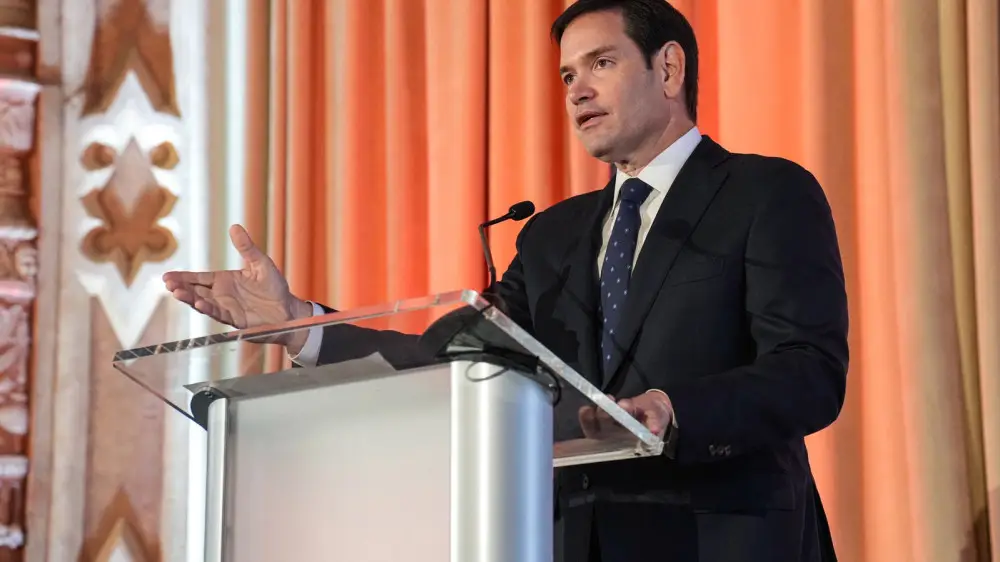
Tengrinews.kz – U.S. Secretary of State Marco Rubio has announced his intention to visit Kazakhstan in 2026. He made the statement at a reception in Washington dedicated to the foreign ministers of the Central Asian states.
Rubio called the recent visit of President Donald Trump’s Special Envoy for South and Central Asia Sergio Gor and Deputy Secretary of State Christopher Landau to Kazakhstan “an important mission.”
“They spent a substantial amount of time, and I know they look forward to going back to the other countries they were not able to visit. I personally intend to visit in the coming year as well, and I – all five, so I know it’d probably be a week-long or longer trip, so we’ve got to work on that and make that happen together,” Rubio said.
Rubio emphasized that under the Trump administration, U.S. foreign policy is based on national interests, which, he noted, in many ways coincide with those of the Central Asian countries.
“Our national interests are aligned, and I think tonight’s reception, tomorrow’s meeting, and some of the things we’re going to do together in the months and weeks and – to come are going to further strengthen that. This is the beginning of a new era in relations between the United States and Central Asia,” the U.S. Secretary of State said.
Earlier, U.S. presidential special envoy Sergio Gor described his recent trip to Kazakhstan as “exceptionally successful” and praised the warm reception and the country’s “impressive progress” in innovation and business.
Tokayev’s visit to Washington
As previously reported, President Kassym-Jomart Tokayev has arrived in Washington. He will hold talks with President Trump and participate in the C5+1 (“Central Asia – U.S.”) summit.
Background: The C5+1 format (five Central Asian countries + the United States) is a platform for dialogue among Kazakhstan, Kyrgyzstan, Tajikistan, Turkmenistan, Uzbekistan, and the U.S. Established in 2015, it focuses on economic cooperation, security, environmental issues, and development — without a geopolitical emphasis. Summits take place every 1–2 years, alternating between meetings of national leaders and ministers.

