


 Қазақша
 Русский
 English

ПОДЕЛИТЬСЯ
- Main
- 09 July 2026 12:47
The world’s most liveable countries and cities named
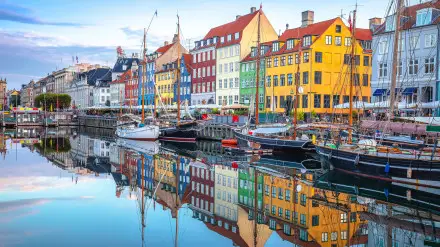 Copenhagen. Photo: depositphotos.com
Tengrinews.kz — The research division of The Economist magazine, the Economist Intelligence Unit (EIU), has published its annual Global Liveability Index 2026, assessing 173 cities around the world by their quality of life.
Experts analyzed around 30 indicators grouped into five main categories: stability, healthcare, culture and environment, education, and infrastructure.
Which city was named the most liveable
According to the study, Copenhagen was named the world’s most liveable city for the second year in a row. As a result, Denmark once again ranked among the countries with the most favorable living conditions. The country’s capital received top marks in three areas at once: safety, infrastructure, and education.
The authors of the study noted that the city stands out for its high level of public services, well-developed transport and urban infrastructure, safety, and vibrant cultural life.
Vienna took second place, having previously topped the ranking for three consecutive years. Melbourne came third, followed by Sydney, Zurich, Geneva, Osaka, Adelaide, Vancouver, and Tokyo.
Top 10 most liveable cities in the world in 2026
Thus, the top 10 included cities from six countries: Denmark, Austria, Australia, Switzerland, Japan, and Canada. Australia was the only country to have three cities in the top 10: Melbourne, Sydney, and Adelaide.
The top 10 most liveable cities in the world in 2026:
- Copenhagen, Denmark;
- Vienna, Austria;
- Melbourne, Australia;
- Sydney, Australia;
- Zurich, Switzerland;
- Geneva, Switzerland;
- Osaka, Japan;
- Adelaide, Australia;
- Vancouver, Canada;
- Tokyo, Japan.
Asia became the fastest-improving region
The EIU noted that, overall, global liveability levels in 2026 remain stable. However, the general picture conceals significant regional differences.
Asia showed the most notable progress. The region’s average score increased thanks to years of investment in healthcare. Chinese cities improved their positions in particular. Fuzhou recorded the strongest rise, climbing seven places. Wuxi, Nanjing, Zhuhai, Qingdao, Shenyang, Dalian, Xi’an, and Chongqing were also among the cities with the most noticeable improvements.
New York also stood out in the ranking, moving up three places. The improvement was mainly linked to a higher stability score, which experts attributed to a decline in crime and reduced risks of terrorist threats.
Lisbon also significantly strengthened its position, with improved healthcare indicators, while Tokyo received higher scores in the culture and environment category.
Where life became less comfortable
At the same time, indicators declined in some regions. According to the EIU, the average score for the Middle East and North Africa fell by one point due to the consequences of the conflict between Iran and Israel, which negatively affected stability. Muscat, Kuwait City, Amman, Manama, Doha, as well as Abu Dhabi and Dubai, showed the steepest declines in the ranking.
Despite this, researchers noted that a number of cities in the region continue to improve their healthcare scores thanks to the development of medical infrastructure.
Western Europe remains the world’s most liveable region, with an average score of 91.7 out of 100. North America ranks second with a score of 90.4.
Damascus ranked last, although experts noted a noticeable improvement in the local healthcare system. Tripoli came second from bottom, having also improved its healthcare indicators.
In addition, Tehran, Harare, Kyiv, Port Moresby, Lagos, Algiers, Karachi, and Dhaka were among the 10 least liveable cities. According to the EIU, most of the cities at the bottom of the ranking received low scores for stability, which remains a key factor in calculating the overall index.
Editorial Question
What’s your take on this news?
Comments are moderated by the editorial team
Show comments


 +7 (777) 001 44 99


